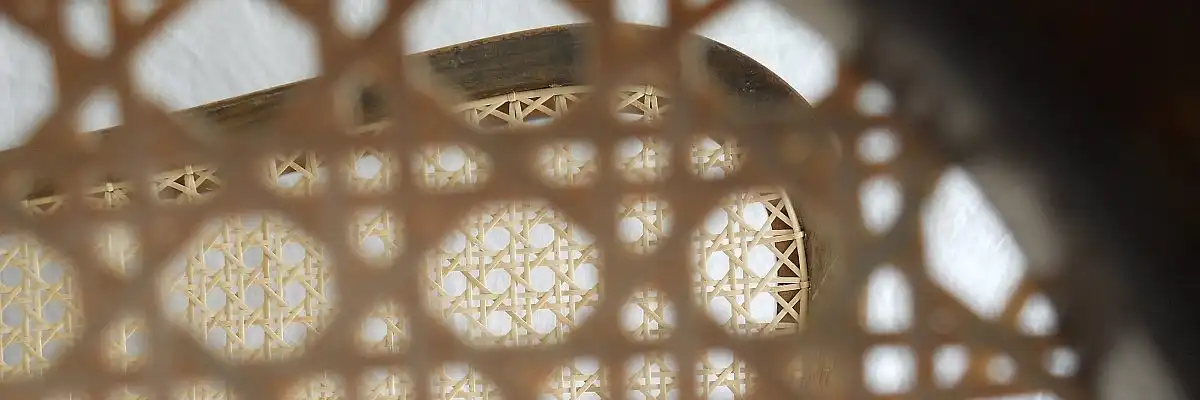
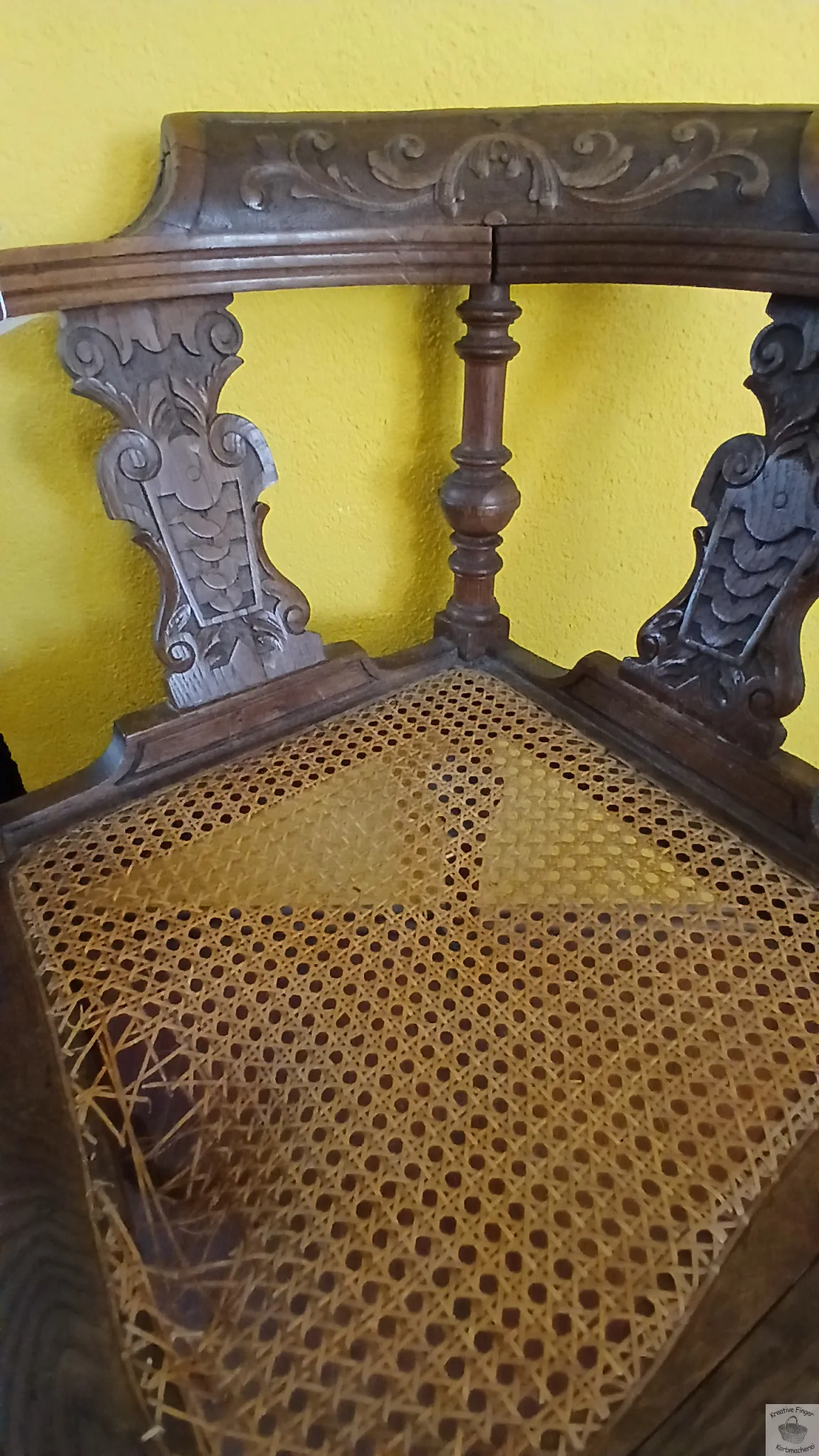
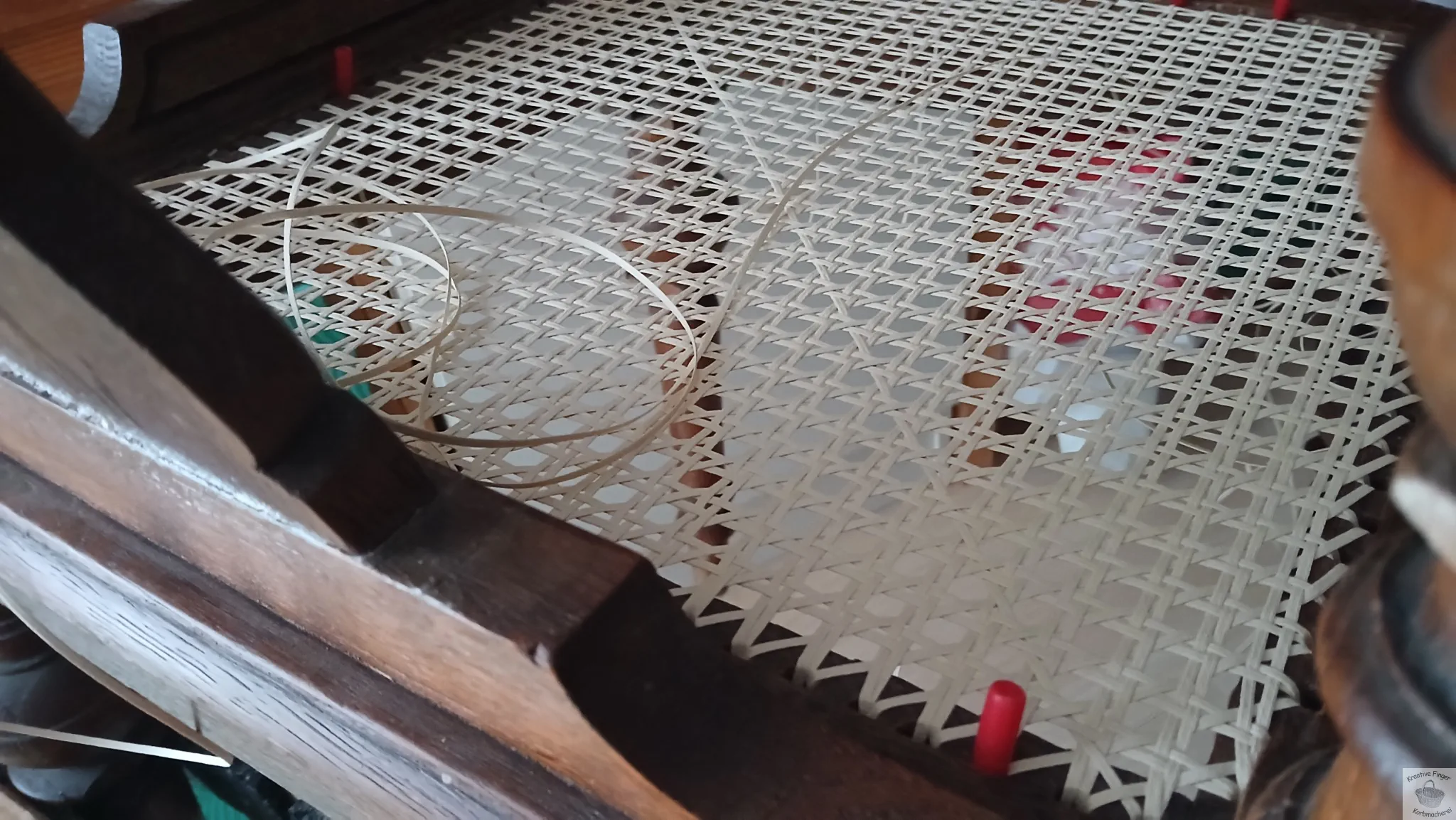
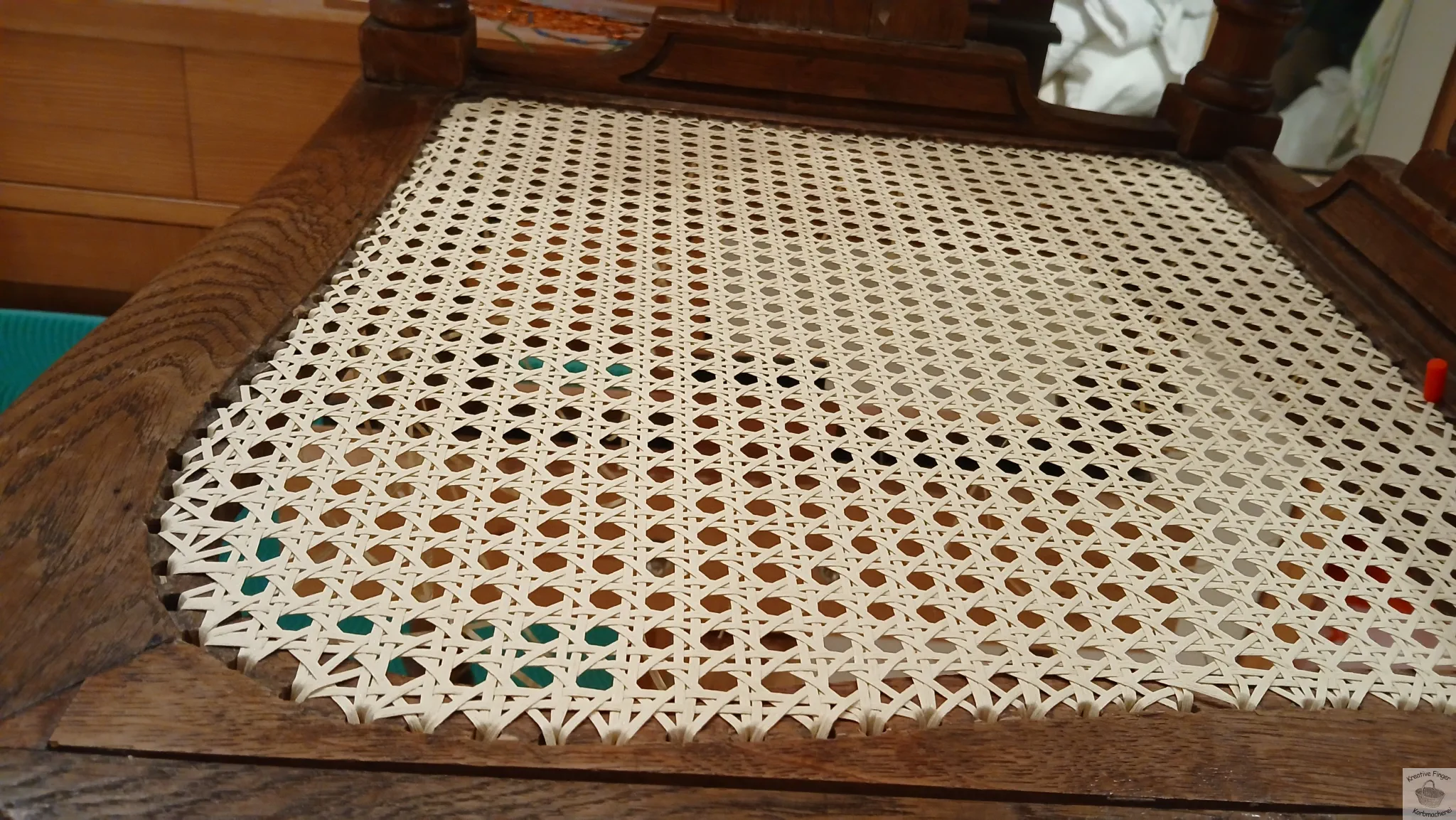
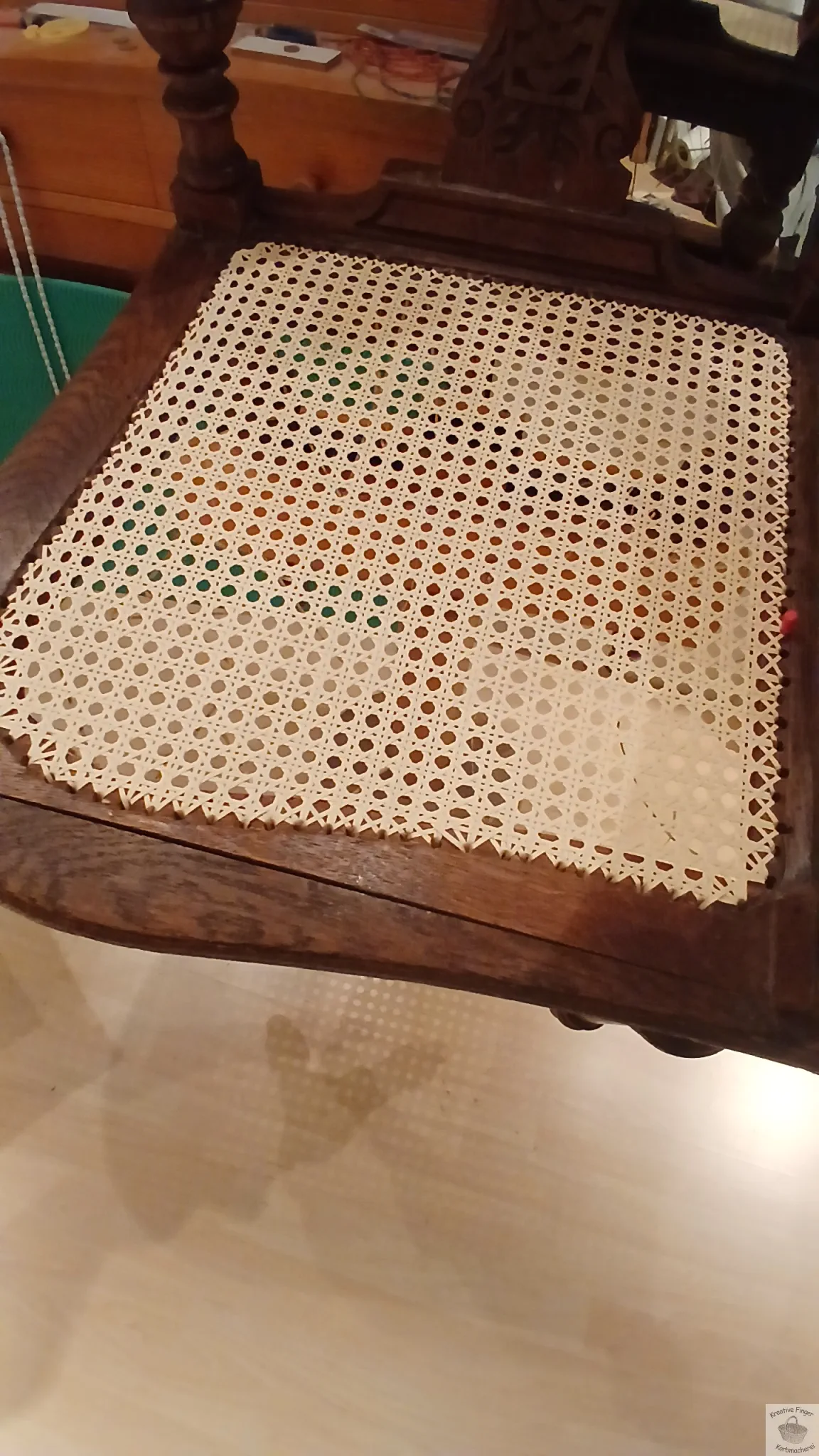
Some chairs present special challenges during restoration. This was certainly the case with this corner chair, which is currently receiving a new cane seat in my workshop and is now almost finished.
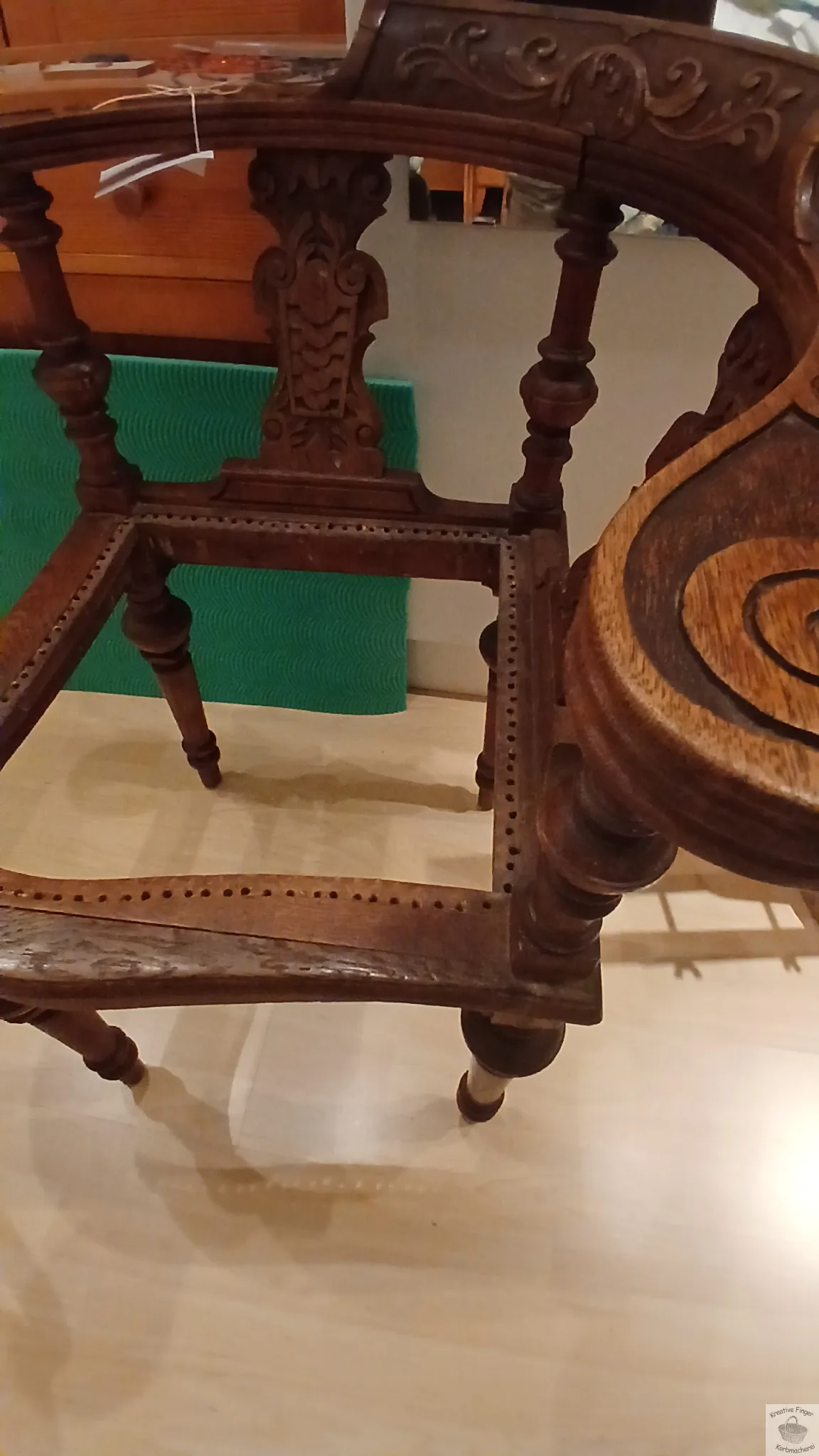
Before the actual weaving could begin, however, a considerable amount of preparatory work was required. The old cane webbing had to be completely drilled out, as every single strand had been firmly glued into every drilled hole. As a result, removing the old caning alone took significantly more time than usual. Only after all the holes had been carefully cleaned could the new cane webbing be installed.
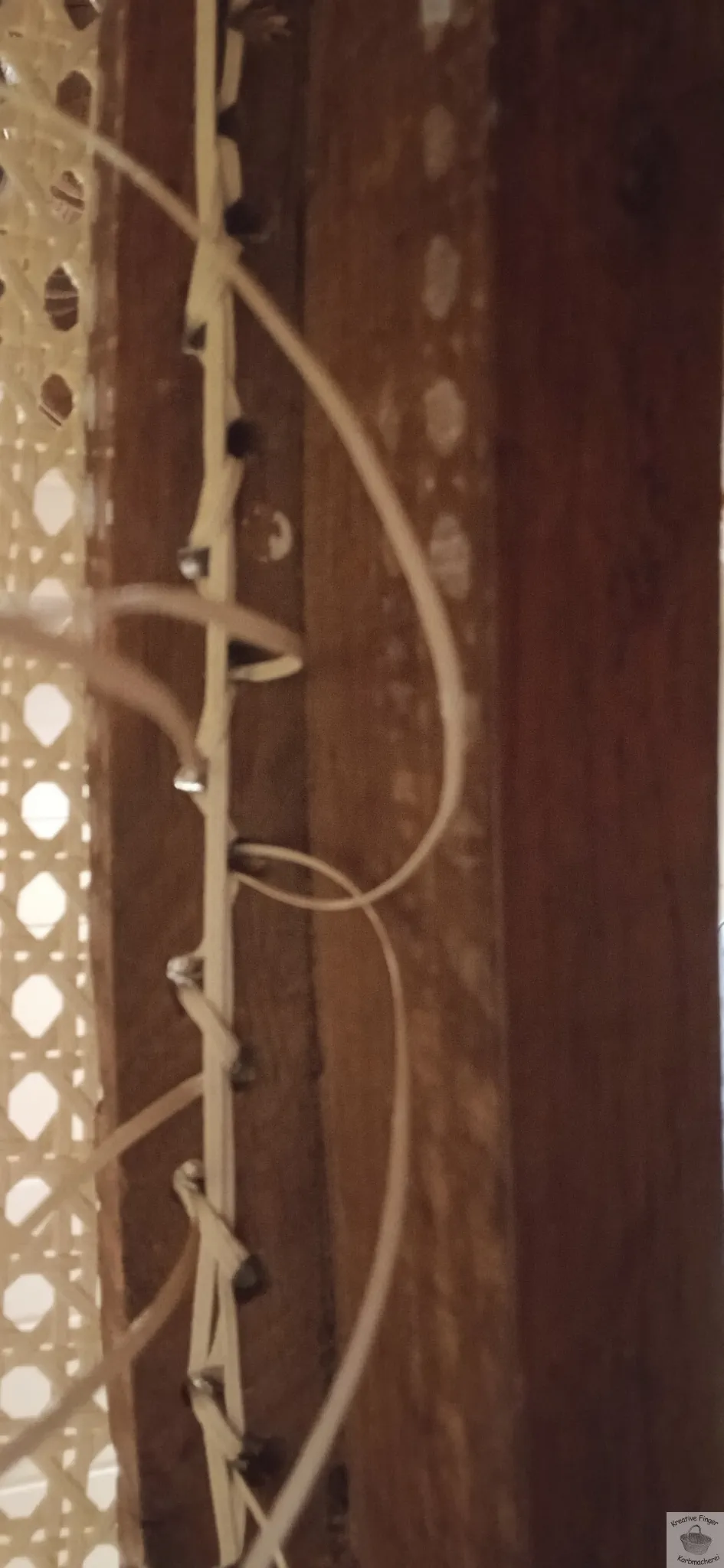
The word “almost” refers to the final knots of the cane strands underneath the frame. Although these finishing touches represent only a small part of the entire weaving process, they require just as much care and attention as every other stage of the work.
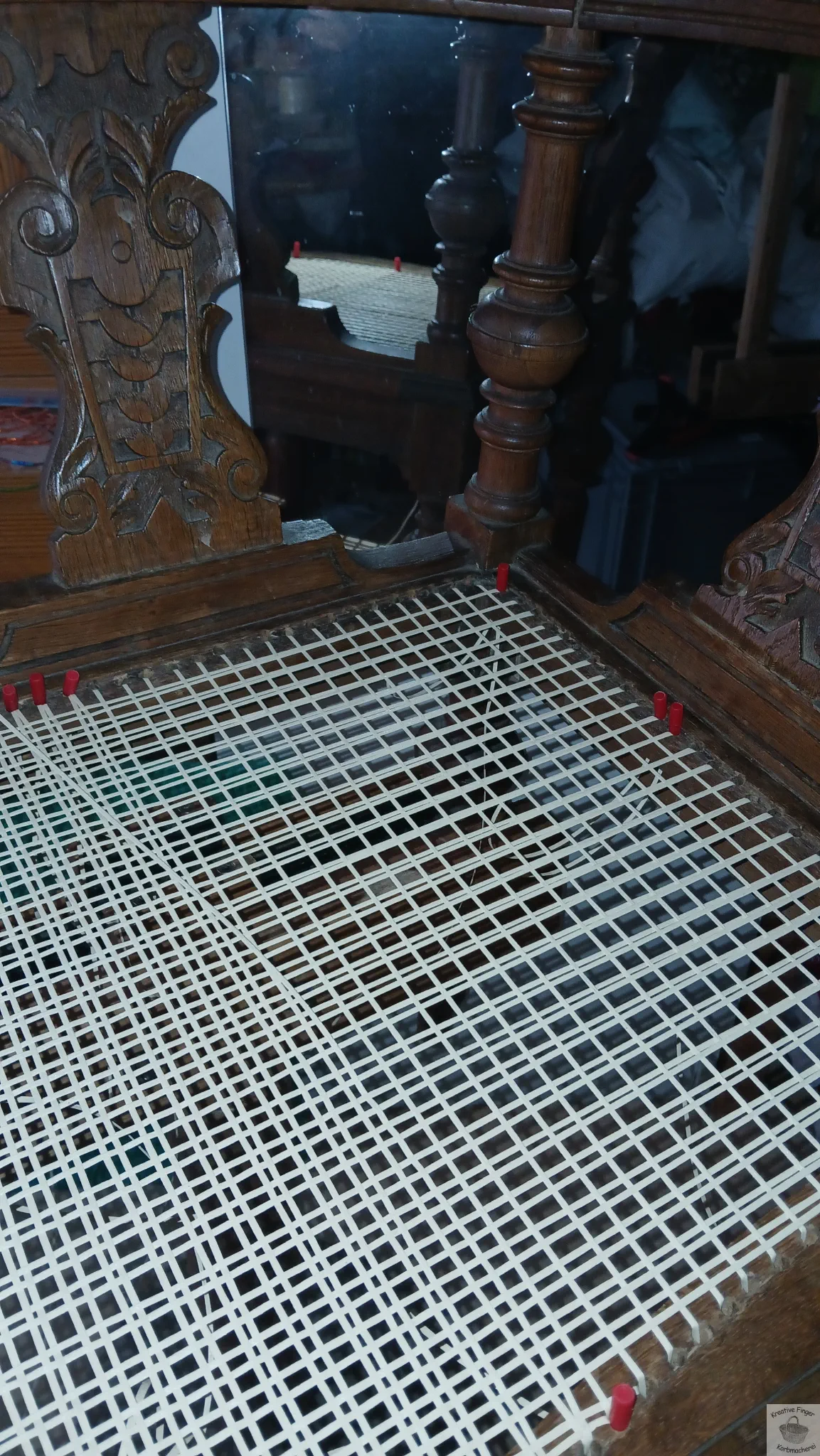
Due to the size of the chair and its unique construction, including the backrest, the weaving process was considerably more demanding than with many other models. While threading and tensioning the cane strands, I repeatedly had to reach around corners to guide each strand correctly. Even with long arms, working on a corner chair like this is not always comfortable and requires a great deal of patience and skill.
Despite these additional challenges, the new cane seat is now nearly complete. Very soon, the chair can be returned to its owner and, with its renewed seat, will provide many more years of service.
I am pleased that this special customer project is nearing completion and that the corner chair will soon be ready to be picked up by its owner.
As a traditional basket-weaving workshop, we love nature and genuine craftsmanship. Our blog articles share personal workshop stories and historical insights. Terms such as ‘natural’ or ‘sustainable’ refer exclusively to our untreated wickerwork. For durable chair weaving, we use modern cotton weaving tape as standard. Legally binding information, material details and care instructions can be found in our FAQs.