And we still haven’t grown tired of spending our annual holiday on this beautiful island. However, quite a lot has changed in Corsica over these 19 years. Some of it for the better, but some of it for the worse too.
The locals are still lovely, as is their friendliness, and it’s also good that some of the mountain passes were upgraded in advance of the 2013 Tour de France.
On the downside, since 2020 – because of the pandemic – it feels as though everyone has bought a motorhome and is now running riot on the island. It’s a particular shame that such motorhome owners then camp illegally on beaches, leading local councils to introduce height restrictions. It’s understandable, but it’s also a bit of a nuisance for those who stick to the rules and only stay overnight at campsites or official parking areas. So thanks a lot to those idiots from all over the place for that.
19 to 21 September: arrival
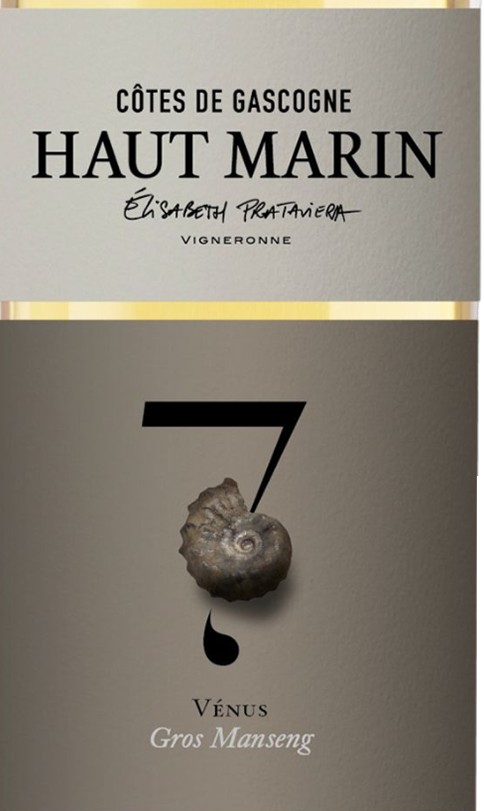
Otherwise, we took our time getting there this year. Katja was determined to spend a night in Charmes, before carrying on to Garne and then on to Toulon for the ferry. In hindsight, however, we realised that this extra day on the journey didn’t really add anything. So we’ll be cutting that out of our future travel plans without replacement. In Garne, we had a lovely meal and drank a delicious white wine. So that we’d know which one it was, I’ve taken a photo of the label. Sweet and mellow, almost sweet, it’s a great wine to enjoy before bed :-)
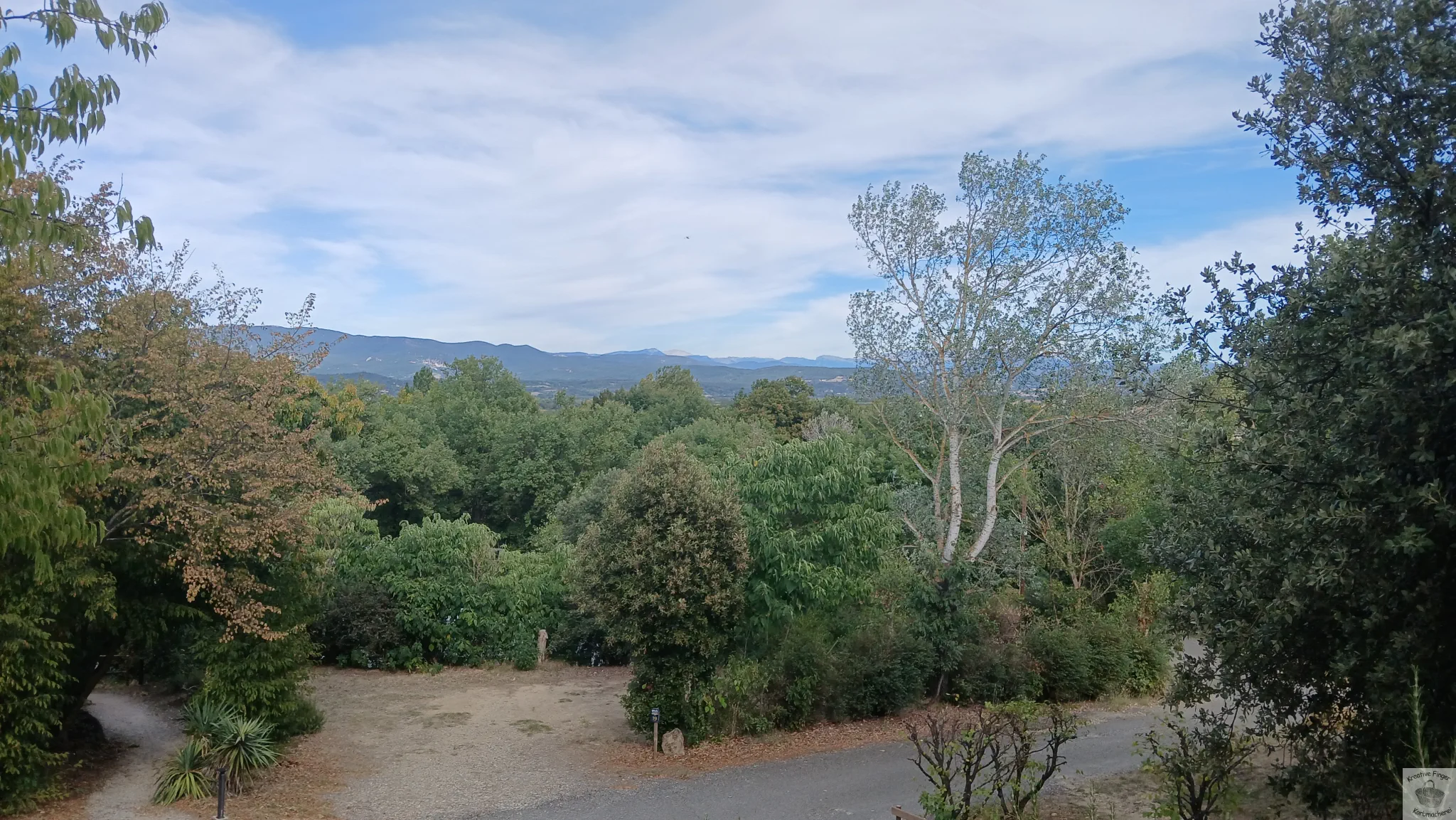
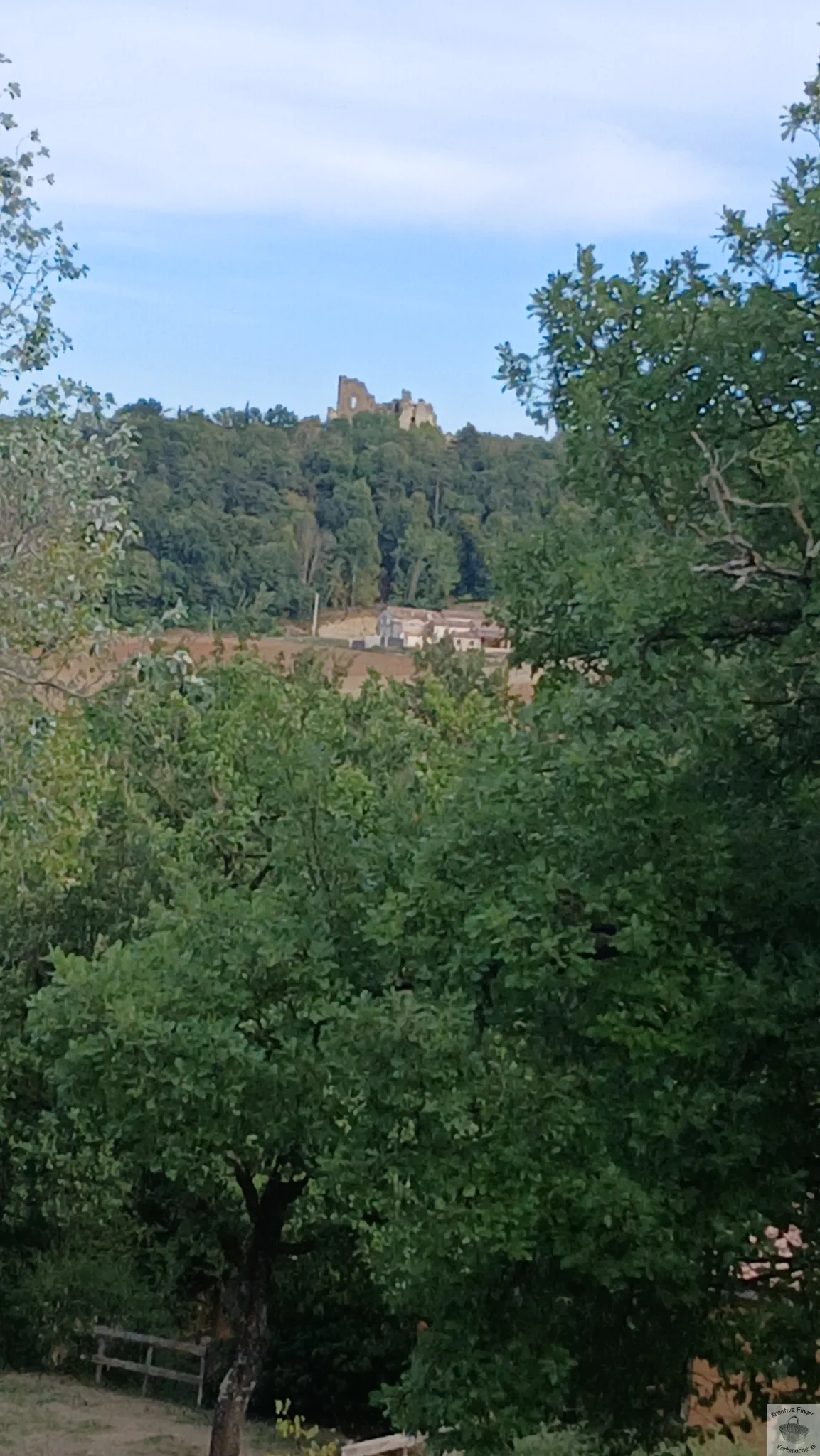
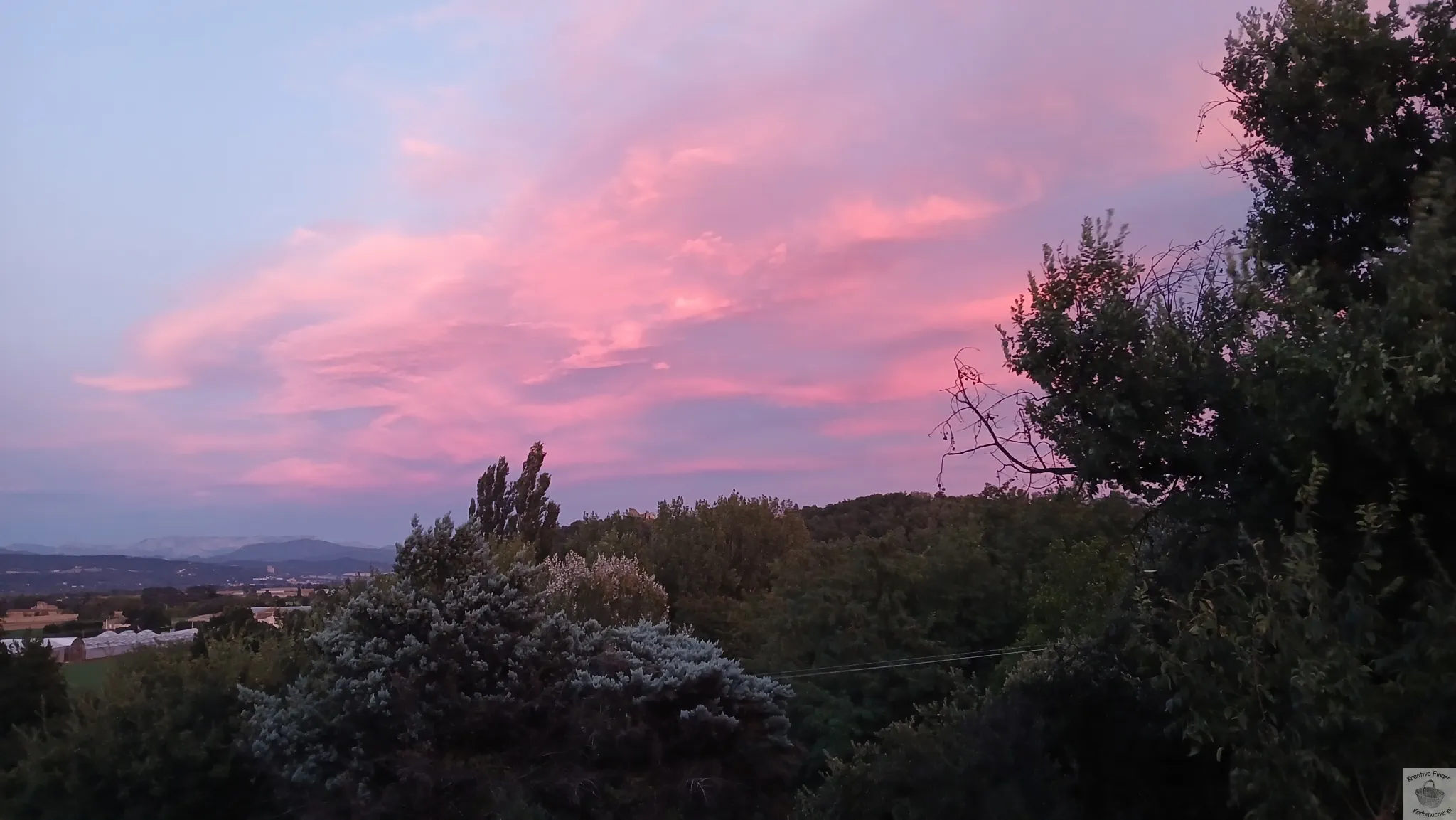
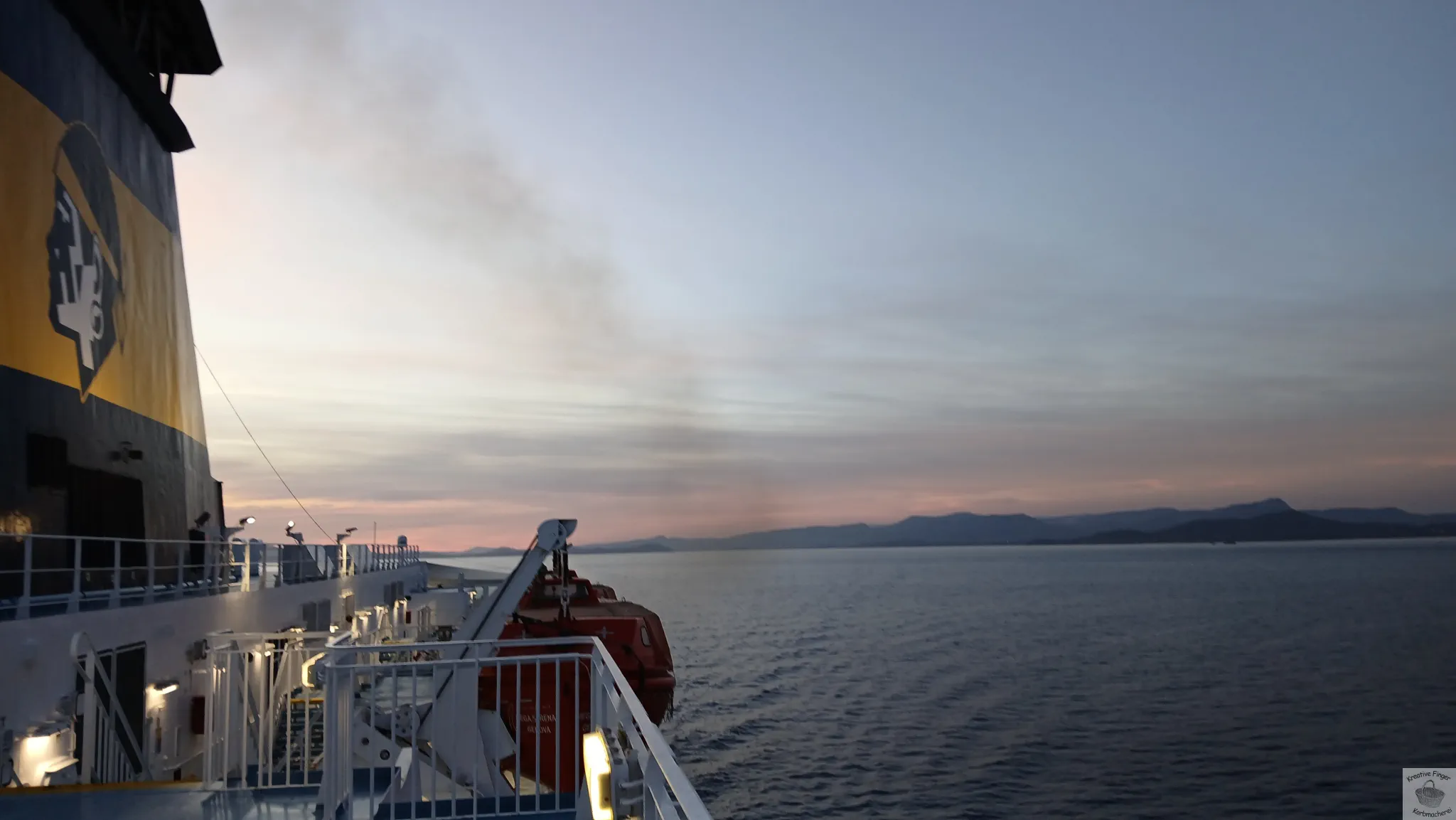
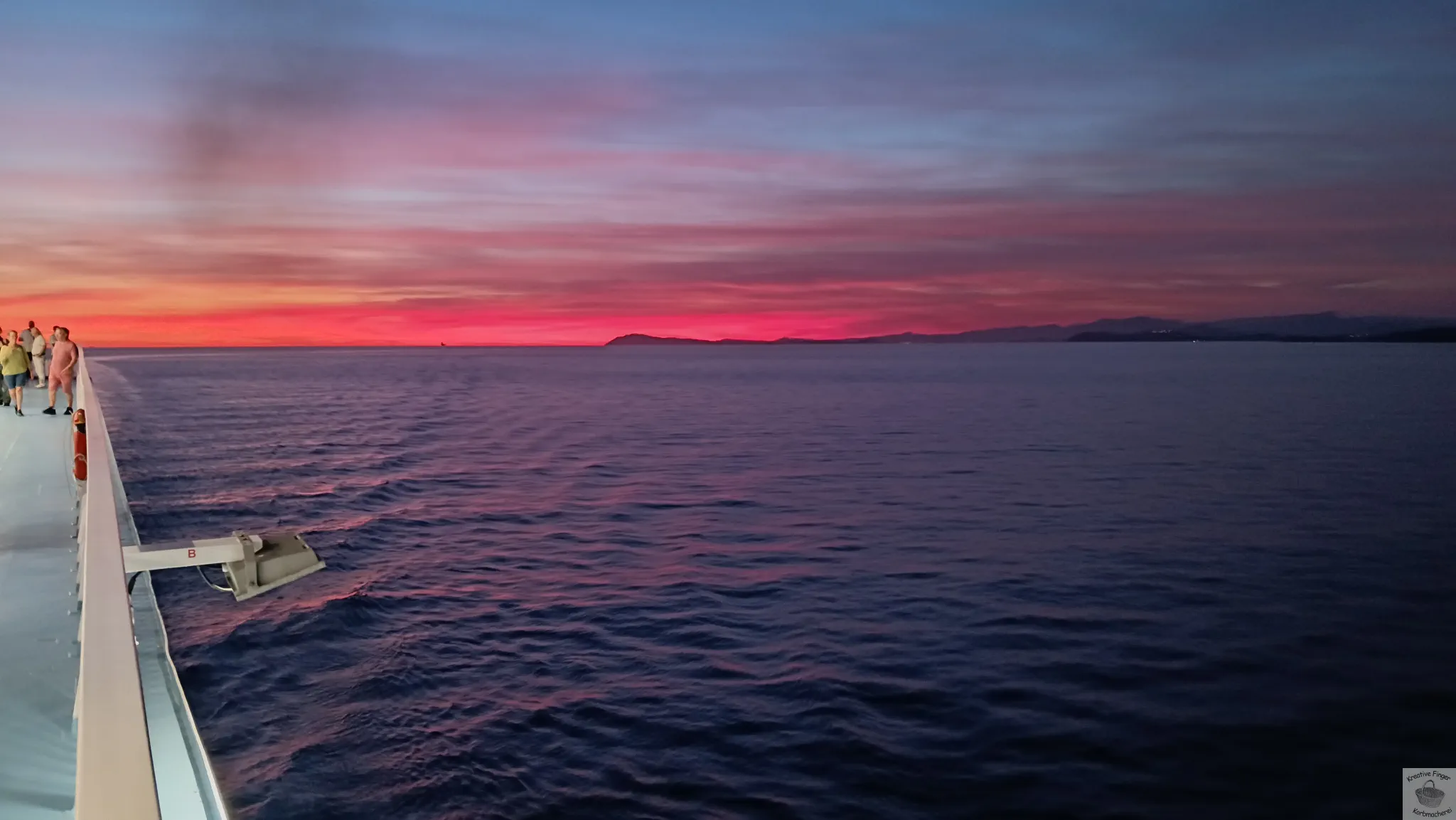
25 September – Arrival, settling in, acclimatising
We’ve arrived, settled in, and spent the first few days lazing about. We naturally enjoyed our welcome drink at the bar and noticed that this year there are significantly more guests who are still here – or have been here all along – than in previous years. Comparative photos on our smartphones provided the proof. The pool by the bar was very crowded, whereas in 2025 and 2024 it was deserted. That, too, is a sign that mass tourism is now taking hold. Unfortunately.
26 September 2026 – First trip to the beach
Today, on 26 September 2026, we ventured out to a holiday resort right on the beach that had been abandoned for years. It was more than 5 km over gravel, bumps and potholes to get there. Once we arrived, the beach was virtually deserted. Only a handful of people and two dogs had made their way there. It was lovely, but with the sun beating down at around 35°, it was also dangerous in terms of sunburn. That’s why we only let ourselves bake in the sun for two hours – and even then, partly in the shade of the ruins.
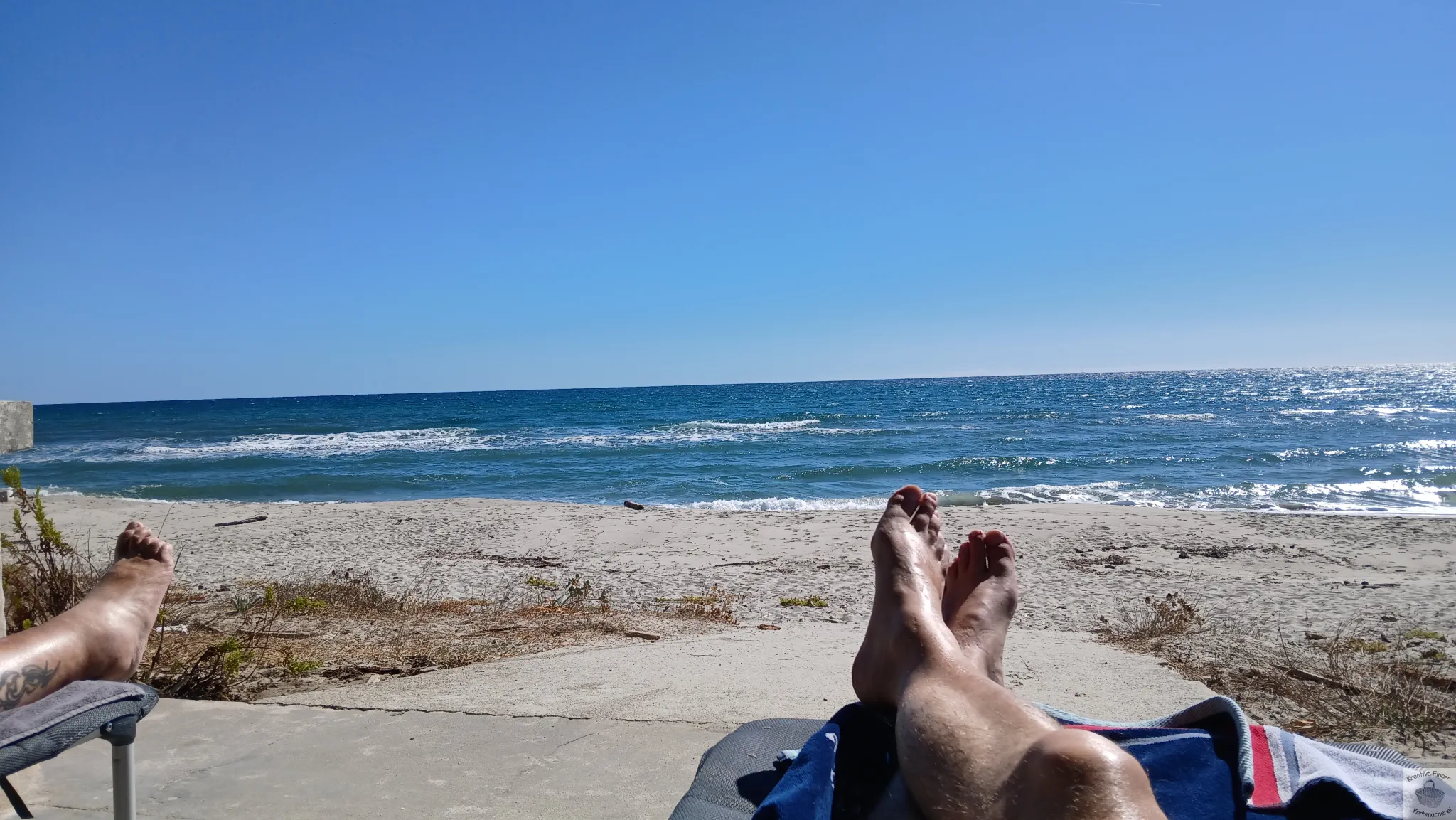
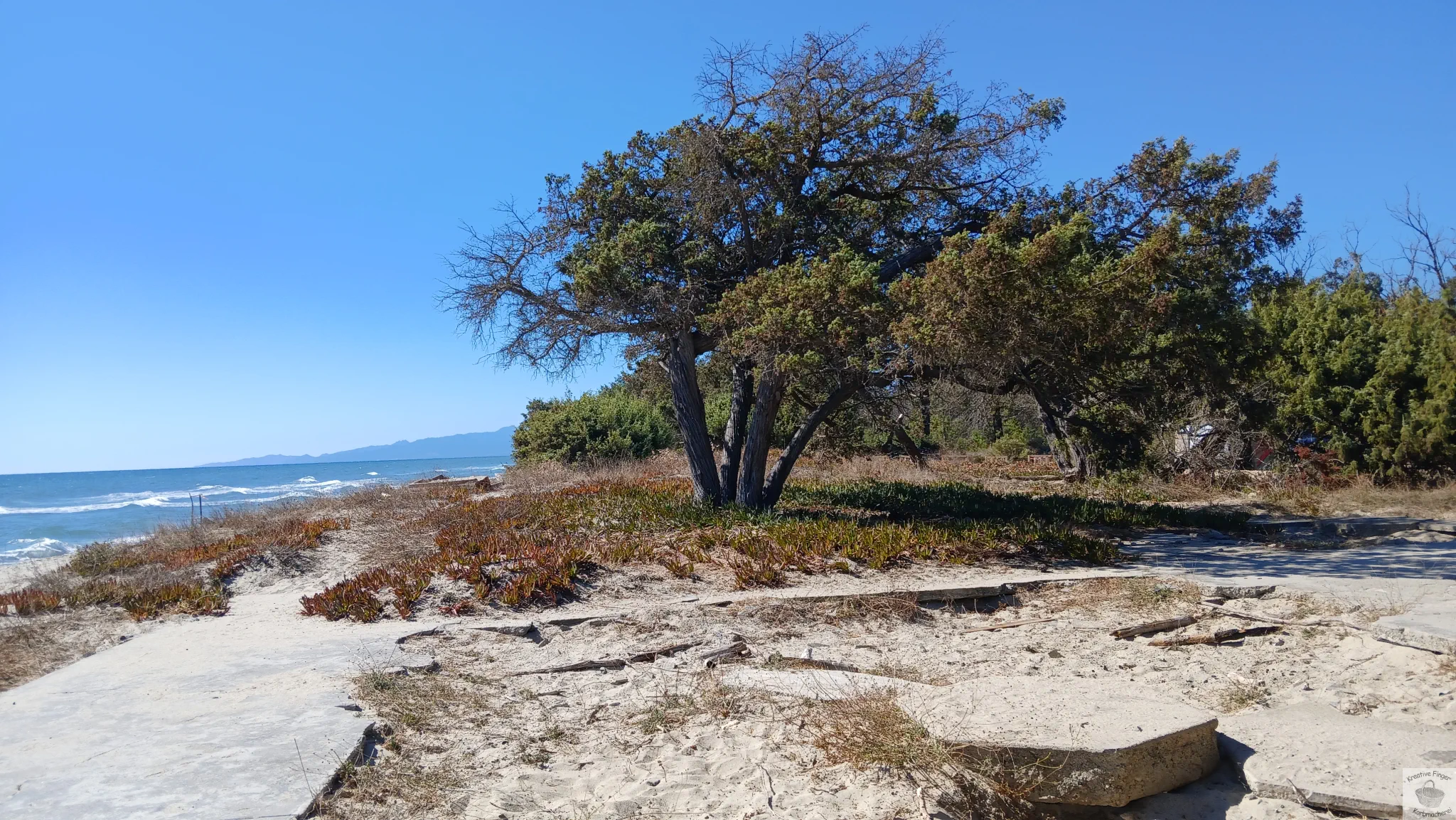
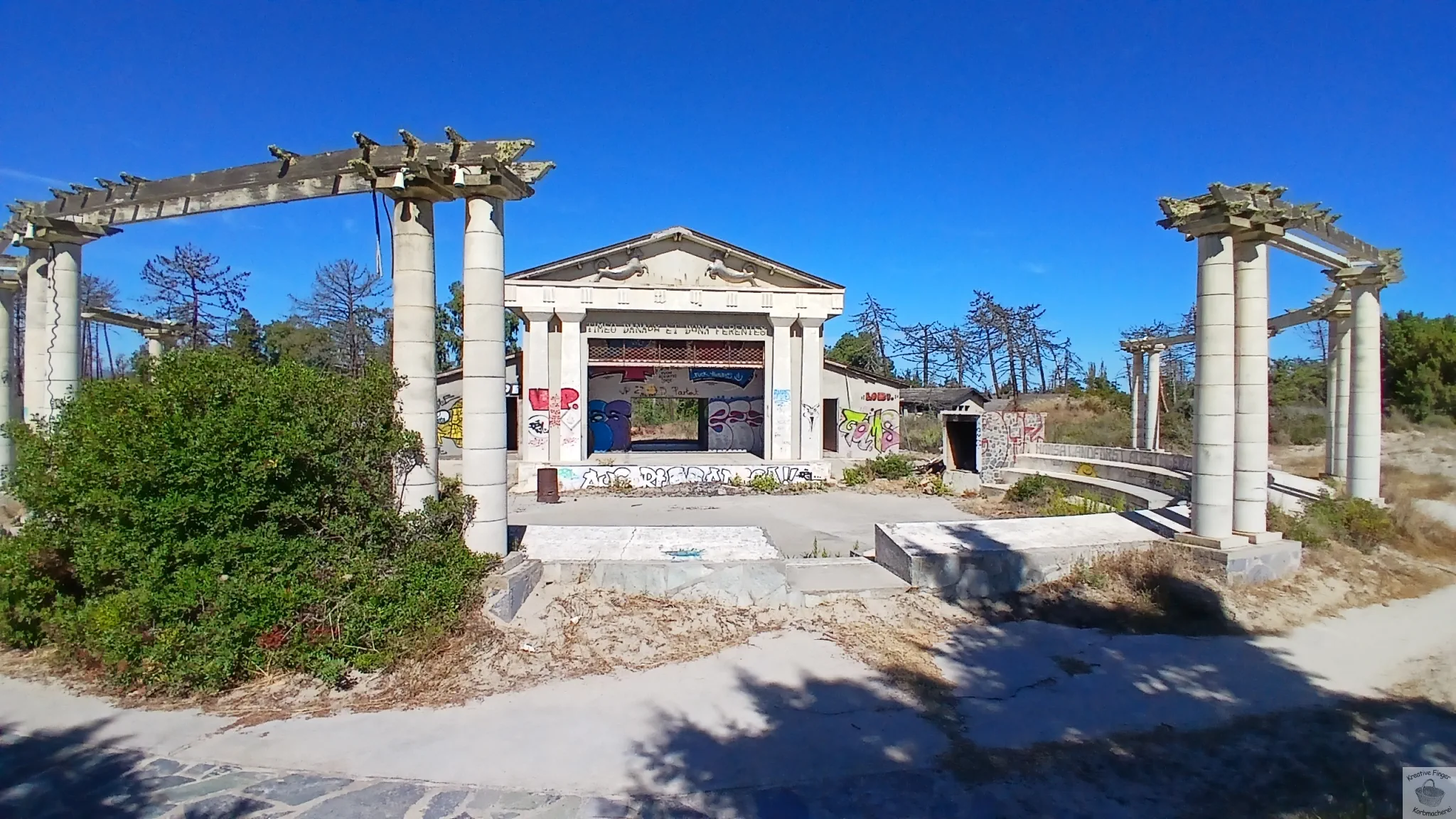
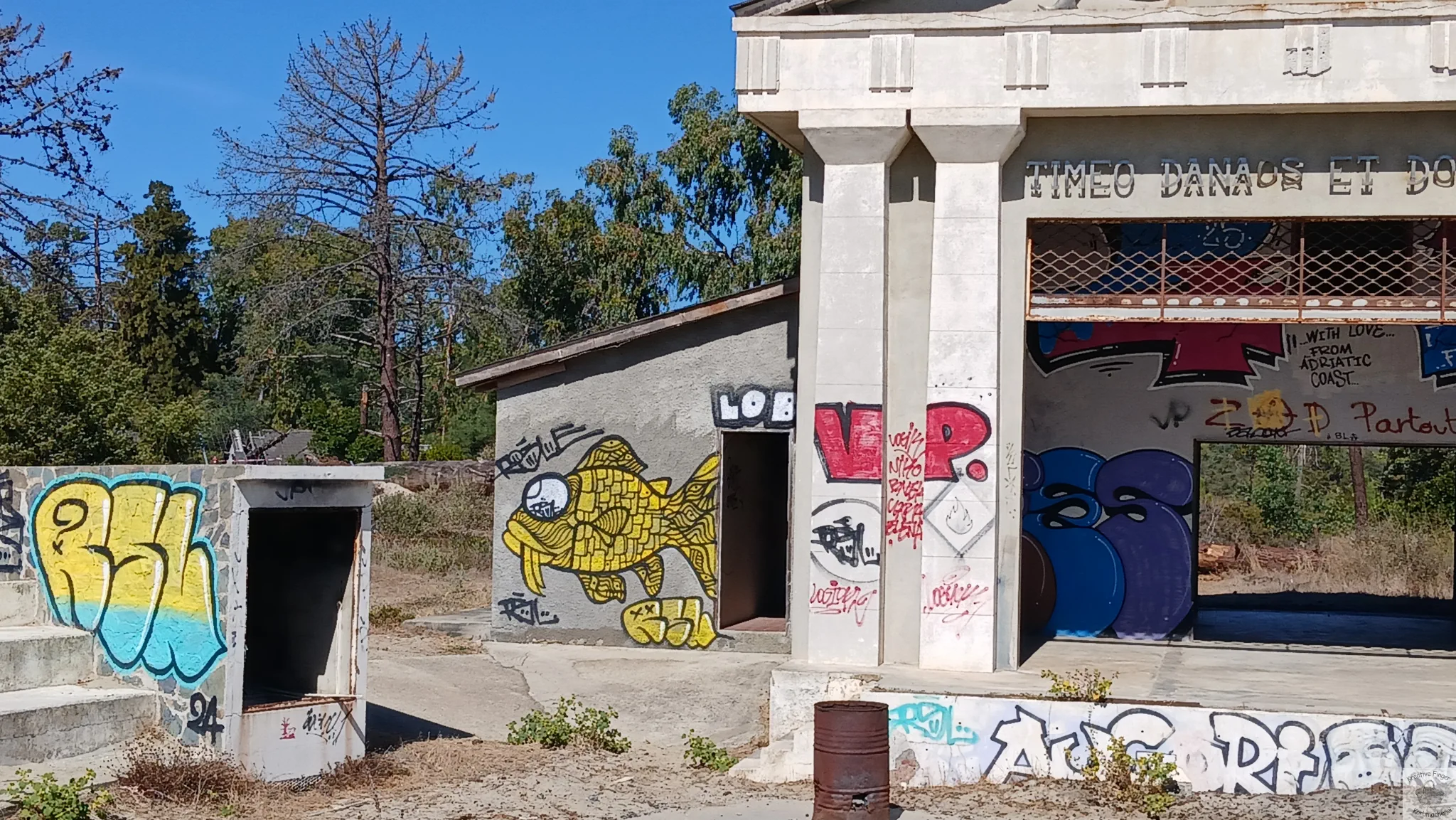
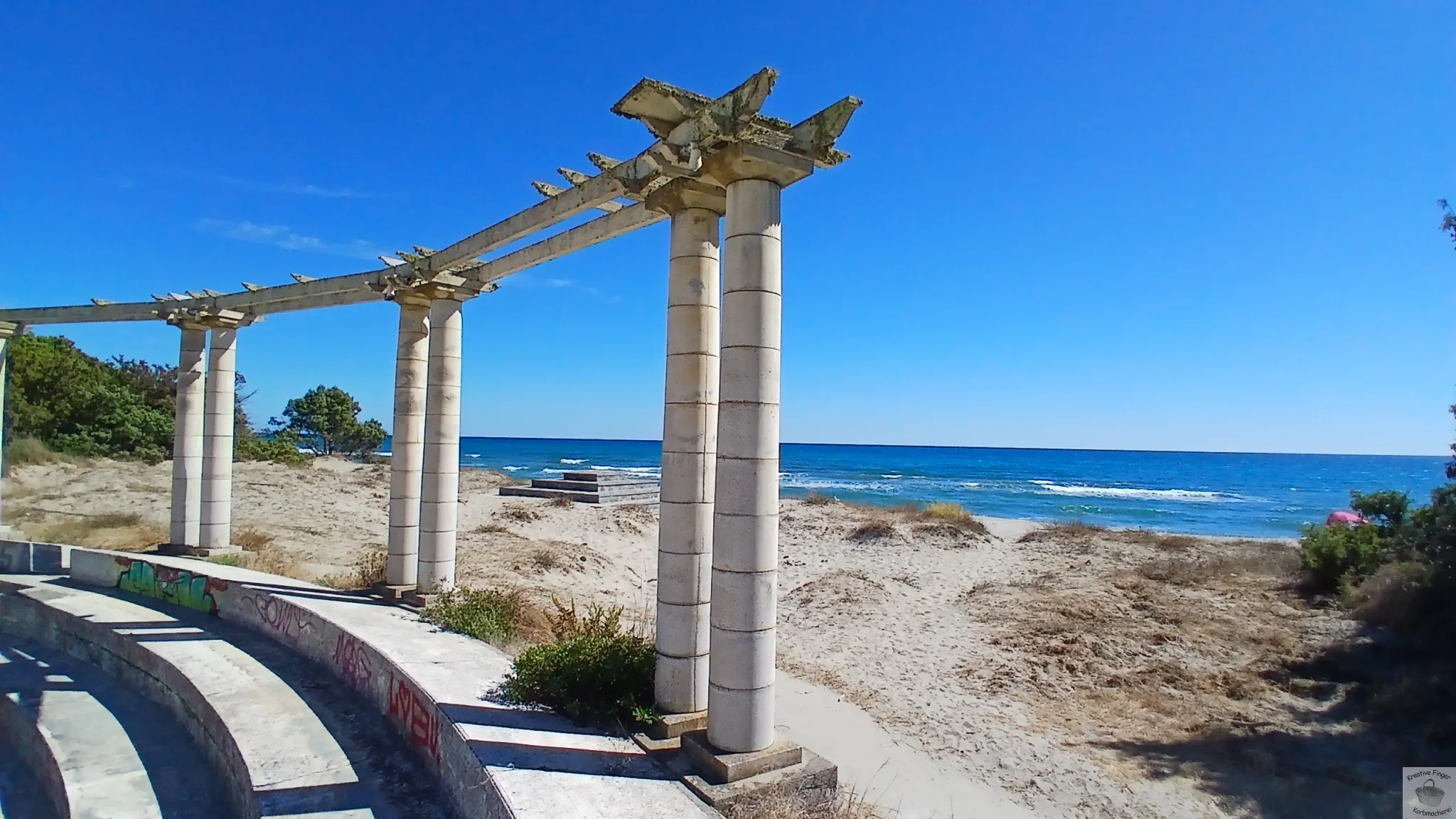
The curious thing about this ‘lost place’ is that this holiday resort was built in the 1970s by prisoners from the neighbouring prison, who later looked after it. And it should be noted that these prisoners were no petty criminals.
The holiday village was intended to allow employees of the Ministry of Justice to enjoy affordable holidays in Corsica. This worked well for a good 30 years, until the FLNC set off a few bombs on several occasions. As a result, the holiday village was abandoned. Nature is now reclaiming it bit by bit.
The prison still exists and is still used as such – without bars on the windows or a fence. Today, the prisoners work in agriculture.
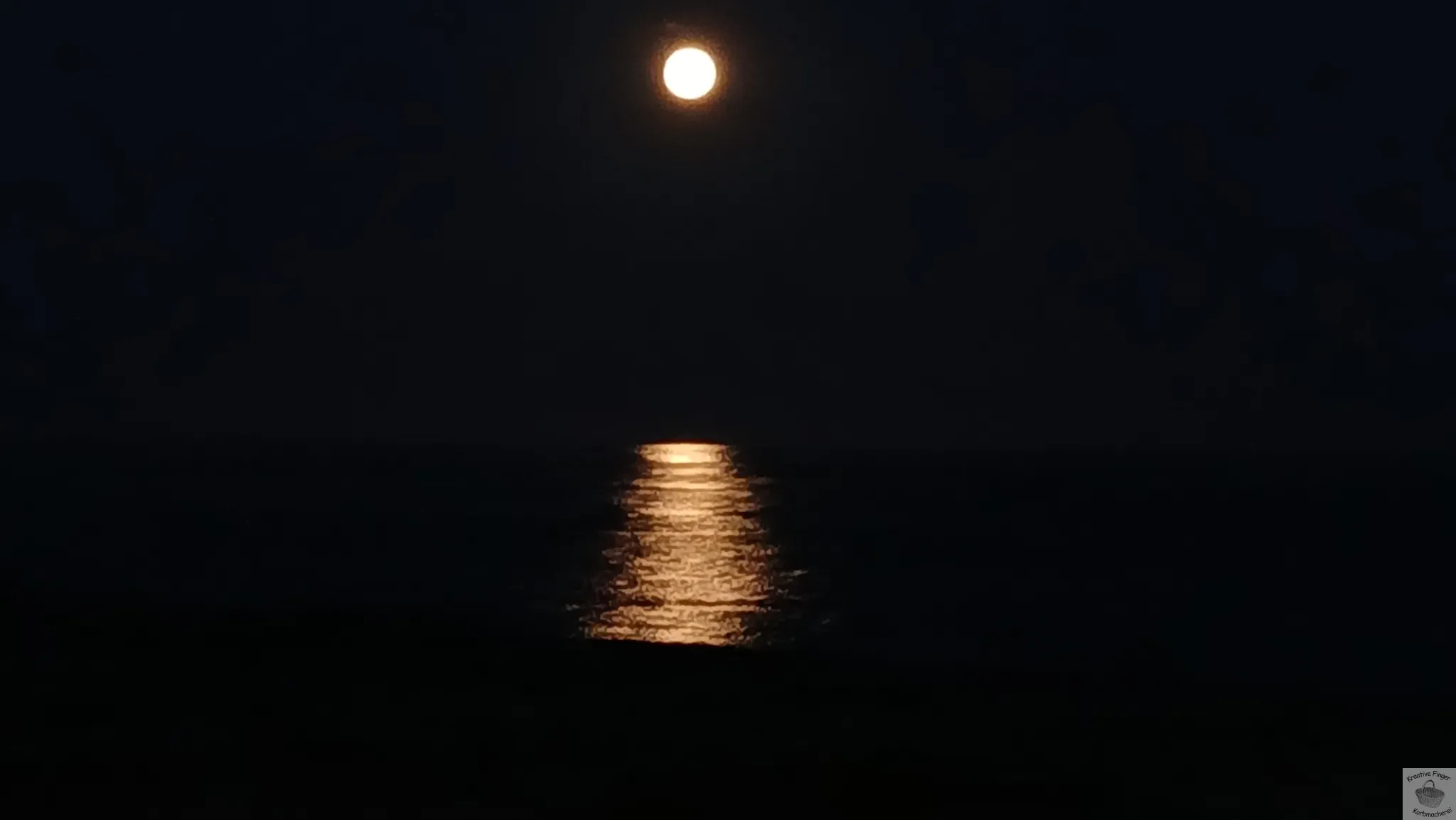
27 September 2026 – Full Moon
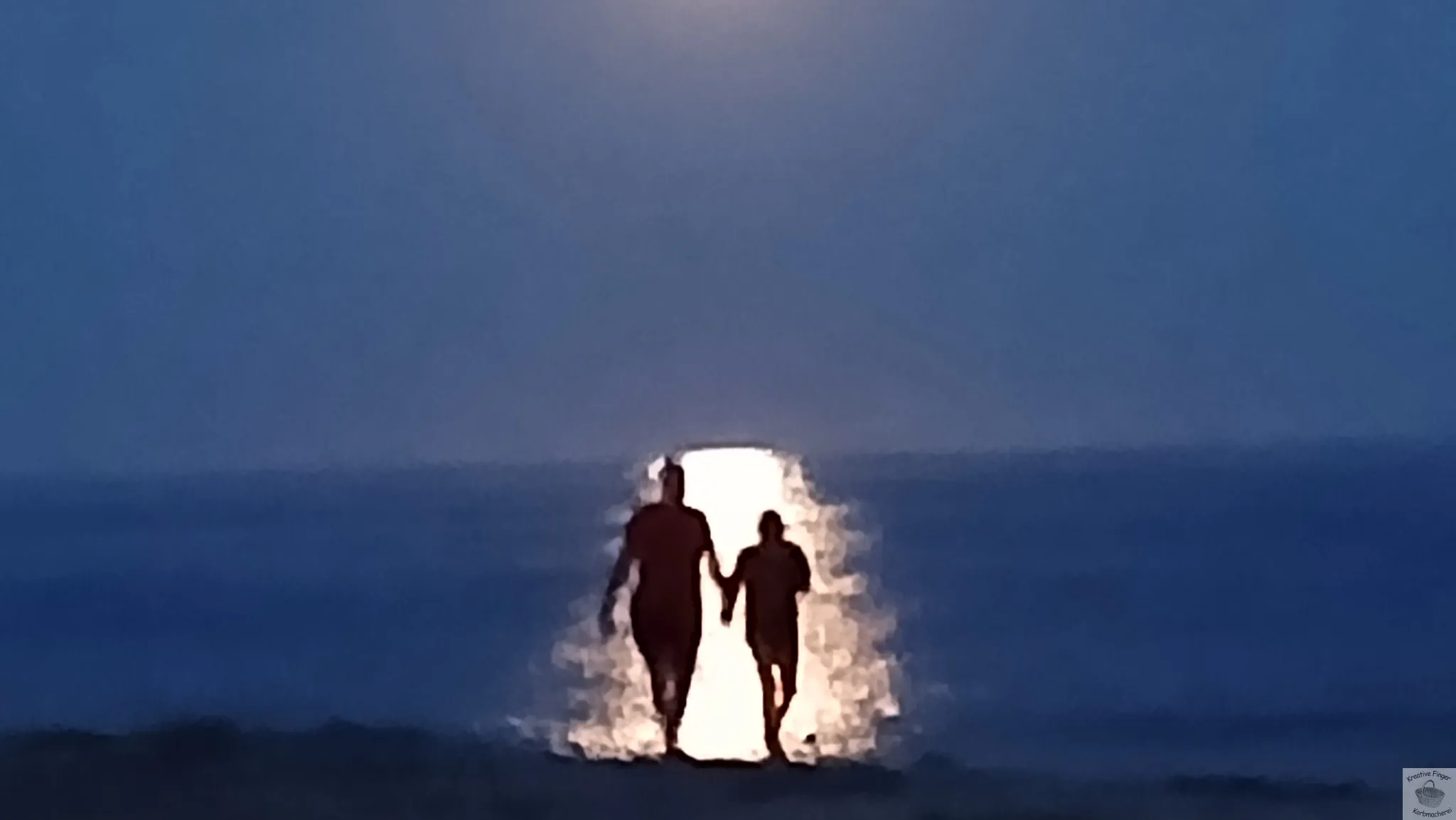
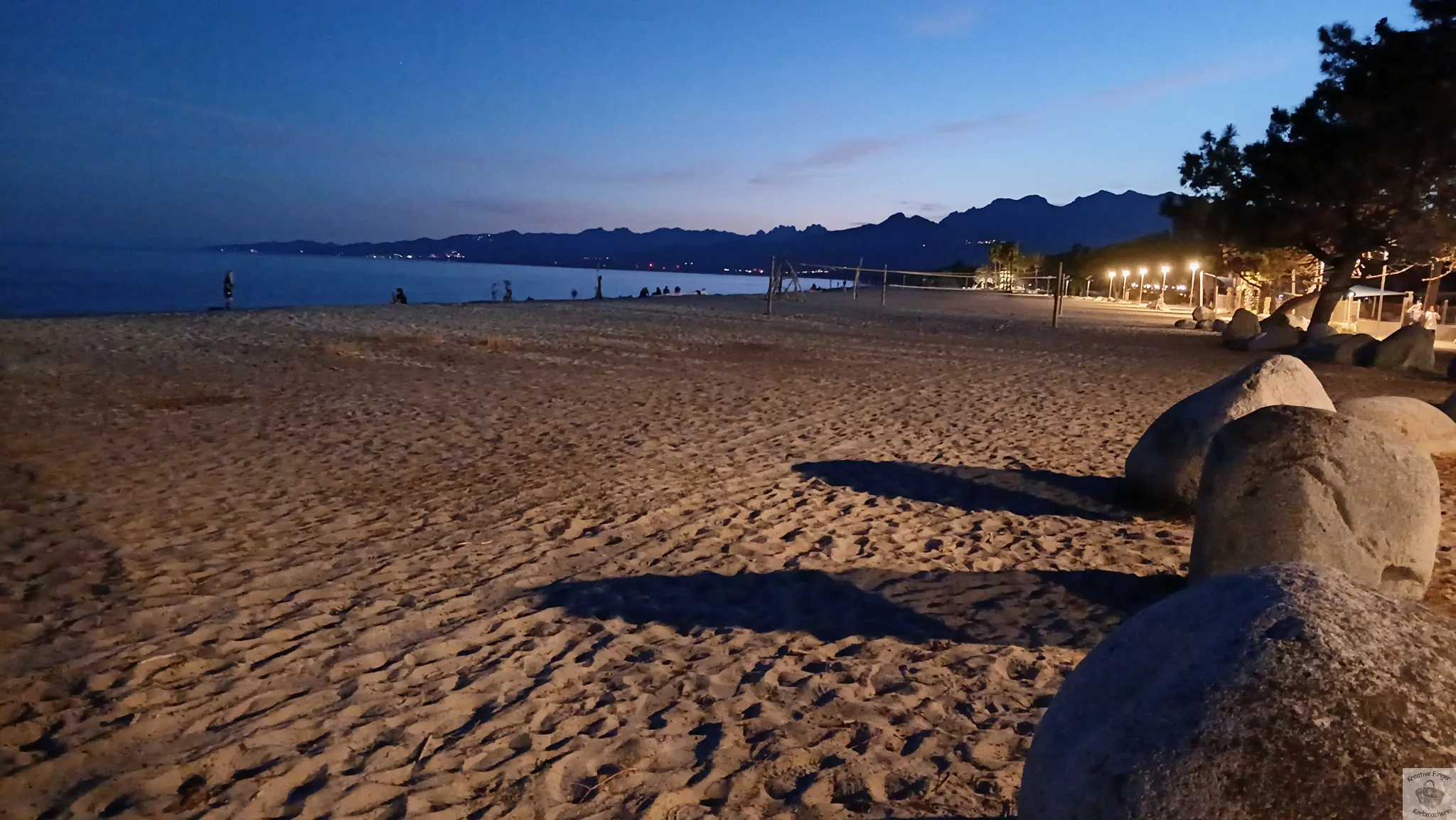
Just like every year at this time of year, as dusk falls, we always head down to the beach. There’s something special about the full moon and the way it glitters on the sea. Hardly anyone about, wonderful peace and quiet, no shouting or whingeing from under-14s – just the sound of the waves and us.
29 September 2026 – A day at the pool and on the beach
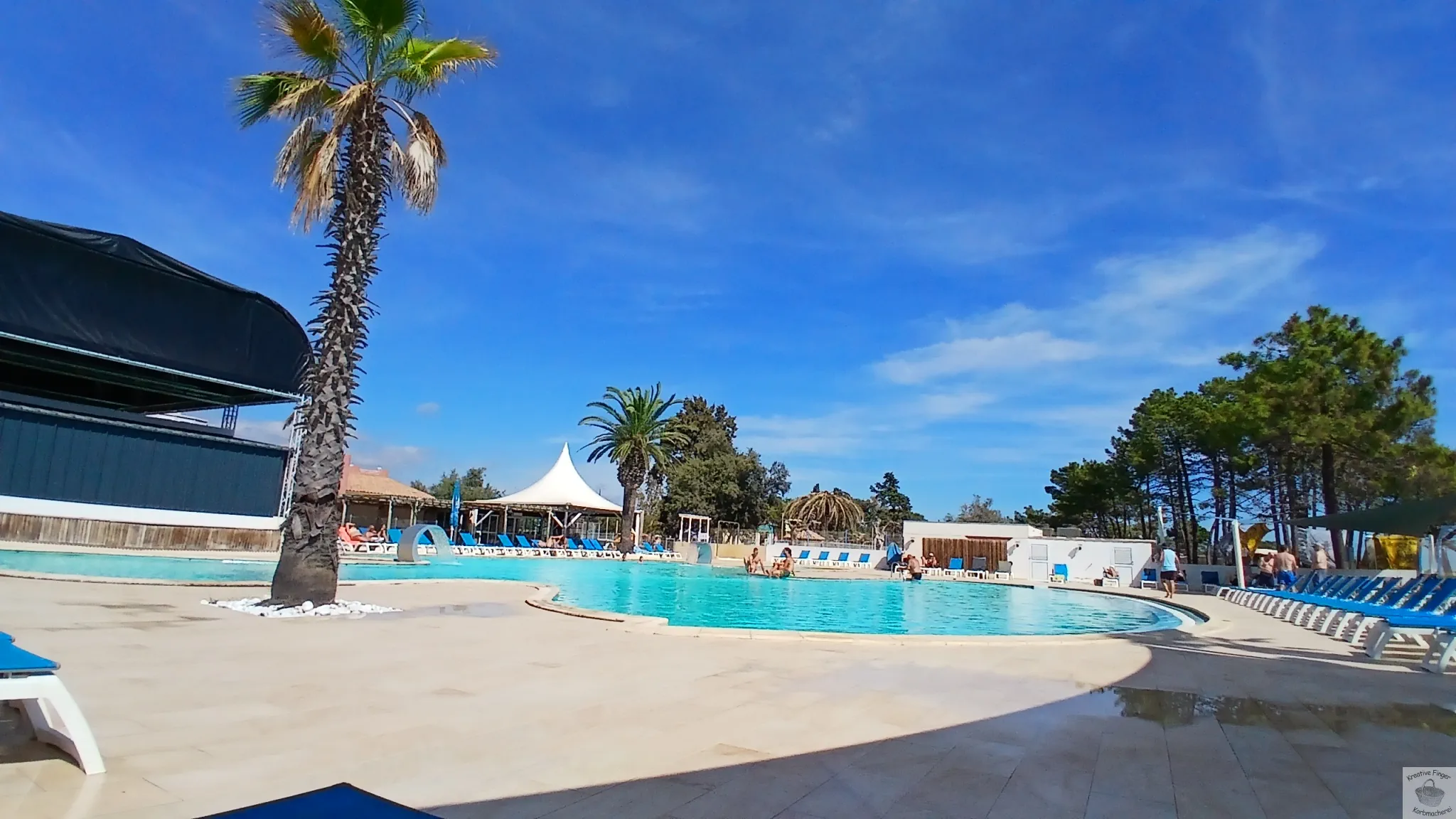
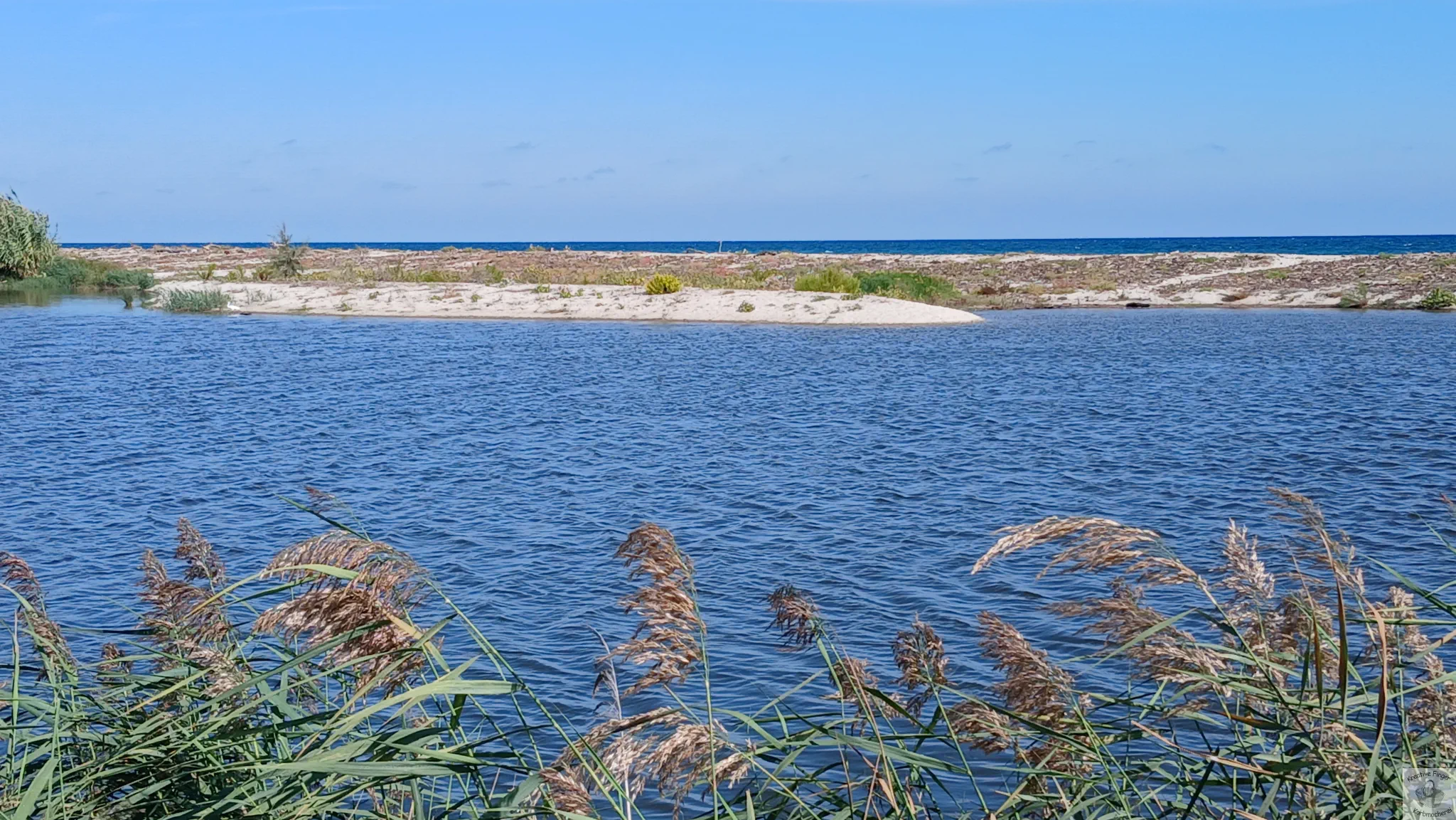
After yesterday’s day of total lazing about, with plenty of doing nothing, we carried on in the same vein today for a change. It was wonderfully peaceful by the pool at lunchtime. And when things started to get a bit livelier again, we drove to a beach. We know our way around, after all. Unfortunately, there was a group of teenagers there, and for old folk like us, it was simply too rowdy. So we just sat down on a bench a few metres further on and enjoyed the weather, watched the herons and simply did nothing.
1 October 2026 – Forum meeting
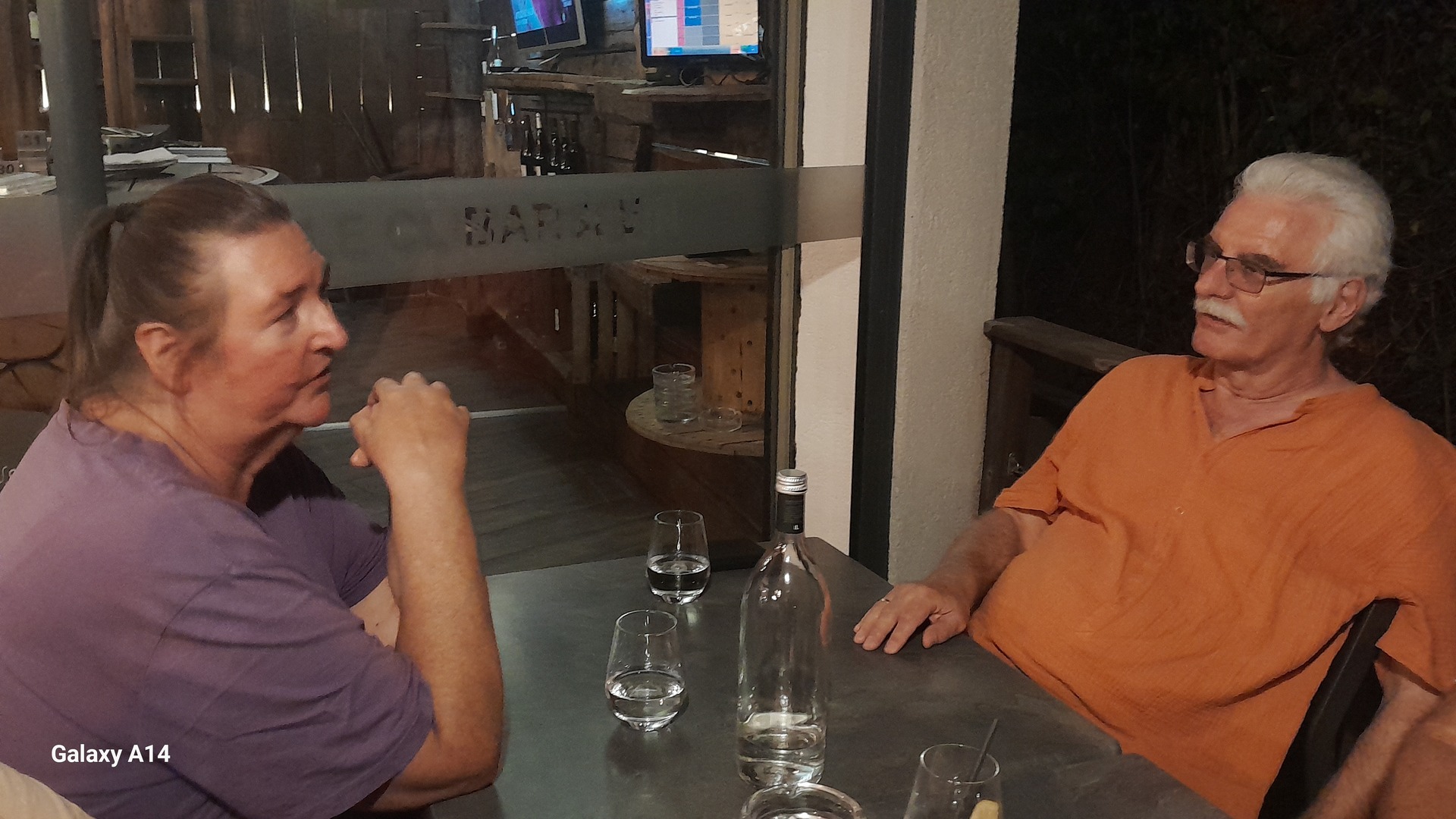
There is a forum dedicated exclusively to Corsica. We’ve been members there for 24 years now, and it was finally time to meet up with some of the users. Thomas, who has lived in Corsica for a long time and whom we met in person a few years ago, organised the get-together. Not far from where we live, in Ghisonaccia, a small group of users from the Corsica forum met up for a cosy evening (and dinner). It was a lovely evening, which we Corsica enthusiasts certainly enjoyed. Here’s just a photo of the two of us (courtesy of the Corsica forum), as we didn’t ask the other participants or the photographer, Manfred, for permission to publish these. And, frankly, we don’t really want to anyway.
We quickly booked some accommodation for the return journey. As is almost always the case, it’s at the Poulet de Bresse service station on the A39. Once again, a huge cockerel (a Bresse chicken, to be precise) will find its way into our fridge. A fine breed of poultry that ranks amongst the most exclusive and expensive chickens in the world. But also amongst the tastiest we know.
3 October 2026 – Dinner with friends
Some very dear friends from the Marburg area are always in Corsica at almost the same time as us in September/October. We’ve all known Catherine for many years. She lives here in Corsica and has discovered a new restaurant that we absolutely must try. So off we go. A small auberge with a limited menu that changes constantly.
Typical Corsican dishes, which are famously very hearty. The ingredients are seasonal and mostly sourced from the restaurant’s own farm. Wow, it was delicious. The owner is a very friendly host who warmly welcomes new guests, like us, as if we’d been there many times before. After tucking into our main course and dessert until we were absolutely stuffed, we were treated to some grapes pickled in eau-de-vie and a homemade limoncello on the house.
After a good two and a half hours, we finally called it a night. We’ll certainly be back there again. And for anyone wondering where the restaurant is, we’re not going to reveal it here. We want it to remain a lovely, cosy spot and not be overrun by tourists and Instagram show-offs.
4 October 2026 – Baking cakes without an oven
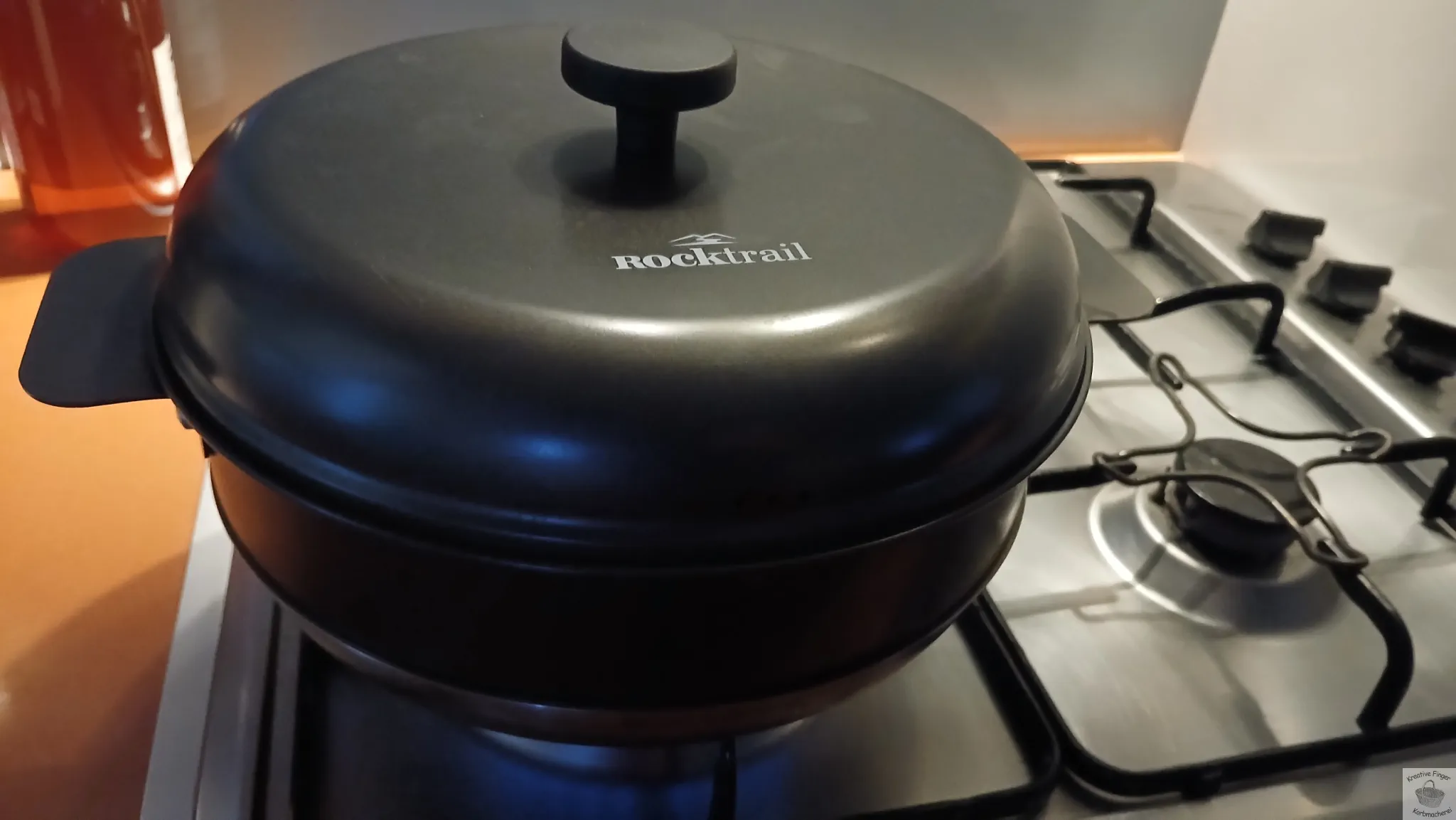
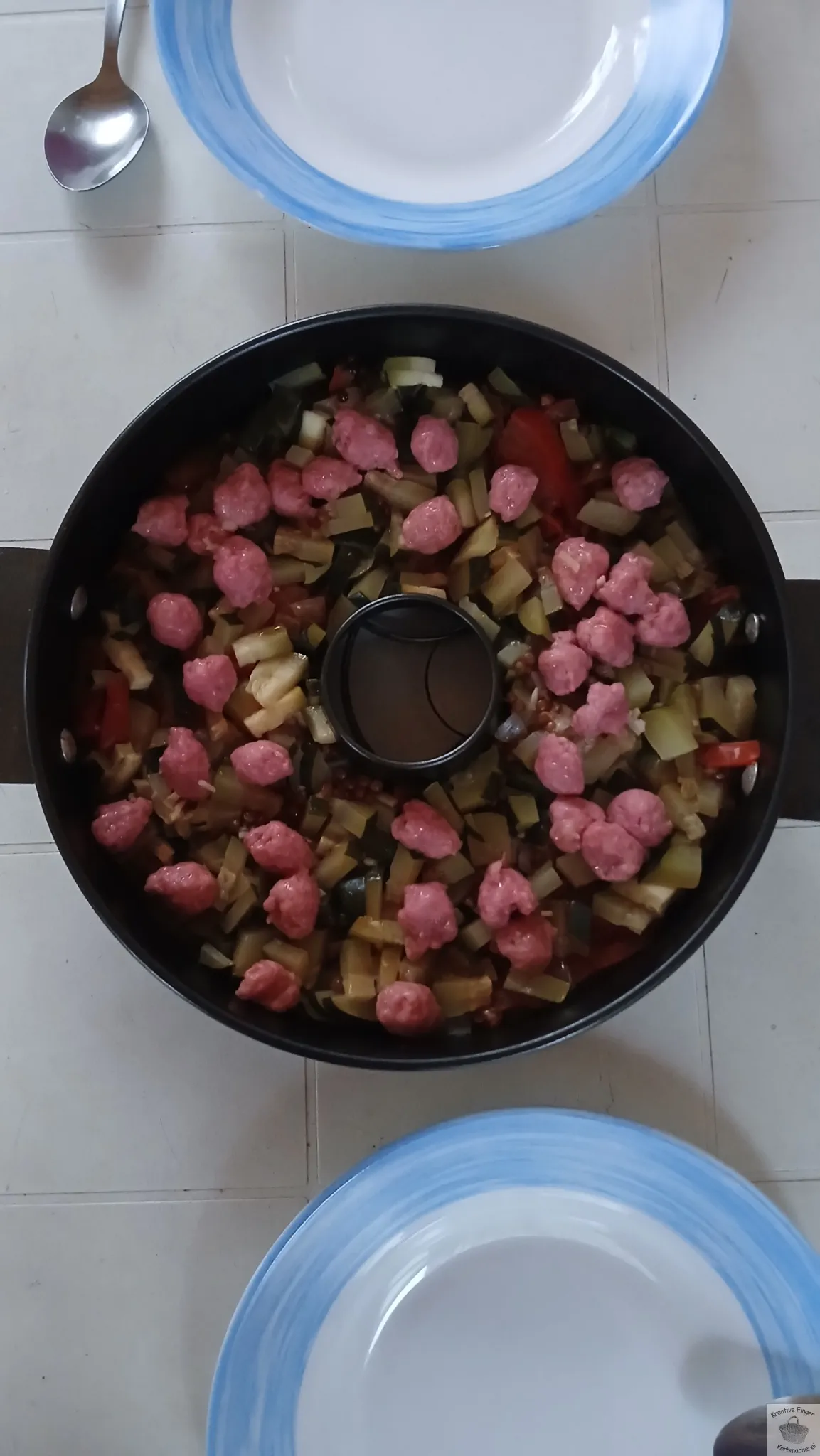
Can’t be done? Sure it can! With the Rocktrail, that is. And this is already the second cake of this holiday. The first one was a bit so-so, as nobody knew exactly which gas burner on the hob produced how many kW. As a result, the base turned out a bit too strong in flavour. We’re wiser now on our second attempt. The rear burners seem to be the right ones. So we mixed the second cake mix (yes, cake mix) with 3 eggs, a bit of milk and slices of 2 apples, popped it into the Rocktrail and left it on the hob for 60 minutes on the lowest heat. Delicious, and even more so when it’s still lukewarm. For 15 euros, it’s a really good alternative to much more expensive models, whose results aren’t actually any better in the end.
5 October 2026 – Washing machine, the beach and, at last, rain
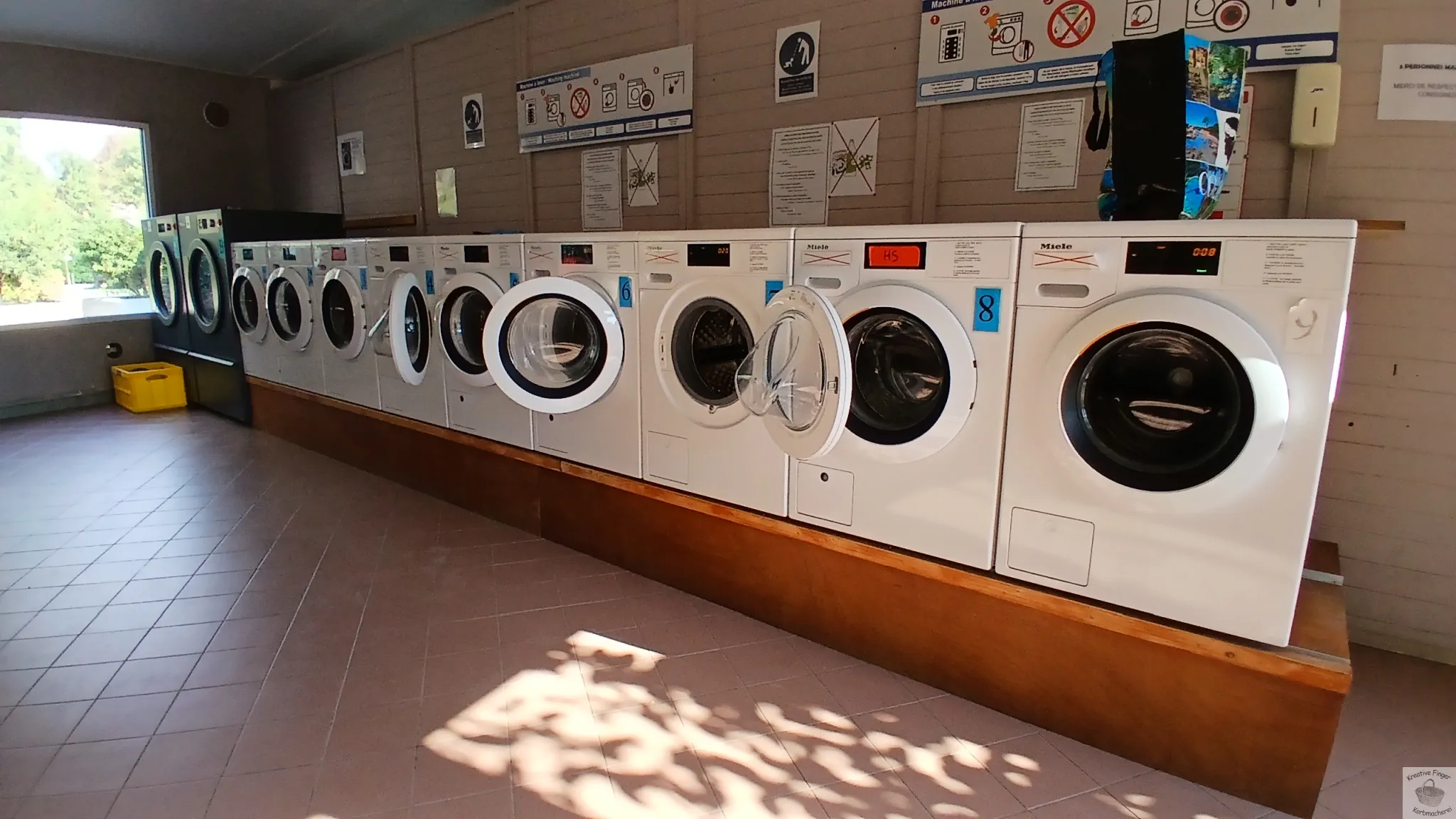
Laundry day. After breakfast, we headed straight to the launderette here at the campsite. The plan was to fill the washing machine, pay, and then wait for about 20 minutes. We spent that time chatting to a Swiss woman of our own age, swapping stories about Corsica, the campsite and all sorts of other topics. Rarely has a load of washing been done so quickly. Then it went straight into the tumble dryer and that was that.
We’d actually planned to go to the pool whilst the washing was on. But thanks to our chat with the lovely Swiss woman, we didn’t manage it. So we decided to go after the washing was done. But no such luck! The pool on the beach was already closed. That’s never happened in 20 years. And we really didn’t fancy the children’s paddling pool. So….
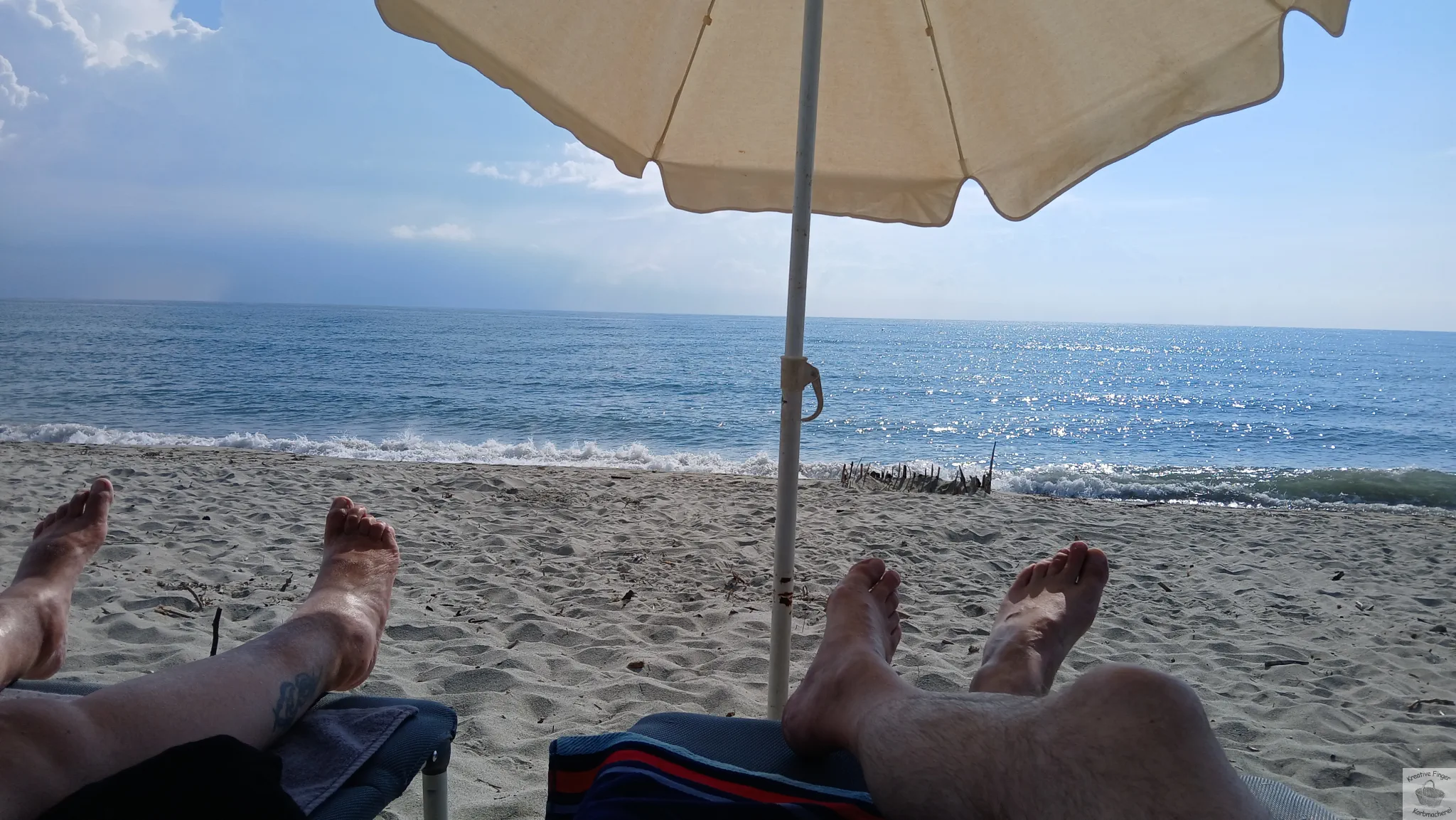
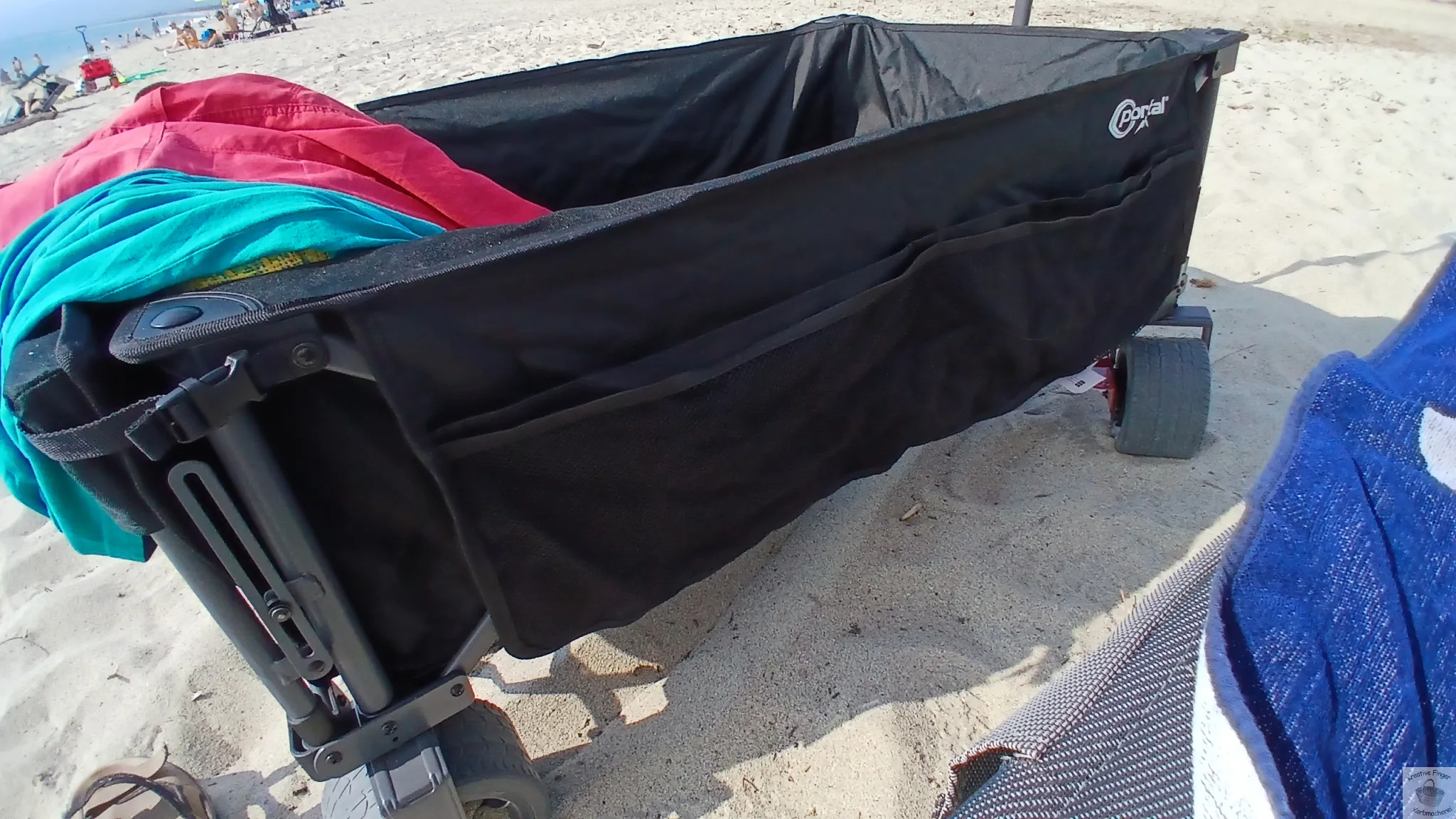
As we’re a bit of a lazy lot (not to say lazy), we naturally went by car. But with the sun shining and knowing we had sun loungers, a parasol and a handcart in the car, we quickly popped the laundry basket in the car, loaded up the handcart and off we went to the beach. This marked the handcart’s debut – we’d bought it ages ago and since then it’d just been sitting in the corner waiting to be put to use. Extra-wide tyres are supposed to make pushing it through the sand a breeze. Er, well. Perhaps when it’s not loaded. But with two sun loungers, a parasol and a beach bag, pushing it through the soft sand becomes a bit – or rather, significantly – more of a struggle. Never mind; it’s still better than lugging everything ourselves, especially as Ralf’s doing the hauling and pulling :-)
Come lunchtime, clouds rolled in, the wind picked up a bit, and we knew it would soon start to rain. So we packed everything up again, stowed it in the handcart, headed back to the car and off to the mobile home. Sitting comfortably on the terrace, we waited out the rain and the thunderstorm. There was frequent lightning and thunder, quite a bit of rain, and it looked set to keep showering on and off for the next few hours.
6 October 2026 – A brief guide to Corsican wines
When we drink wine, we tend to go for the ‘Lieblich’ variety. Unlike in Germany, French wine bottles don’t always state the level of sweetness on the labels. As a result, we’ve already tried a few wines that were advertised as ‘Lieblich’ but ultimately turned out to be very dry. We’re no wine connoisseurs, but it does have to be to our taste.
So we visited the wine section of the local supermarket’s website and used the AI to analyse the wines for ‘sweet’ options. And the result was surprising. Most of the wines were identified as rather dry. Only a few were labelled as ‘sweet’. So we took photos of the labels to search for precisely those wines that were supposedly in the range. Fat chance. Not a single one could be found.
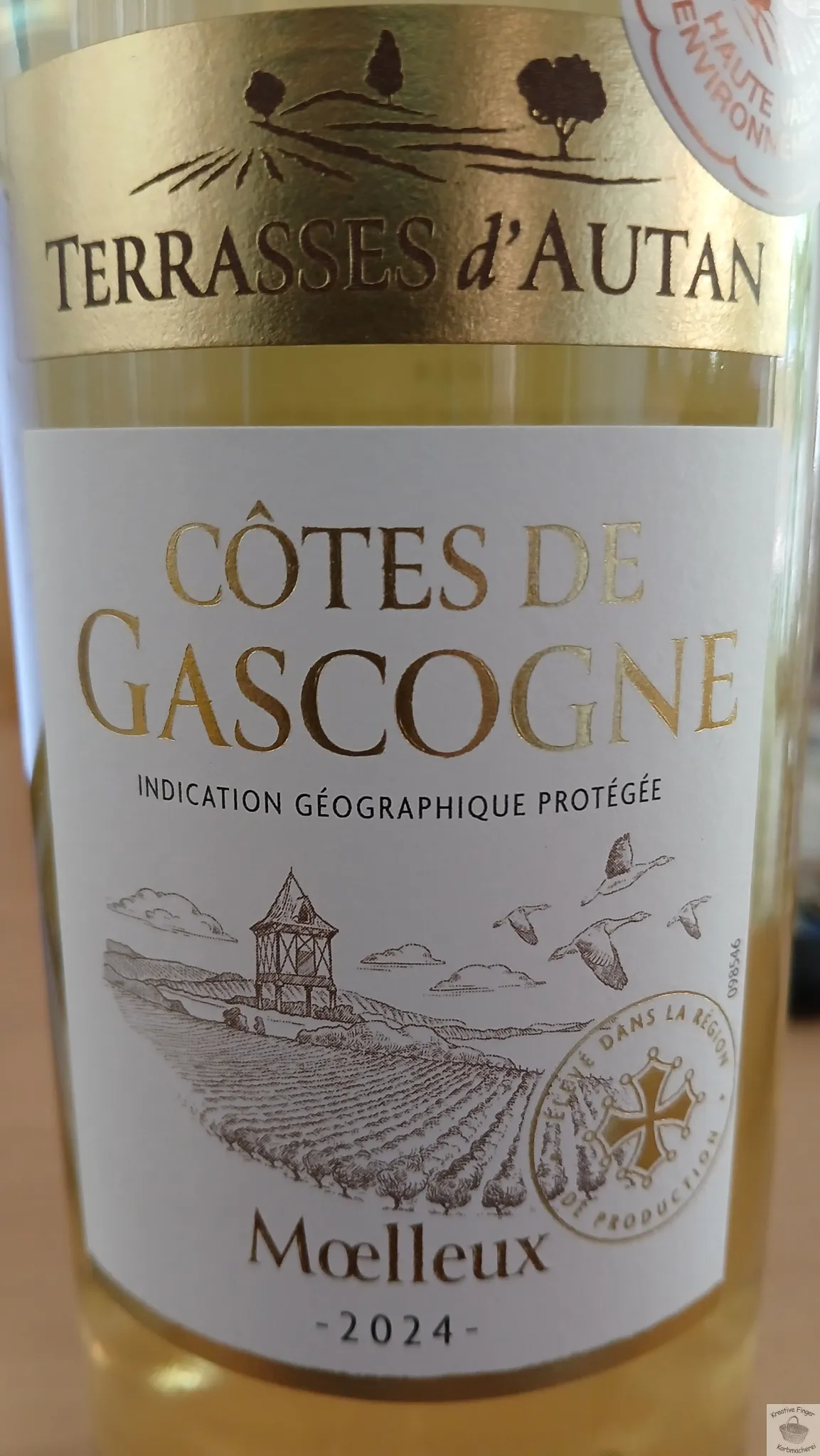
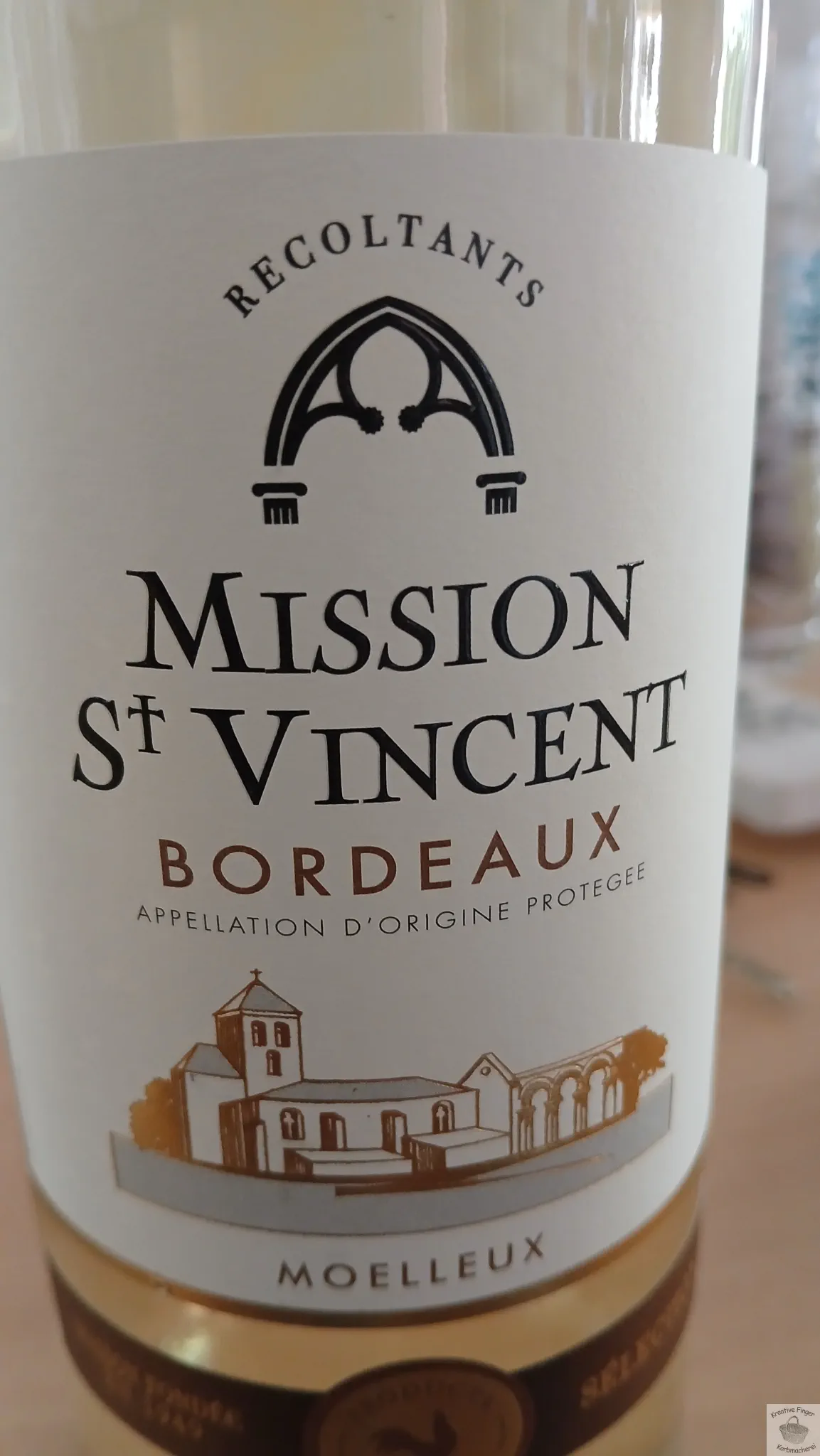
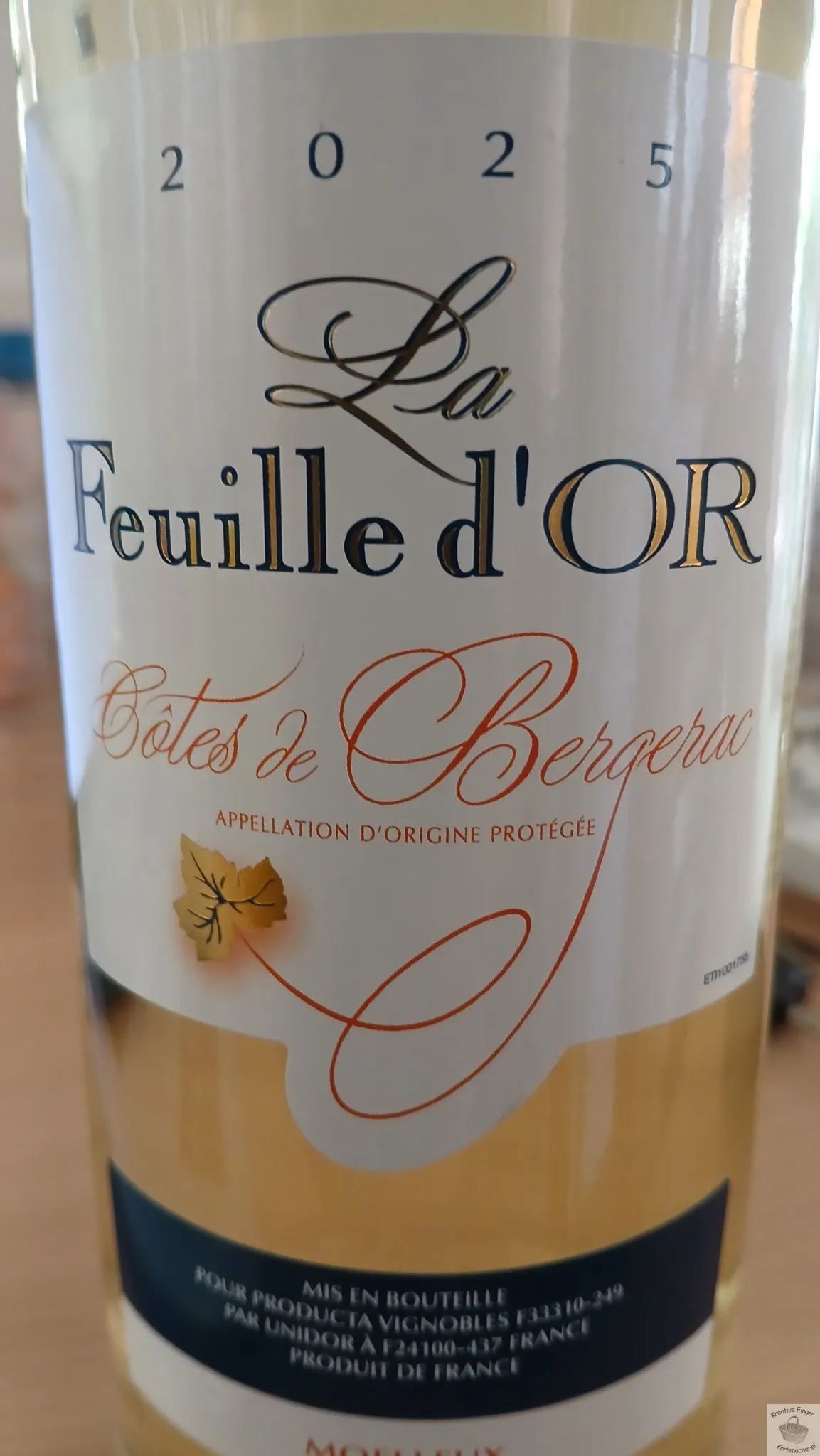
So we took a closer look at the wine shelves ourselves. After all, we know that the terms ‘Moelleux’ and ‘Doux’ suggest a sweet or semi-sweet profile. We then selected three different white wines and took them home for a private wine tasting.
- Terrasse d’Auttan Côtes de Gascogne – tasted and approved ****
- Mission St Vincent Bordeaux – tasted and approved ***
- Feuille d’Or Côtes de Bergerac – tried and approved ****
Unfortunately, the Corsican wines in the wine sections are dry across the board. Apparently, there are a few sweet ones here too. However, we haven’t been able to find them in shops so far.
The difference between our drinking habits (typically German) and those of the French lies in the drinking culture. In Germany, it’s quite common to simply have a glass of wine in the evening just for the sake of it. In France, wine is usually paired with food – as an aperitif, with the meal and with dessert. What’s completely out of the question in France is a sweet red wine; it’s always dry. Sweet red wines are exported to Germany, amongst other places. So you should bring them with you straight from home ;-)
7 October 2026 – Waiting for the storm
Is it coming or not? The forecast storm with lightning, thunder, hail and heavy rain? Whilst the sun has been shining here in Ghisonaccia since this morning, it is raining – in some places heavily – elsewhere on the island, and the west coast is being battered by strong winds. Even the Haute-Corse Prefecture issued a warning (as is customary here) this morning.
Now, at 3.30 pm, there’s no sign of the storm, which is expected to come from the west and affect the east side as well. Is there more to come, or will the storm strike overnight? We’ll probably only find out tomorrow.
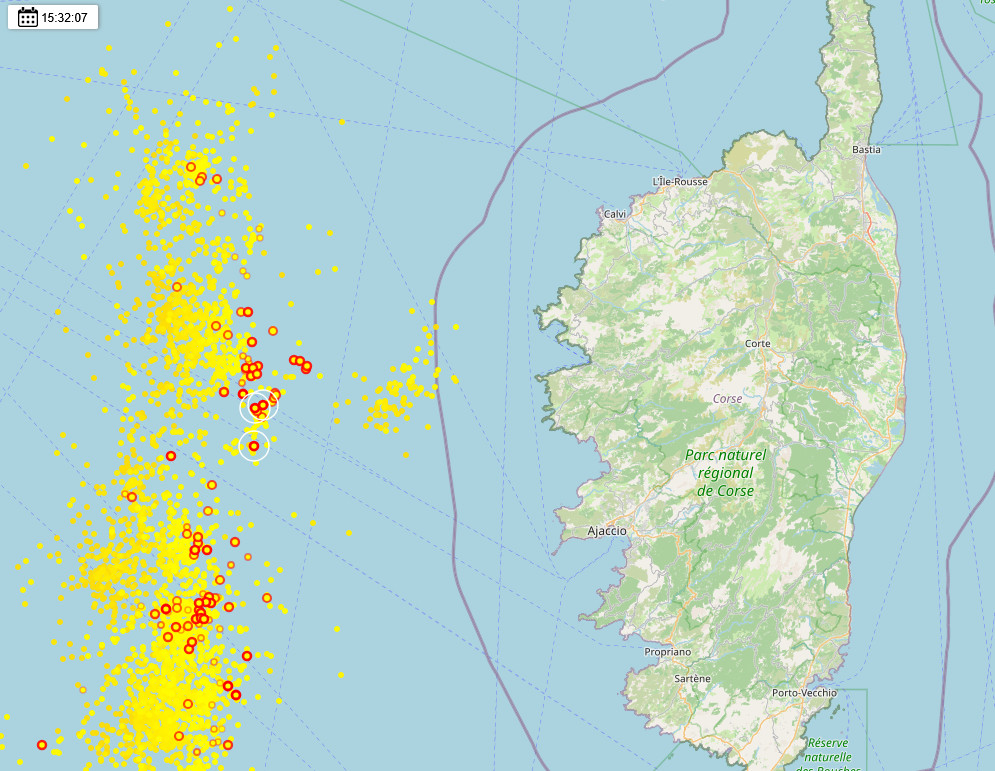
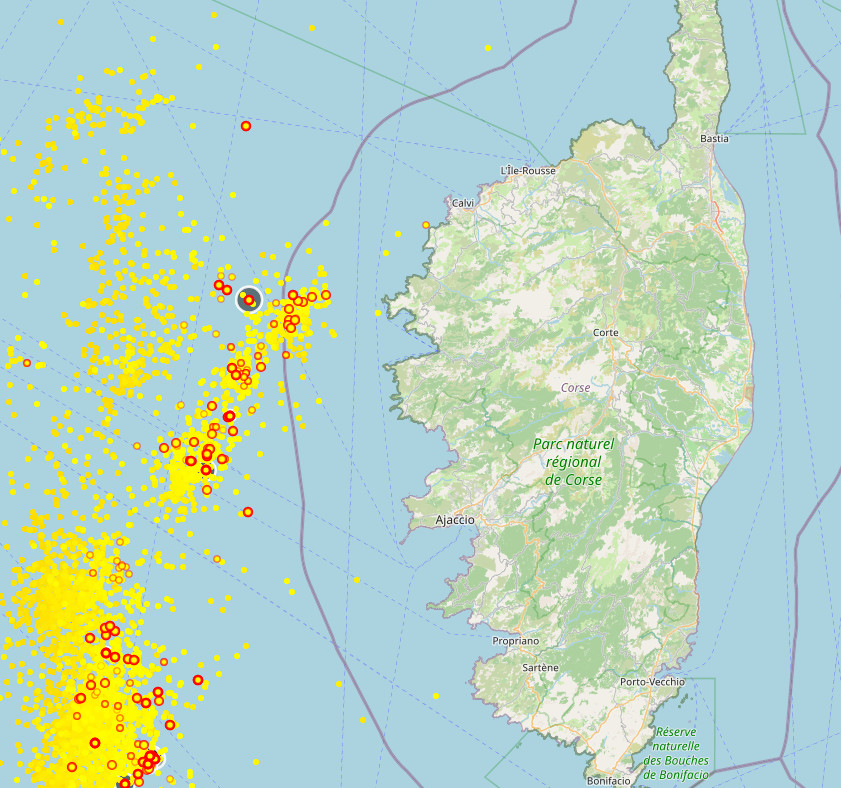
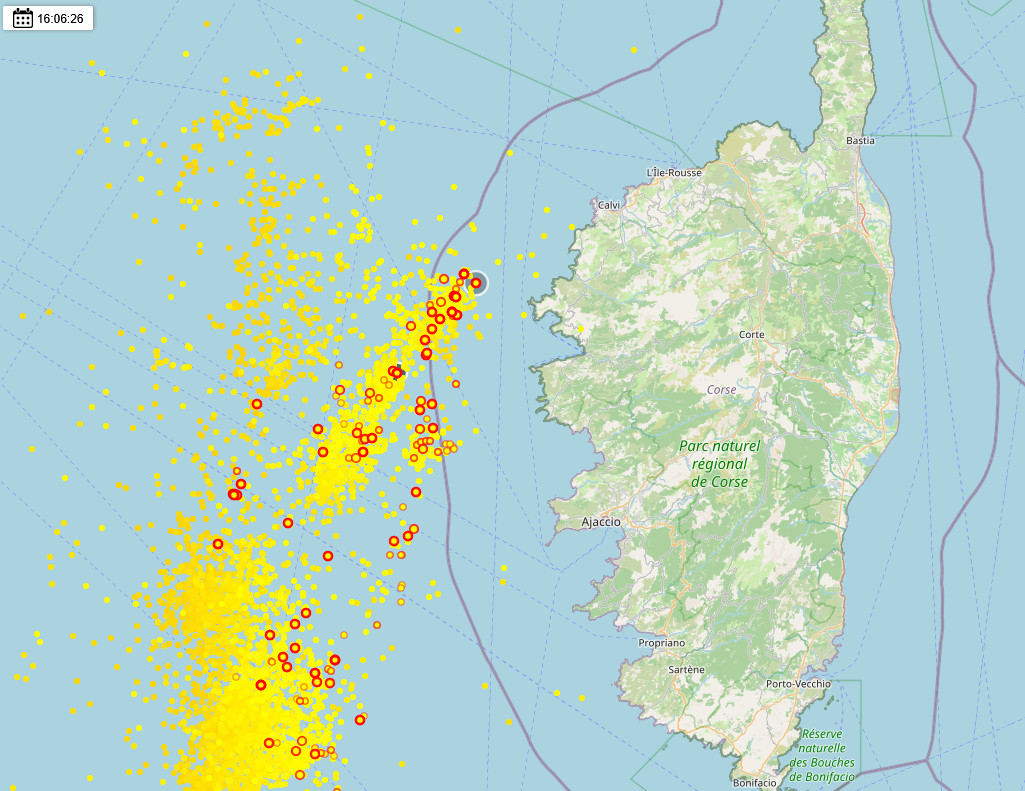
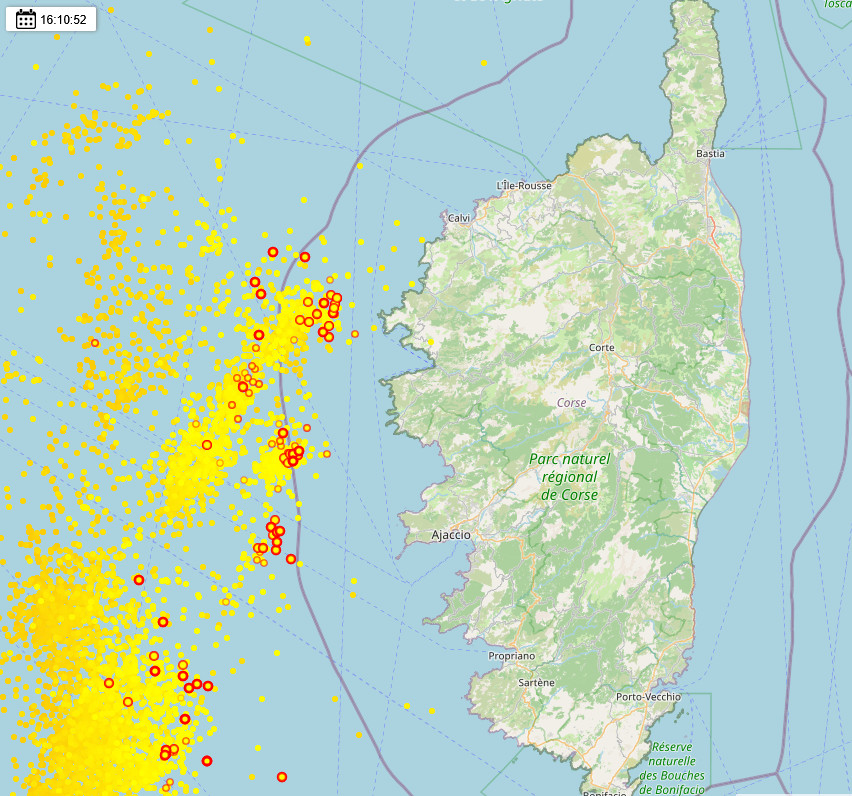
And even during the night, apart from the odd rain shower and a distant thunderstorm, it wasn’t as bad as forecast. The thunderstorm front moved swiftly across the island from west to east. We were lucky.
8 October 2026 – Changeable but dry weather
Whilst it’s pouring with rain in some parts of the island, it’s much drier here where we are. There were thunderstorms and rain during the night, but during the day it was a pleasant 26° with plenty of sunshine. We made a quick detour – or rather, an attempt – to get to ‘Les bungalows Lisa-Maria’. It was almost impossible, as there are no roads or paths leading there. And you can’t just plough straight across the field either. So it was a bit of a shot in the dark, which ended in a dead end. Back to the shops for some tartlets from the patisserie, picked up a few bits and bobs, then headed back to enjoy the sun for a little while longer.
In preparation for the end of our holiday, we fired up the barbecue again in the evening and grilled all the meat. So now we’ve got a few sausages left for our journey on Saturday. We also picked up some more wine and, in typical German fashion, simply had a glass in the evening – or two, or three. Because Pietra, the Corsican beer, hasn’t really been to my taste since we arrived.
9 October 2026 – Last proper day of the holiday
What do you do on the last proper day of your holiday? Get ready for tomorrow’s departure, tidy up, pack the travel bag, charge the power station (EcoFlow Delta2) for the cool box, and things like that. Food and drink are important too, of course. We picked up the latter yesterday – some grape juice from Gascony – and we barbecued the former last night. Plus croissants and other sweet treats.
As the campsite is closing tomorrow as well, we asked when we’d have to vacate our pitch. The answer was that the main gate at the entrance would be closed at 12:00. The thought immediately crossed both our minds: what if we didn’t leave until 12:05 and then had to – or rather, were allowed to – stay here because the gate was locked?
10 October 2026 – Start of the return journey
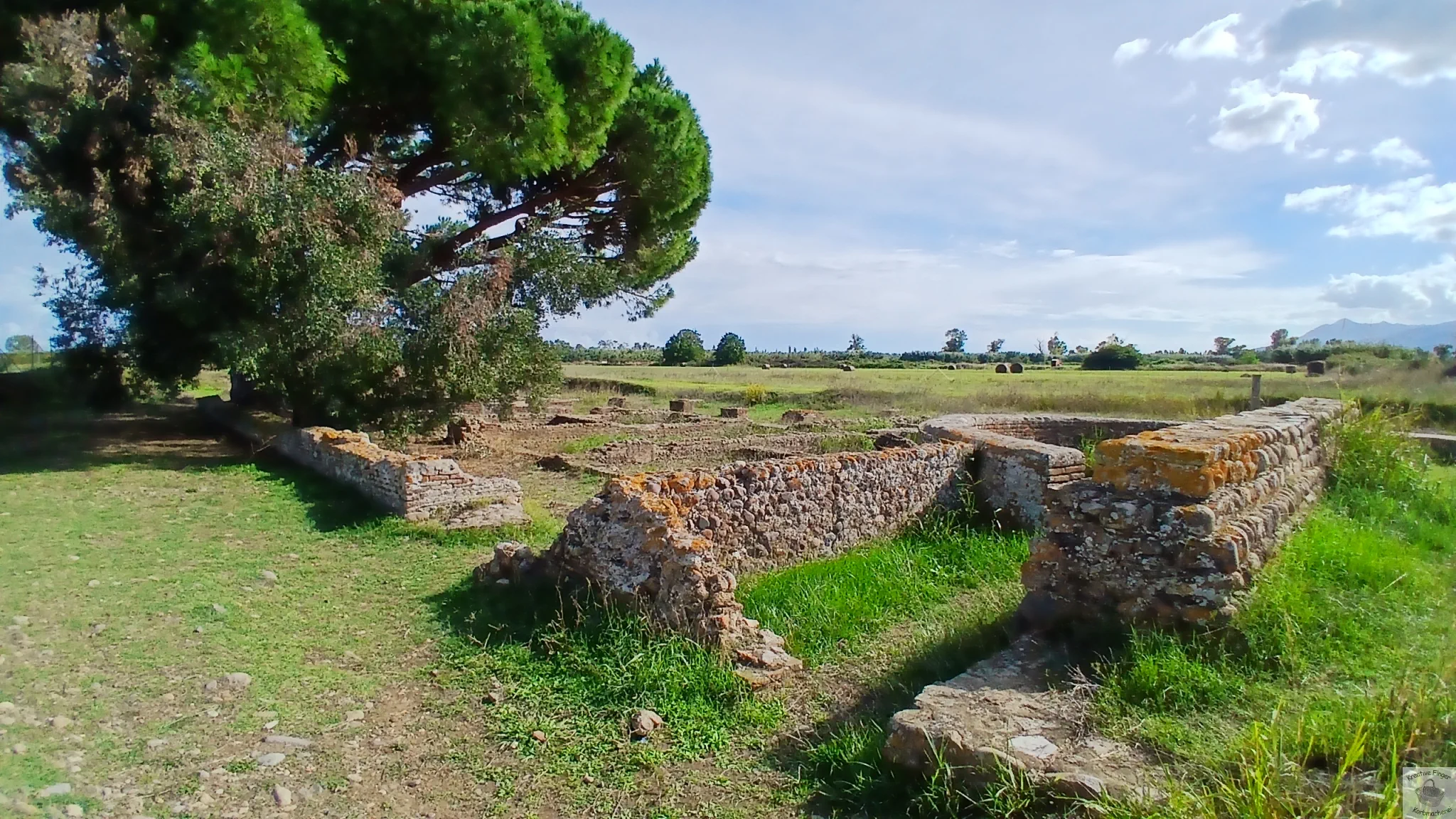
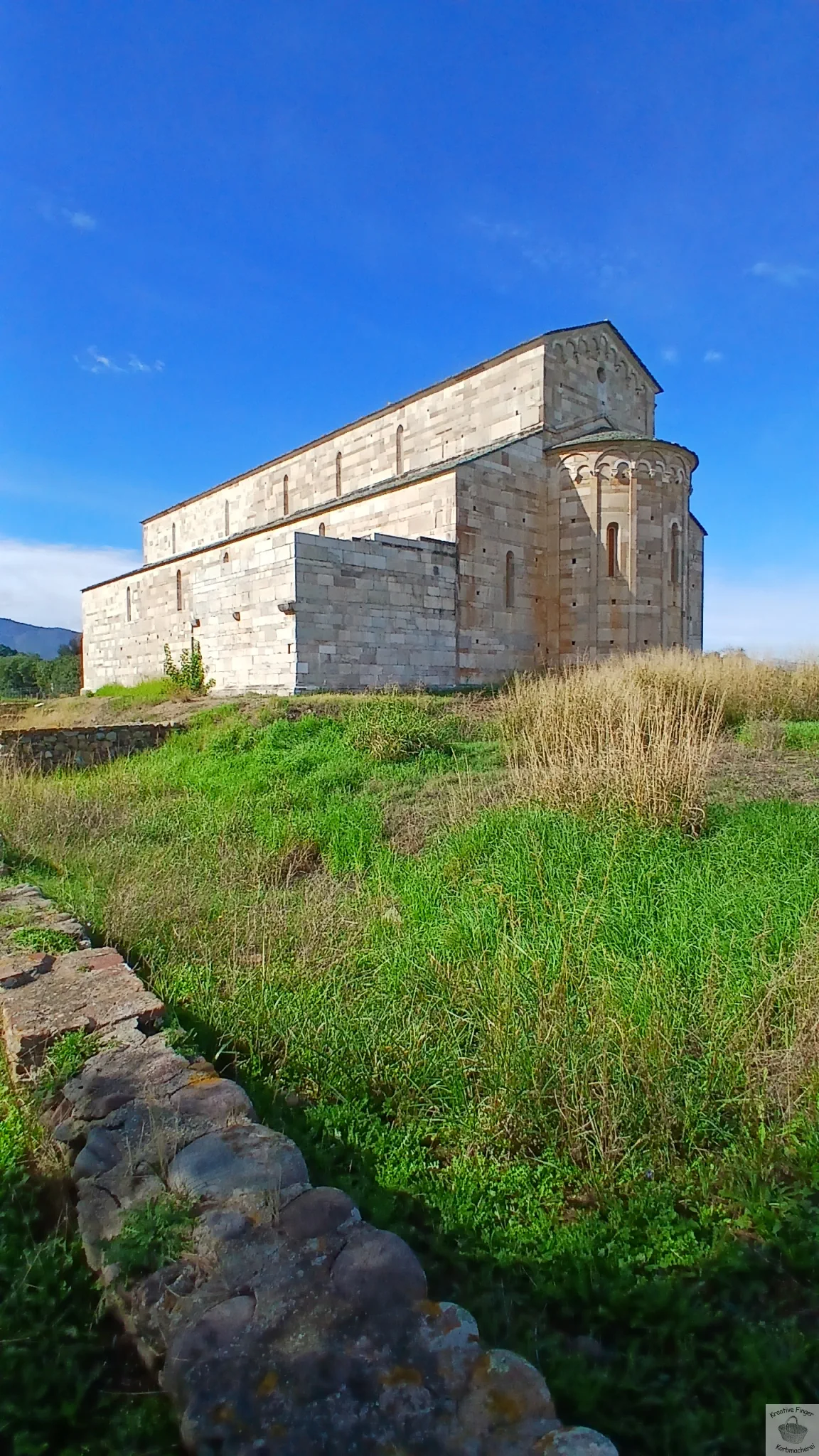
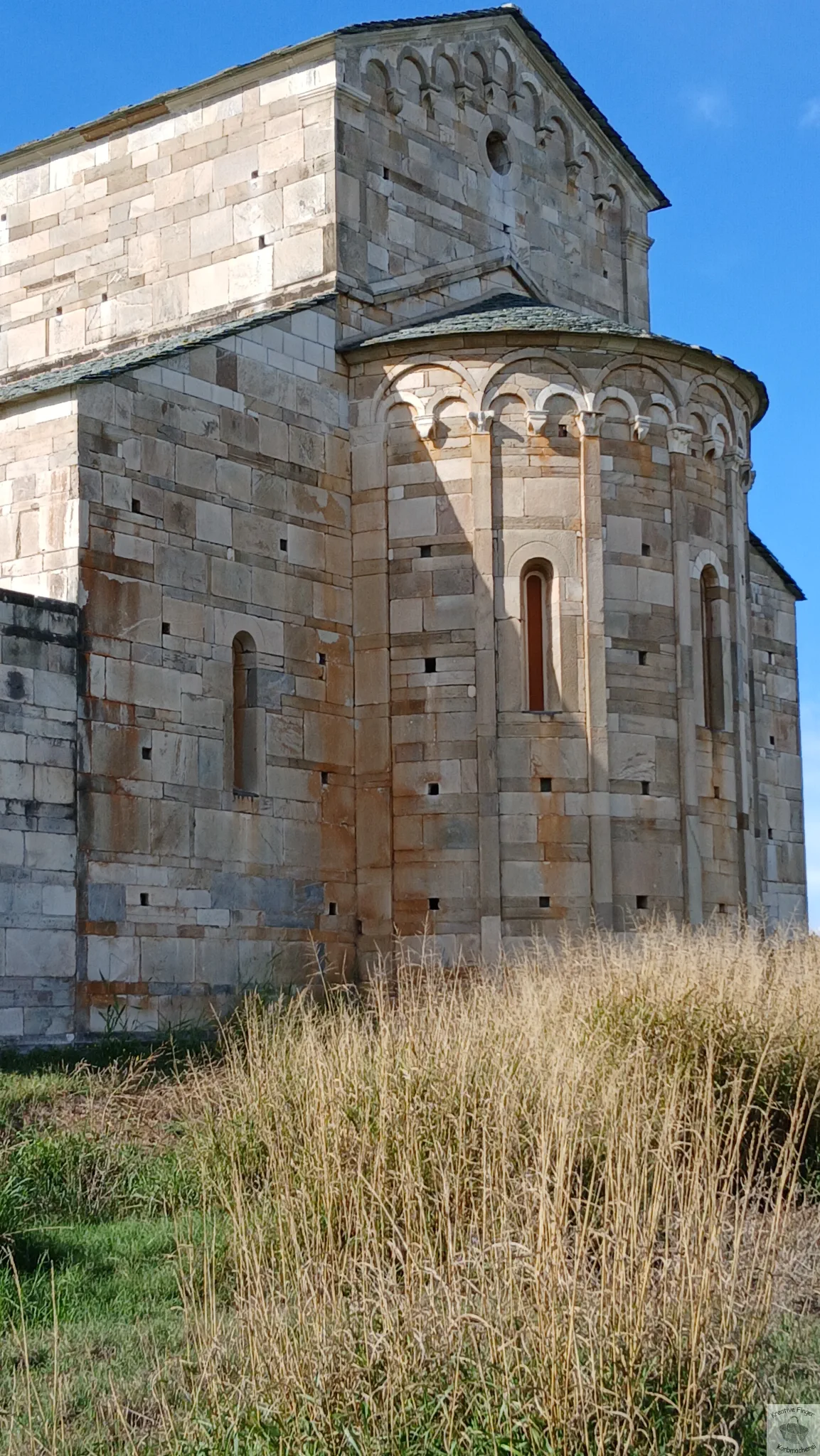
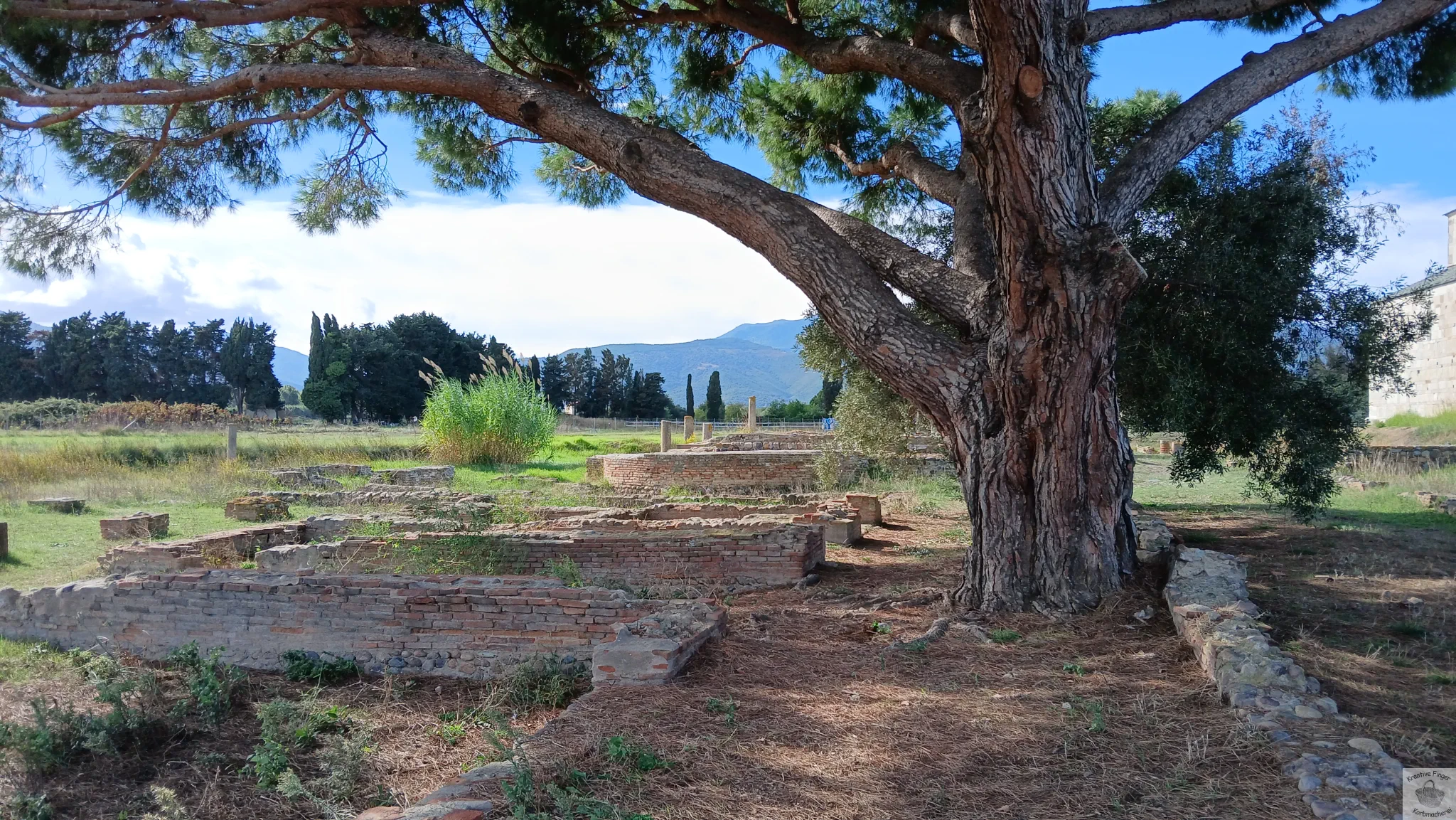
The plan was to have a lie-in and pack at a leisurely pace. We didn’t want to end the holiday in a rush. At around 11 o’clock, we set off towards Bastia. We stopped briefly at the beach in Alistro and then carried on to Plage de Marana. On the way, we saw that the gate to the Cathédrale de la Canonica (Cattedrale di Santa Maria Assunta) was open and decided on the spur of the moment to pop in, as it’s usually closed. It forms part of the Cité Romaine de Mariana site, an archaeological museum displaying remains of walls dating back to around 100 BC.
As preparations were underway inside the cathedral, we only had a quick look around so as not to disturb anyone.
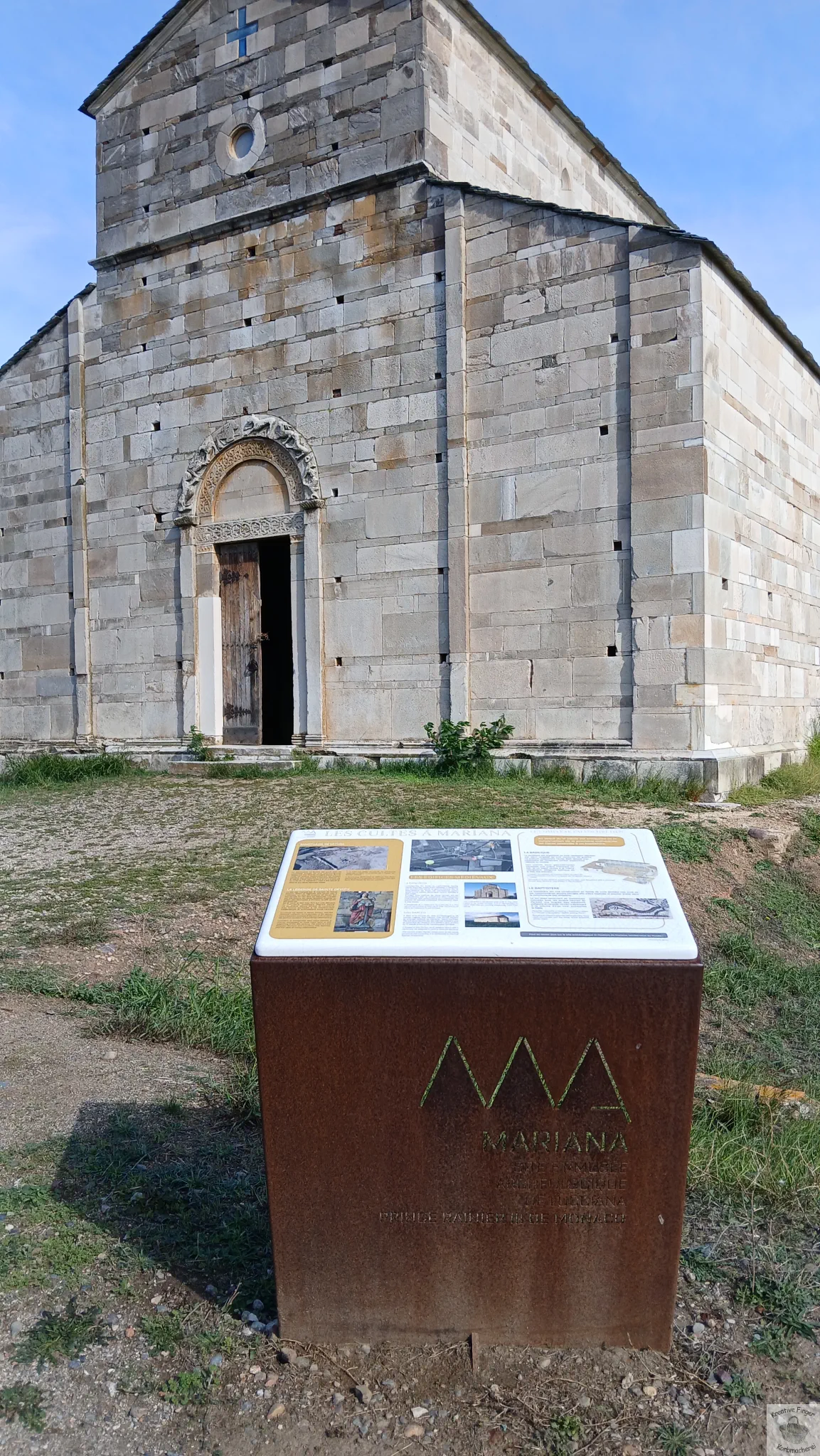
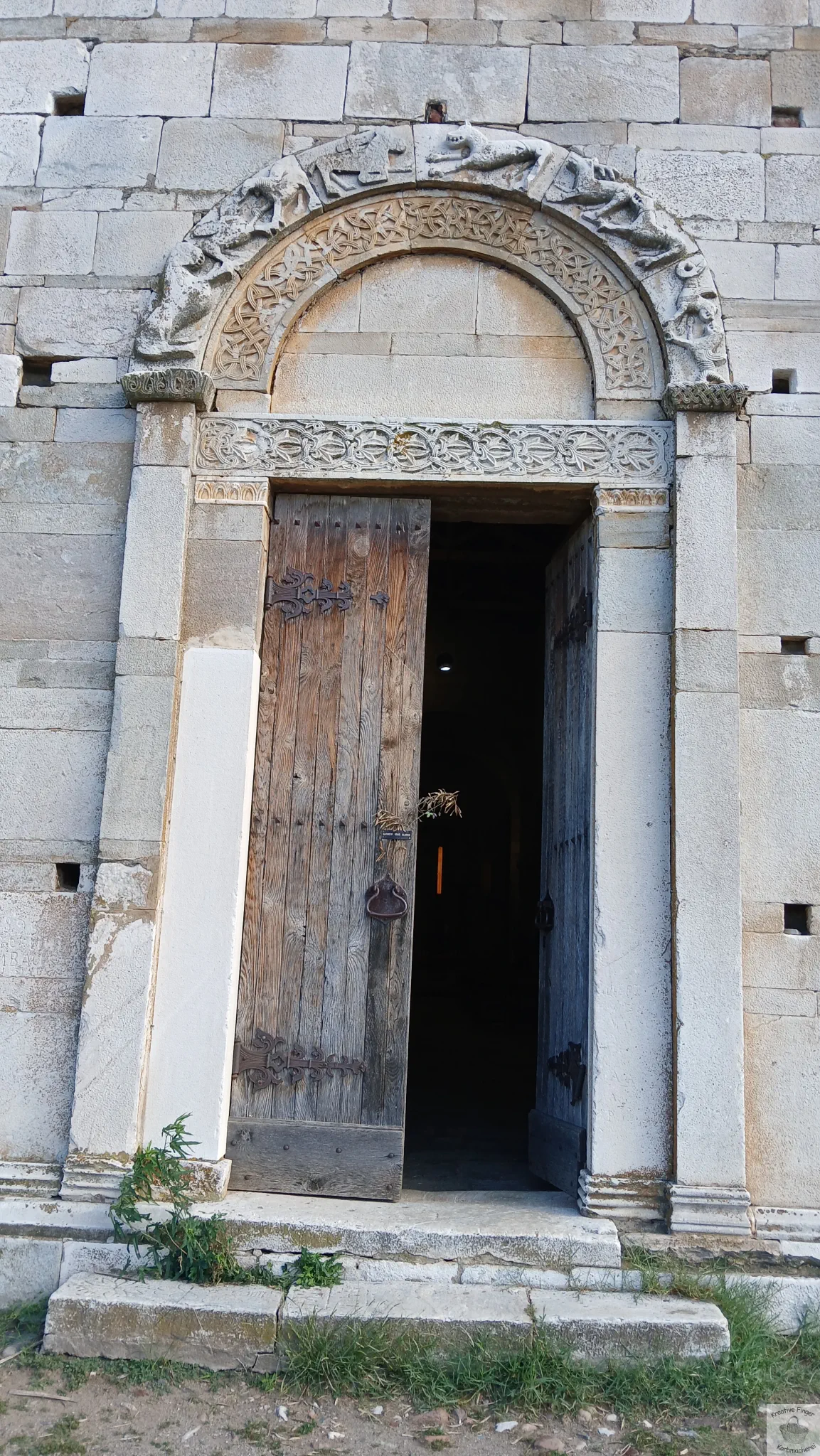
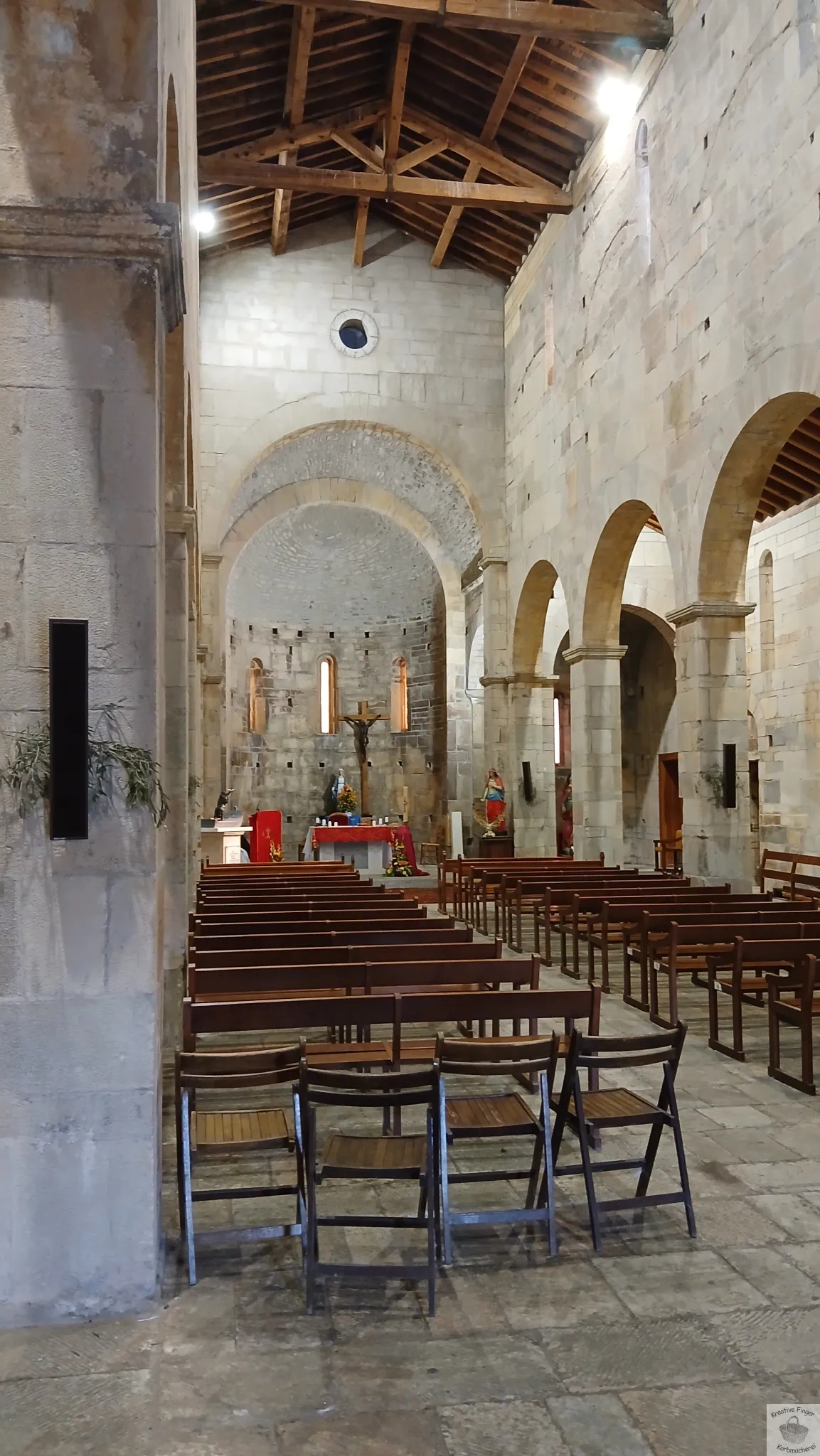
Below are the AI-generated translations of the texts on the display boards in front of the church.
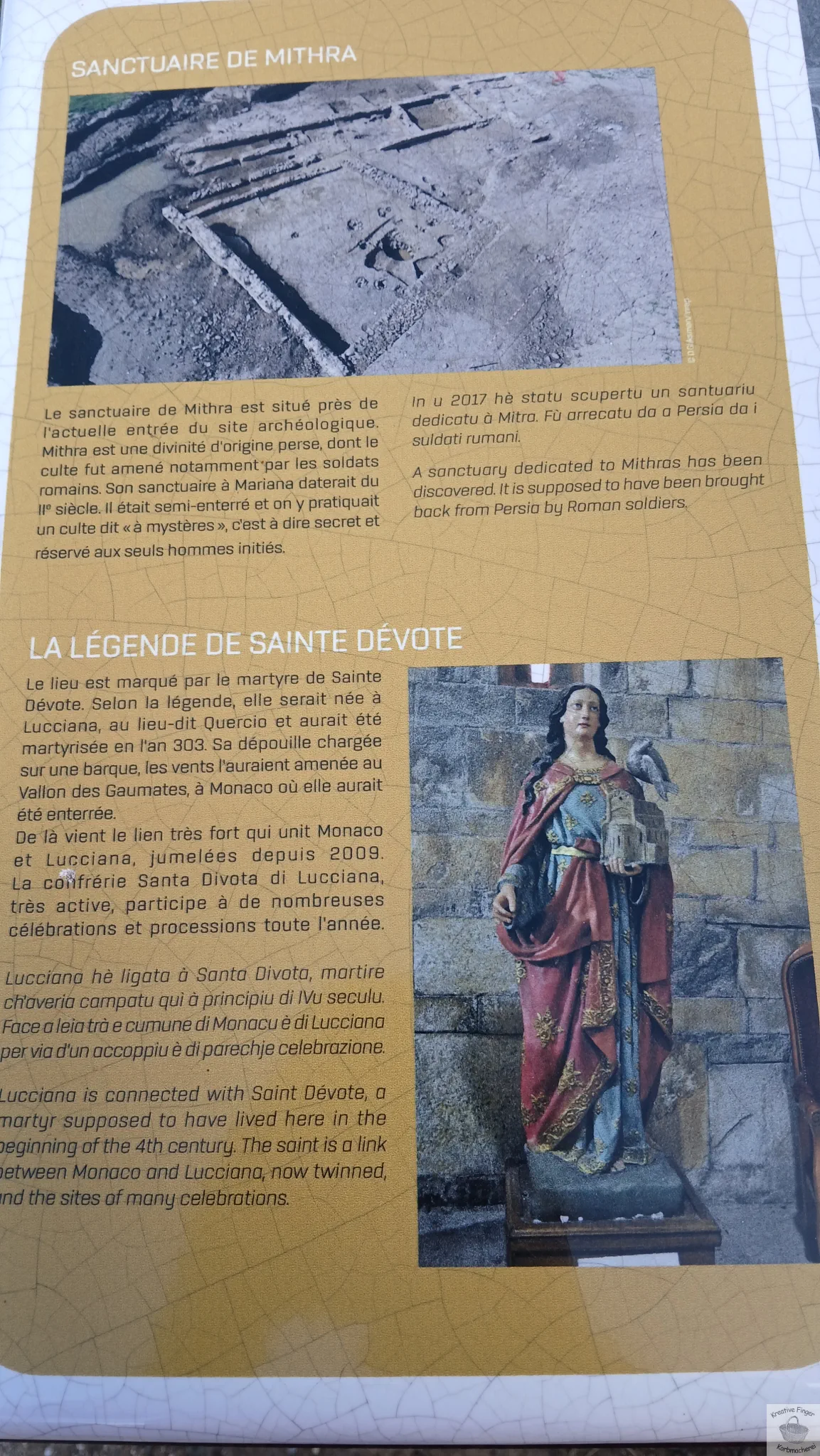
MITHRAIC SANCTUARY
The sanctuary of Mithras is located near the current entrance to the archaeological site. Mithras is a Persian deity whose cult was brought to France primarily by Roman soldiers. His sanctuary in Mariana dates back to the 1st century. It was situated partially underground and housed a so-called “mystery cult”—a secretive practice reserved exclusively for initiated men.
In 2017, a sanctuary dedicated to the god Mithras was discovered. It is believed to have been brought there from Persia by Roman soldiers.
A sanctuary dedicated to Mithras has been uncovered; it is thought to have been brought from Persia by Roman soldiers.
THE LEGEND OF SAINT DÉVOTE
This site is defined by the martyrdom of Saint Dévote. According to legend, she was born in the locality of Quercio, in Lucciana, and suffered martyrdom in the year 303. Her remains were placed on a ship and carried by the wind to Les Gaumates in Monaco, where she was laid to rest.
This marks the origin of the very close bond between Monaco and Lucciana, which have been twinned since 2009. The highly active Confraternity of Saint Dévote (Santa Divota) in Lucciana participates in numerous celebrations and processions throughout the year.
Lucciana is linked to Saint Dévote, a martyr who is said to have lived here at the beginning of the 4th century. She serves as a connecting link between the communities of Monaco and Lucciana, which are now partner towns and the setting for various commemorative events.
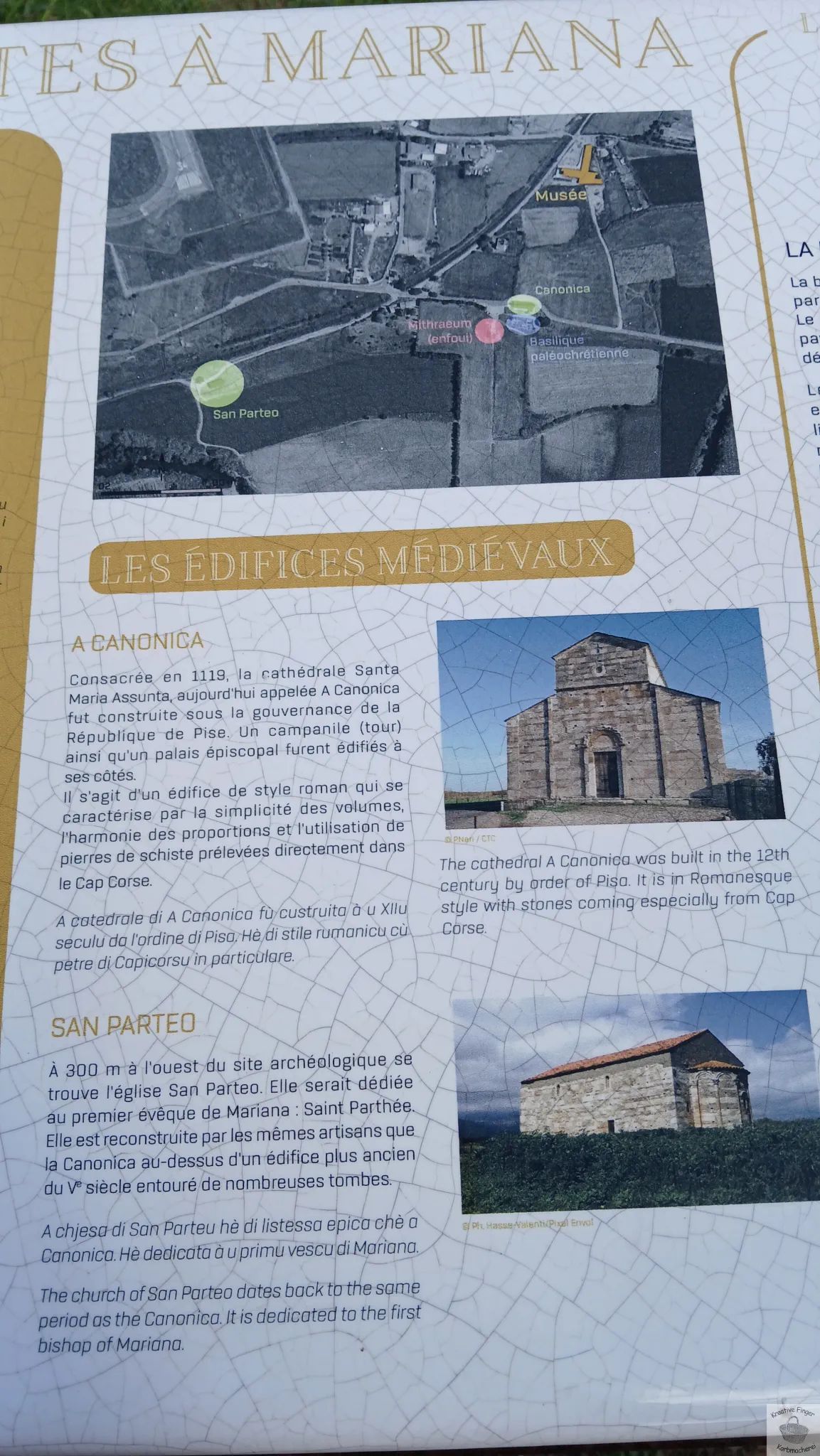
MEDIEVAL BUILDINGS
AT CANONICA
The Cathedral of Santa Maria Assunta, now called A Canonica, consecrated in 1119, was built under the rule of the Republic of Pisa. A bell tower and a bishop’s palace were built next to it.
It is a building in Romanesque style, characterized by the simplicity of its forms, the harmony of its proportions and the use of slate stones from Cap Corse.
The Cathedral of A Canonica was built by the Pisan Order in the 11th century. It is in the Romanesque style and consists primarily of stones from Cap Corse.
The Cathedral A Canonica was built in the 12th century on behalf of Pisa. It is in the Romanesque style, with the stones mainly coming from copies.
HOLY PARTHEUS
300 meters west of the archaeological site is the church of San Parteo. It is said to be dedicated to the first bishop of Mariana, Saint Partheus. It was built by the same craftsmen as the Canonica on an older 5th century structure surrounded by numerous tombs.
The church of Son Parteu dates from the same period as the canonical church. It is dedicated to the first bishop of Mariana.
The church of San Parteo dates from the same period as the Canonica. It is dedicated to the first bishop of Mariana
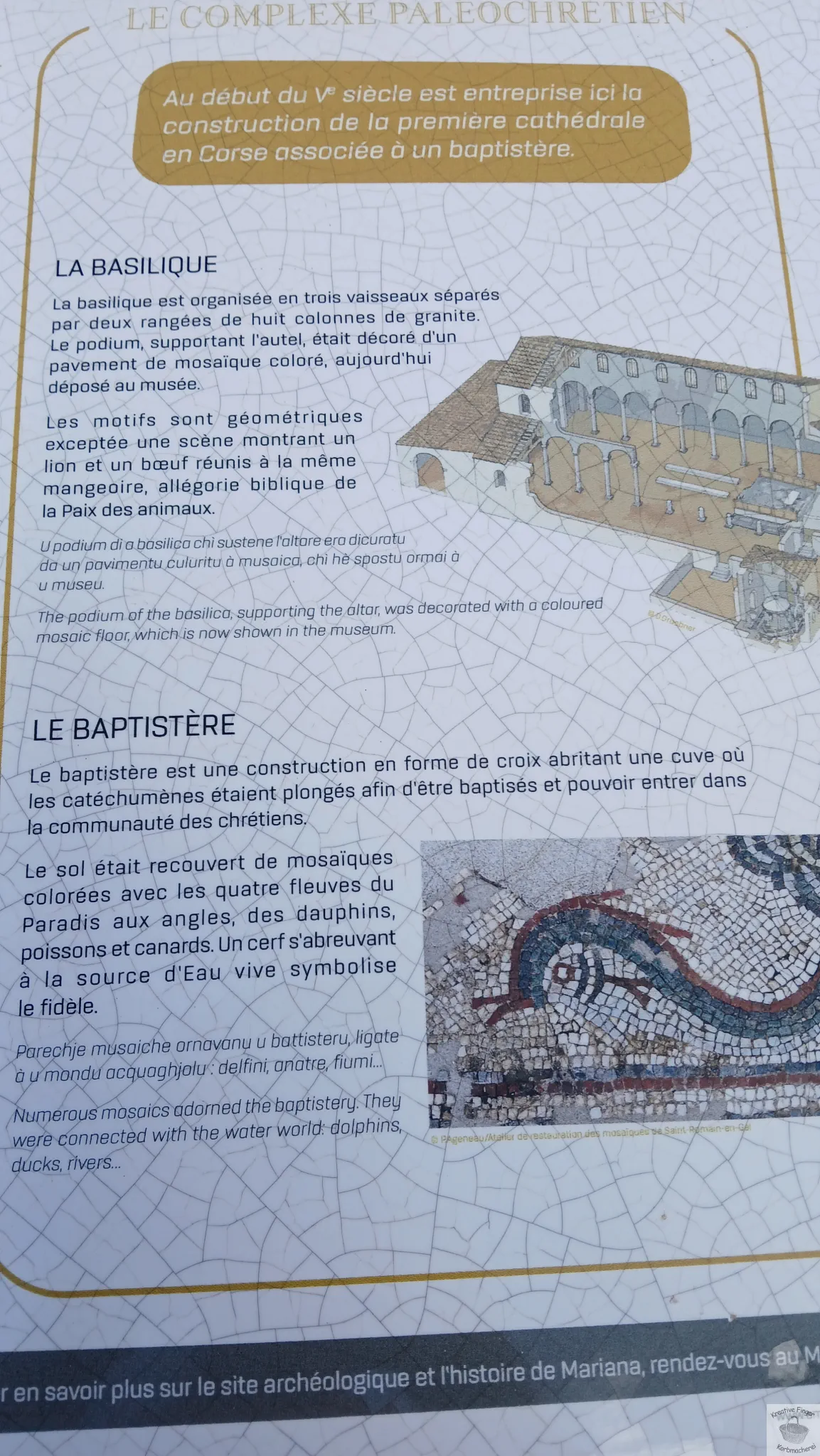
THE EARLY CHRISTIAN COMPLEX
At the beginning of the 5th century, construction began here on the first cathedral in Corsica, along with an accompanying baptistery.
THE BASILICA
The basilica is divided into three naves, separated by two rows of eight granite columns each. The podium supporting the altar was decorated with a colorful mosaic floor, which is now housed in the museum.
The motifs are geometric, with the exception of one scene depicting a lion and an ox together at the same manger—a biblical allegory of peace among animals.
The podium of the basilica, where the altar stands, was adorned with a colorful mosaic floor that can now be seen in the museum.
The podium of the basilica, which supported the altar, was decorated with a colorful mosaic floor that is now on display in the museum.
The Baptistery
The baptistery is a cross-shaped structure containing a basin where catechumens were immersed to be baptized and welcomed into the Christian community.
The floor was covered with vibrant mosaics; in the corners, they depicted the four rivers of Paradise, as well as dolphins, fish, and ducks. A stag drinking from the spring of living water serves as a symbol for the faithful.
The baptistery was adorned with numerous mosaics centered on the theme of water: dolphins, ducks, and rivers.
The baptistery was embellished with many mosaics, all relating to the aquatic realm—featuring dolphins, ducks, rivers, and more.
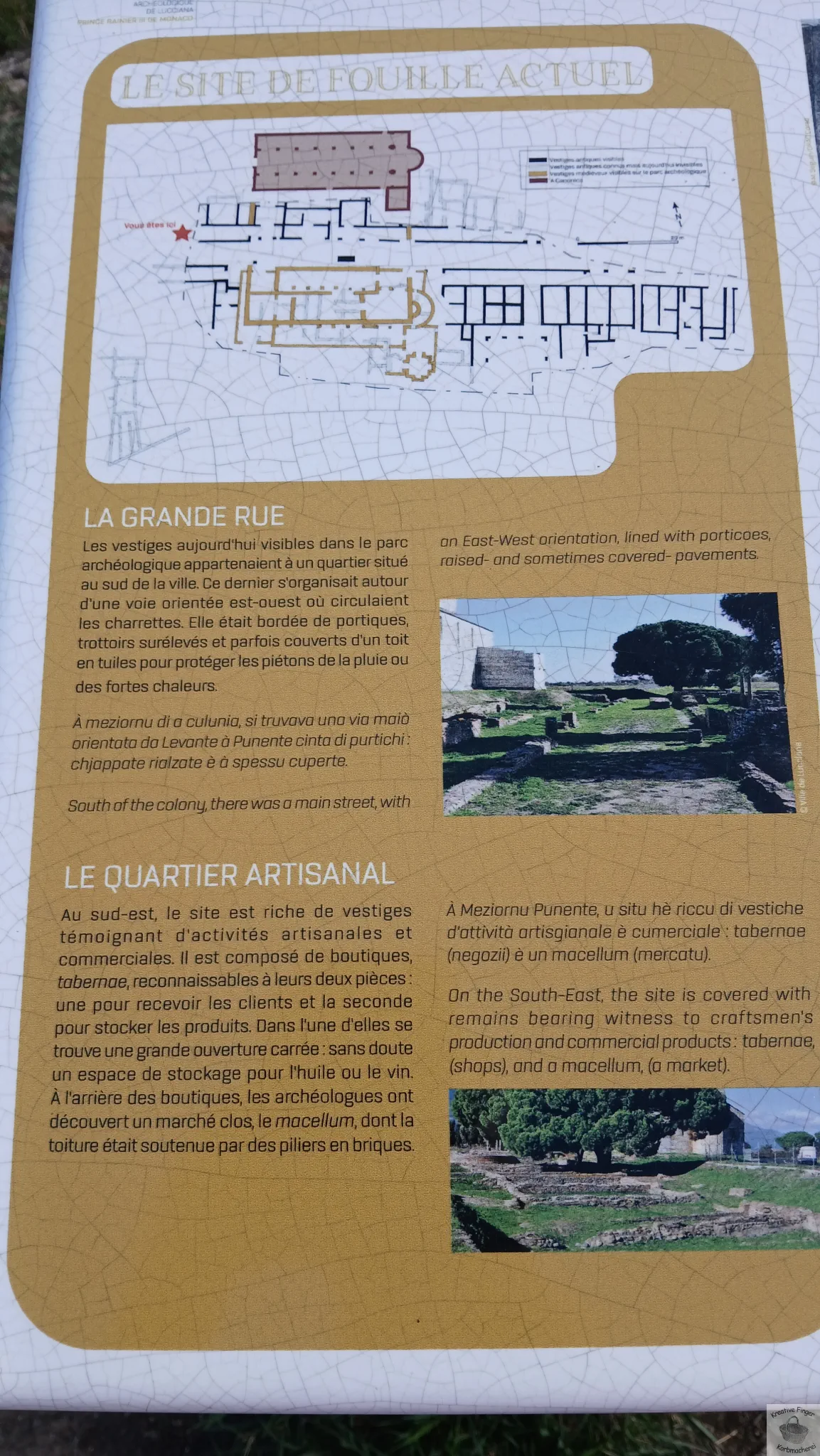
THE CURRENT EXCAVATION SITE
THE MAIN STREET
The remains visible today in the archaeological park belonged to a district located in the southern part of the city. This district was laid out around a thoroughfare for carts that ran in an east-west direction. It was lined with porticoes—elevated walkways, some of which were roofed with tiles to provide protection from rain and heat.
A main street ran from east to west along the southern edge of the colony, flanked by colonnades—elevated, and in some cases roofed, covered walkways.
THE ARTISAN QUARTER
In the southeastern part of the site, there are numerous remains that bear witness to artisanal and commercial activities. These include shops, known as tabernae, which can be identified by their two-room layout: one space for receiving customers and another for storing goods. One of these rooms features a large square opening, likely used for the storage of oil or wine. Behind the shops, archaeologists discovered
a covered market hall, or macellum, the roof of which was supported by brick pillars.
In the southwestern area, the site is rich in traces of artisanal and commercial activity, including tabernae (shops) and a macellum (market).
In the southeastern area, the site contains remains that attest to artisanal production and commercial trade: tabernae (shops) and a macellum (market).
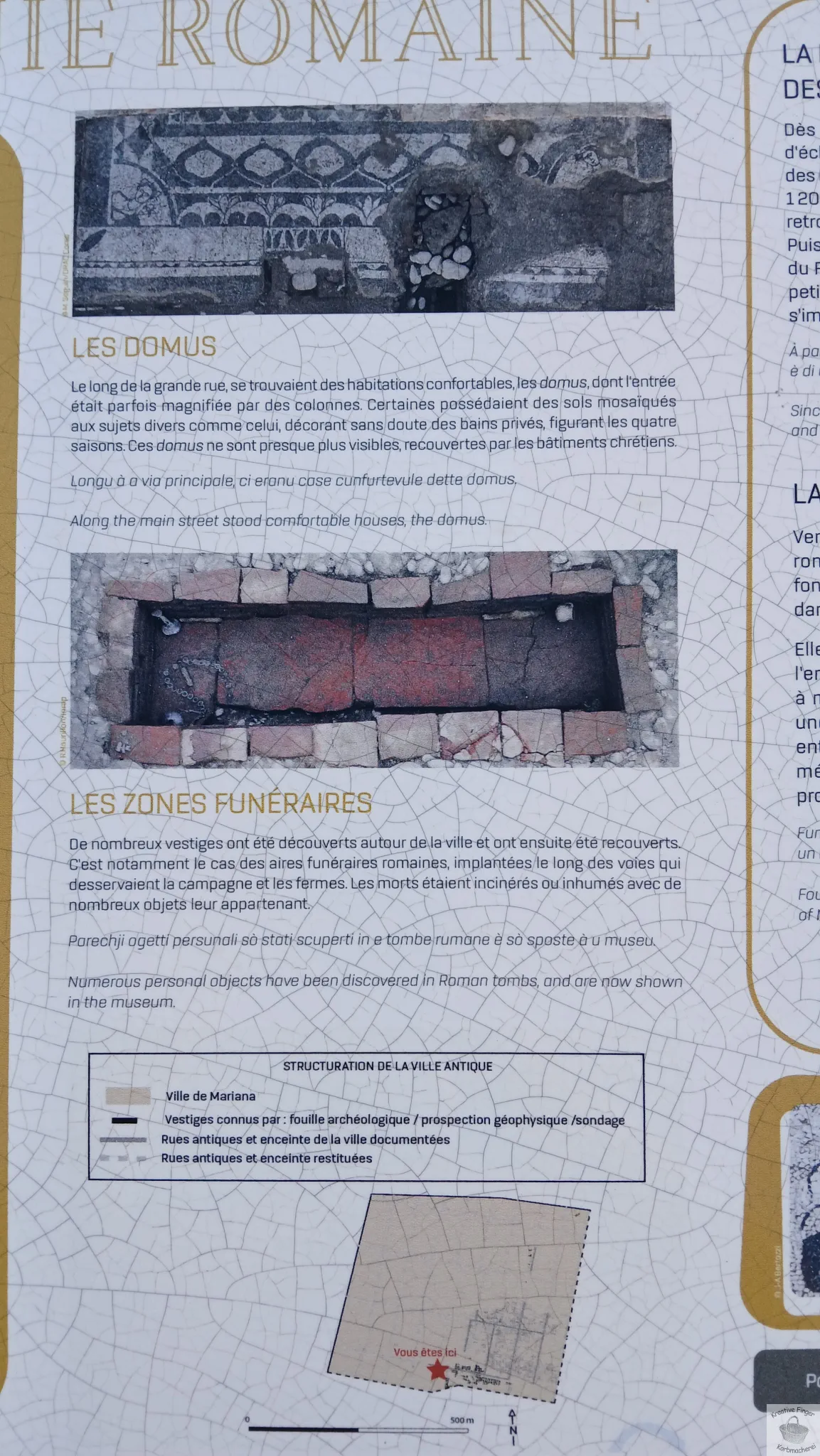
THE ROMANS
HOMES
Along the main street stood comfortable houses, known as domus, with entrances sometimes adorned by columns. Some featured mosaic floors with various motifs—including depictions of the four seasons—which likely decorated private bathing areas. Today, these domus are almost entirely concealed by Christian structures.
Along the main street stood comfortable dwellings, known as domus.
Along the main street stood comfortable houses, known as domus.
Burial Grounds
Numerous remains have been discovered around the city, though they were subsequently reburied. This is particularly true of the Roman cemeteries located along the rural roads that once provided access to the surrounding fields and farms. The deceased were either cremated or buried alongside many of their personal possessions.
Many personal items have been discovered in Roman graves and are now on display in the museum.
Numerous personal items were discovered in Roman graves and are currently exhibited in the museum.
Structure of the Ancient City
City of Mariana
Remains identified via: archaeological excavation / geophysical survey / core drilling
Ancient streets and documented city walls
Ancient streets and reconstructed city walls
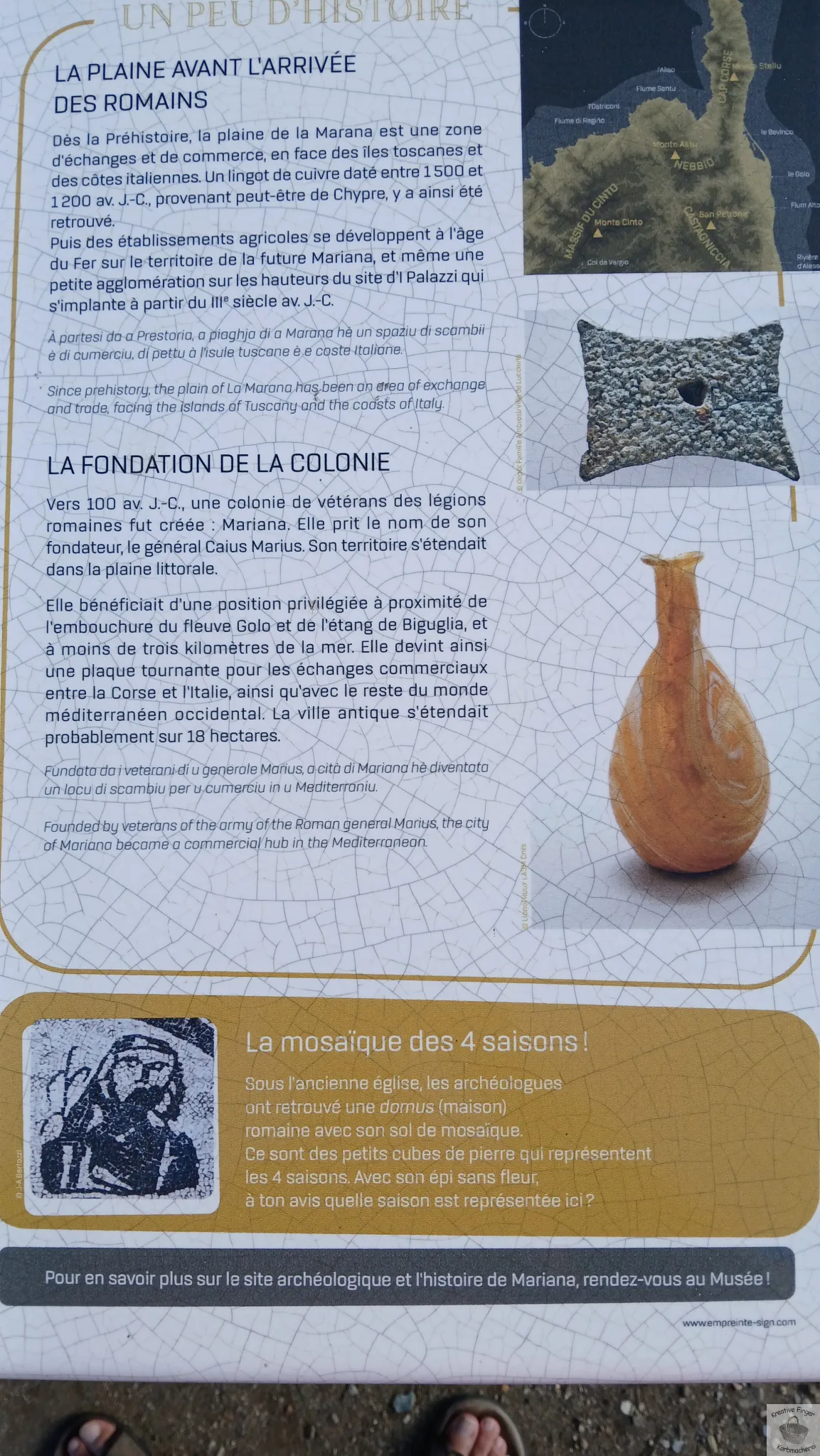
A BRIEF HISTORY
THE PLAIN BEFORE THE ARRIVAL OF THE ROMANS
Since prehistoric times, the plain of Marana served as a trading hub facing the Tuscan islands and the Italian coast. A copper ingot, dating from between 1500 and 1200 BC—possibly originating from Cyprus—was discovered there.
Later, during the Iron Age, agricultural settlements emerged in the area that would eventually become Mariana; a small settlement was also established on the heights of the site known as “I Palazzi,” dating from the 3rd century BC onwards.
From prehistoric times, the plain of Marana functioned as a commercial and trading zone, situated opposite the Tuscan islands and the Italian coast.
Since the prehistoric era, the plain of Marana has been a trading post facing the islands of Tuscany and the coasts of Italy.
THE FOUNDING OF THE COLONY
Around 100 BC, a colony for veterans of the Roman legions was established at Mariana. It took the name of its founder, General Gaius Marius. Its territory extended across the coastal plain.
The city enjoyed a privileged location near the mouth of the Golo River and the Biguglia Lagoon, less than three kilometers from the sea. Consequently, it developed into a commercial hub connecting Corsica with Italy and the rest of the western Mediterranean. The ancient city is estimated to have spanned 18 hectares.
Founded by veterans of General Marius, the city of Mariana evolved into a trading post for commerce throughout the Mediterranean.
The city of Mariana was established by veterans from the army of the Roman General Marius and grew into a commercial hub within the Mediterranean region.
The Mosaic of the Four Seasons! Beneath the old church, archaeologists discovered a Roman house (domus) with a mosaic floor. The mosaics are composed of small stone cubes (tesserae) that depict the four seasons. Which season is symbolized here by the absence of a blossom on the ear of corn?
To learn more about the archaeological site and the history of Mariana, visit the museum!
www.empreinte-sign.com
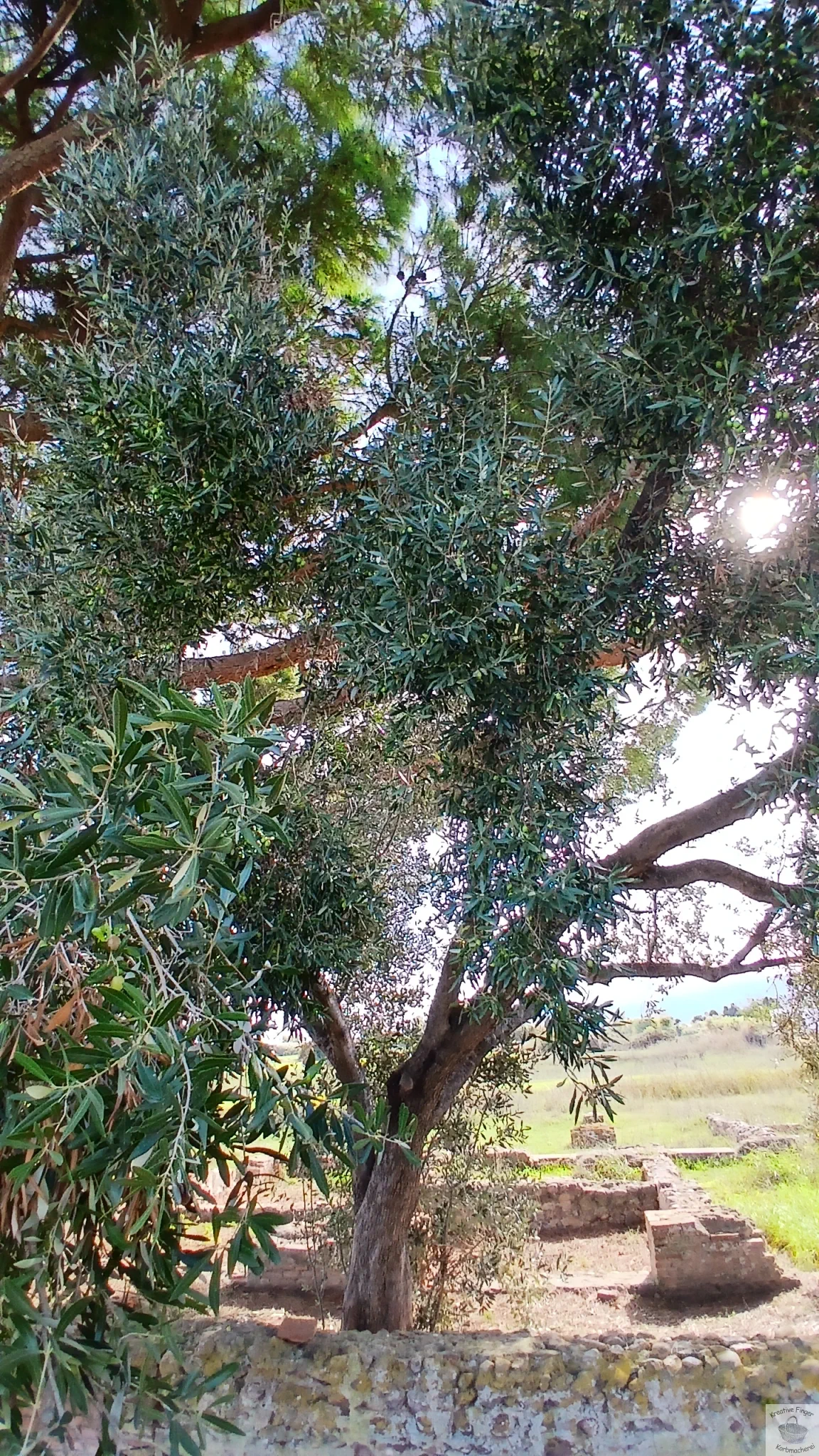
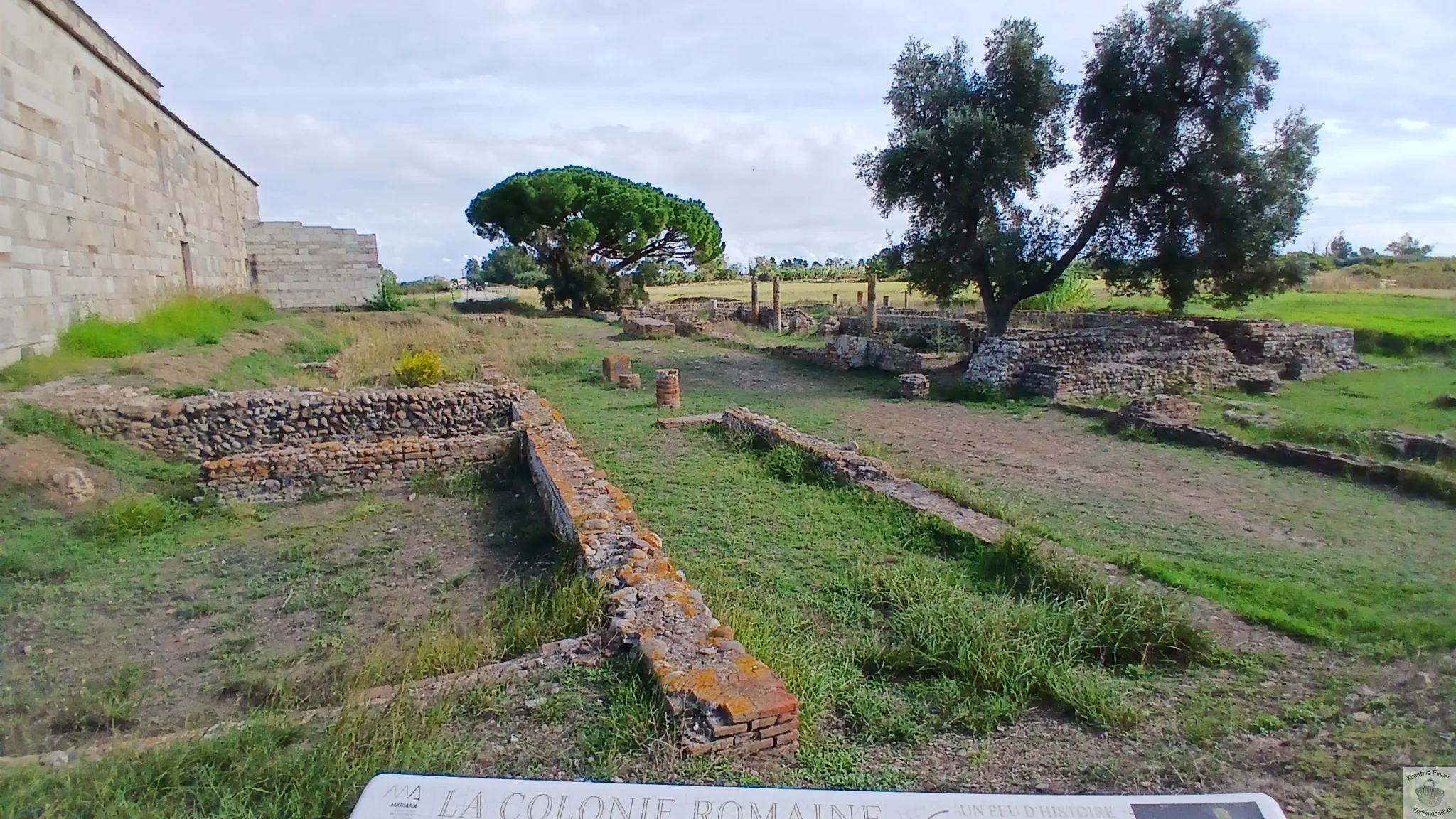
Olives straight from the tree don’t taste of anything. That was Katja’s observation when I handed her a lovely dark olive in good faith. Well, in hindsight, I’ve learnt yet again just how labour-intensive it is to produce tasty olives. Definitely not straight from the tree into your mouth!
Eventually, we did carry on from Plage de Marana to the harbour in Bastia. There was no sign of the ferry anywhere. It’s still sailing about out there to the north of Bastia.
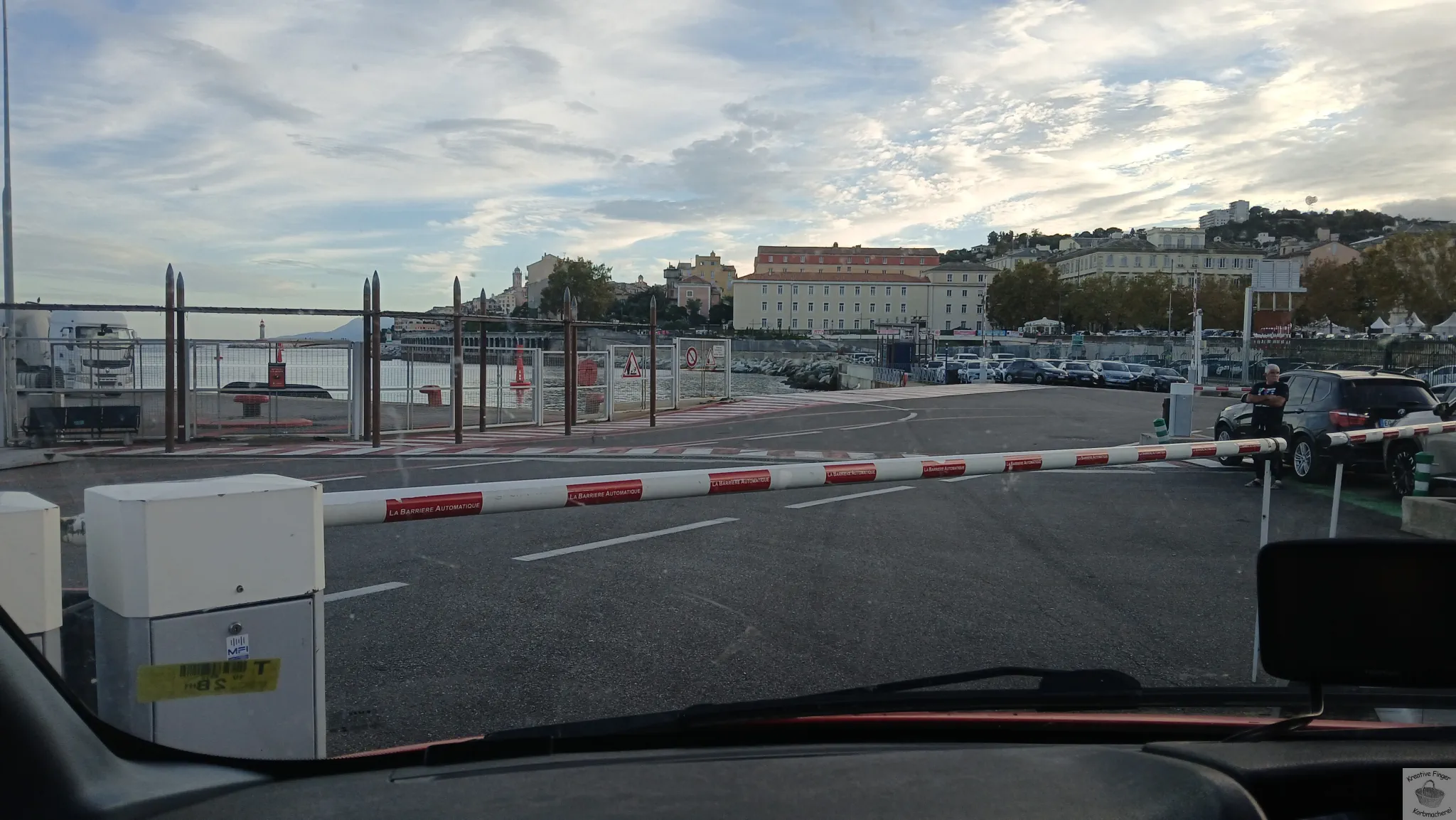
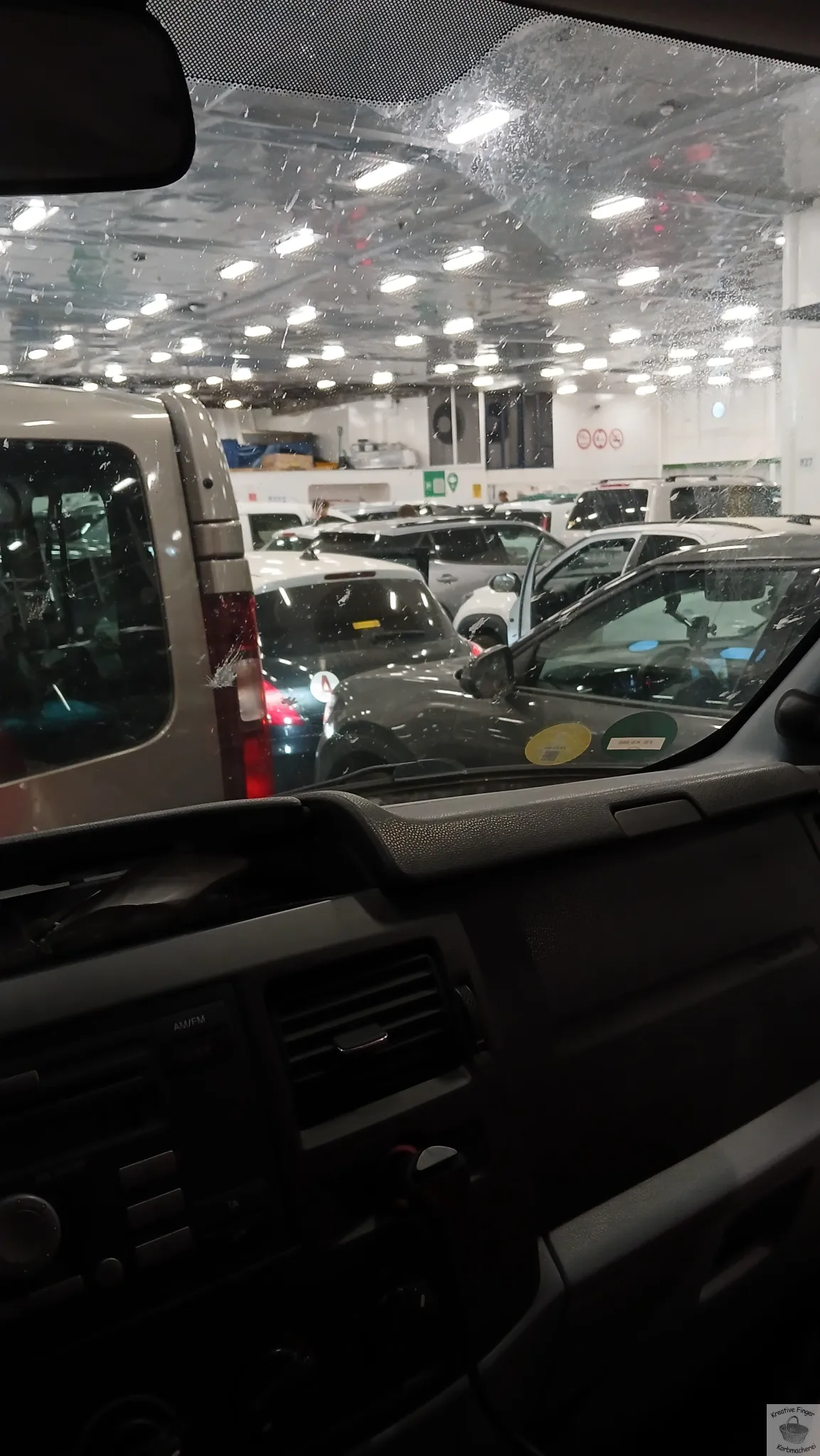
And with the Rallye Historique Corse now over too, things are getting rather cramped on the ferry. The racing cars – and, of course, the support crew – had already given us a hint that it would be very tight on the Mega Victoria.
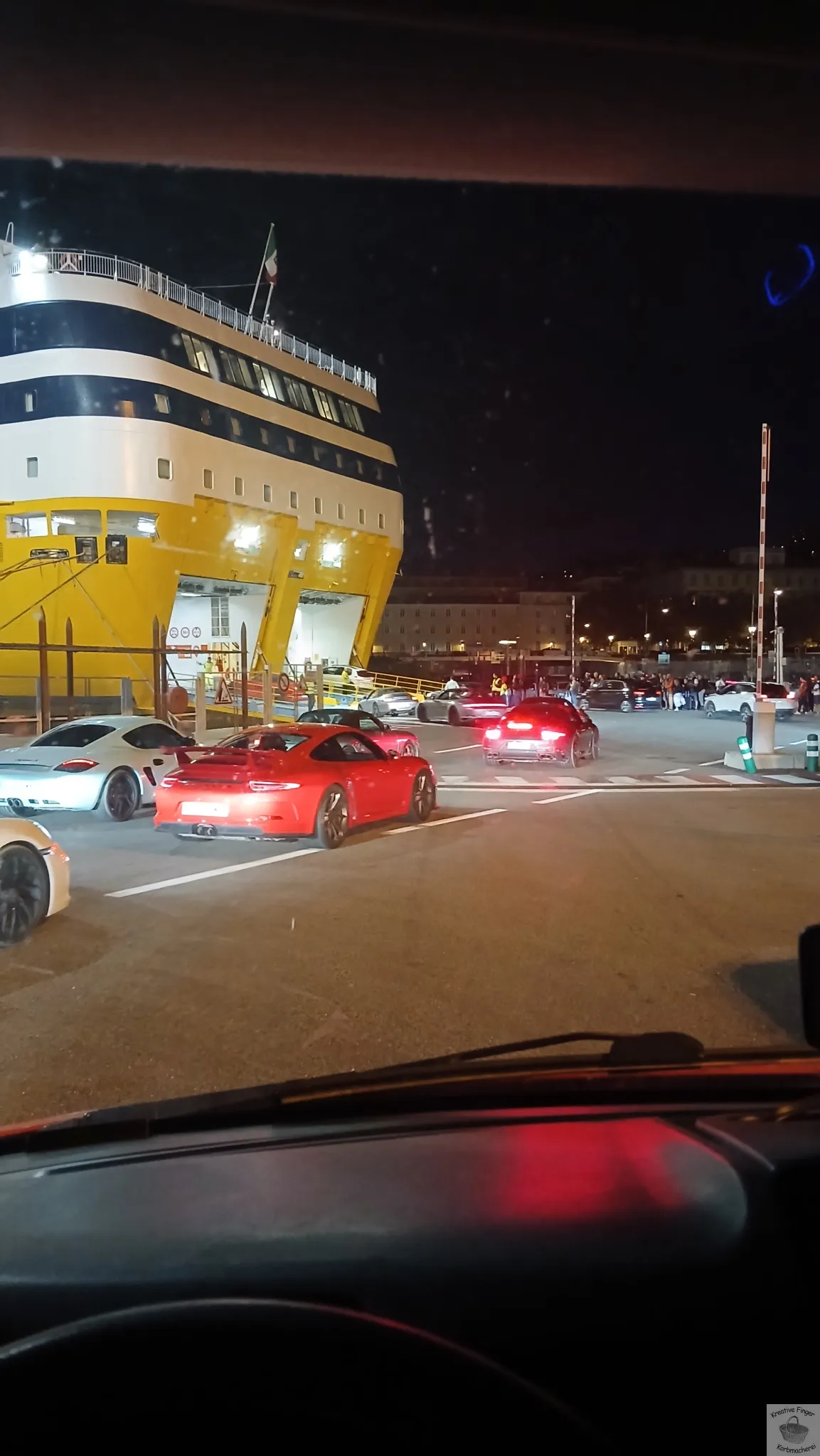
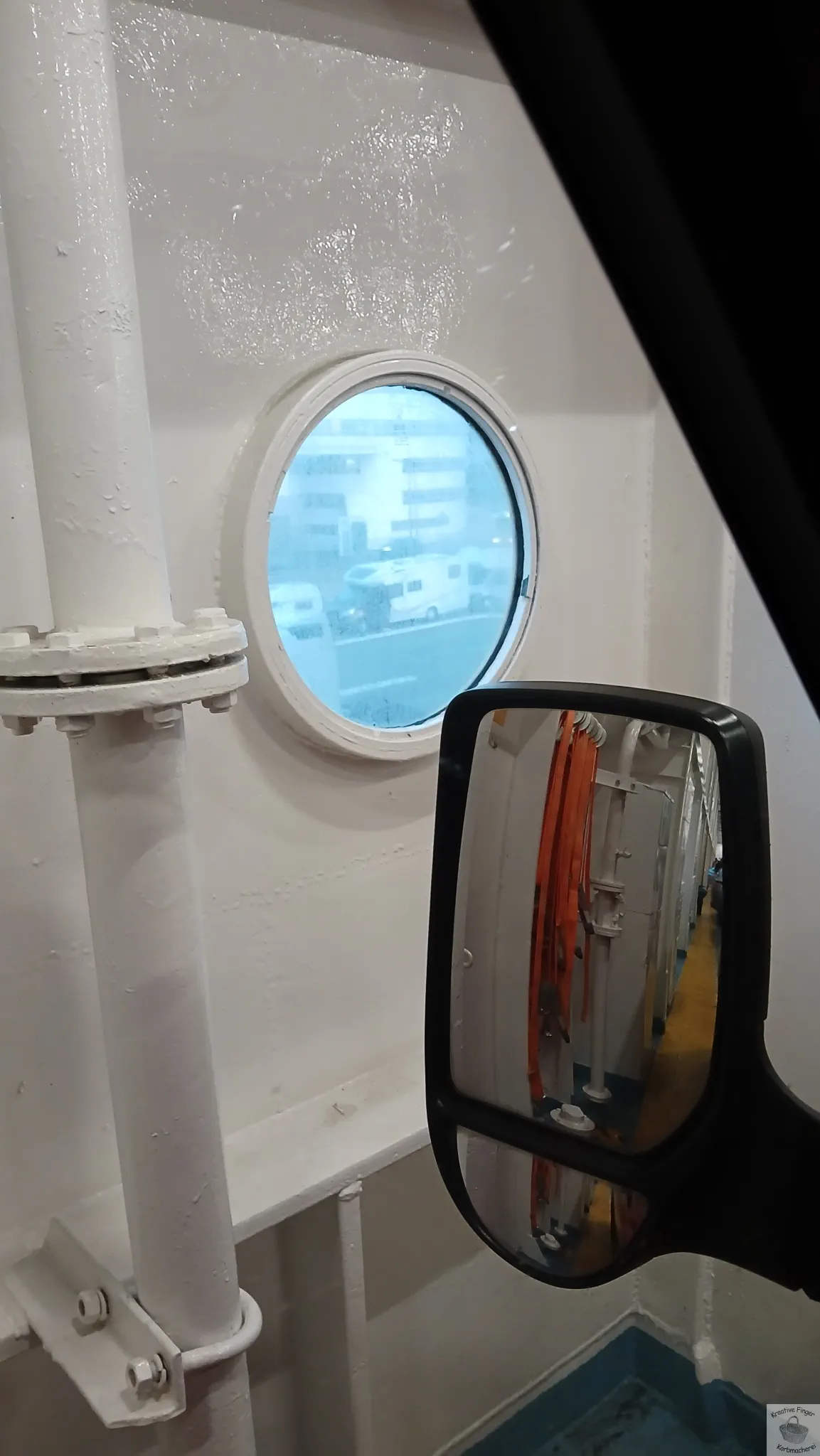
We set off late from Bastia but arrived on time in Toulon after a calm crossing. Then it was just a matter of waiting to be unmoored. However, this almost cost me the roof-mounted aerial. I was supposed to pull into the right-hand lane. So I put the car in reverse and realised that the 2.40 metres, plus the aerial, wouldn’t fit under the ramp. But everything turned out fine in the end.
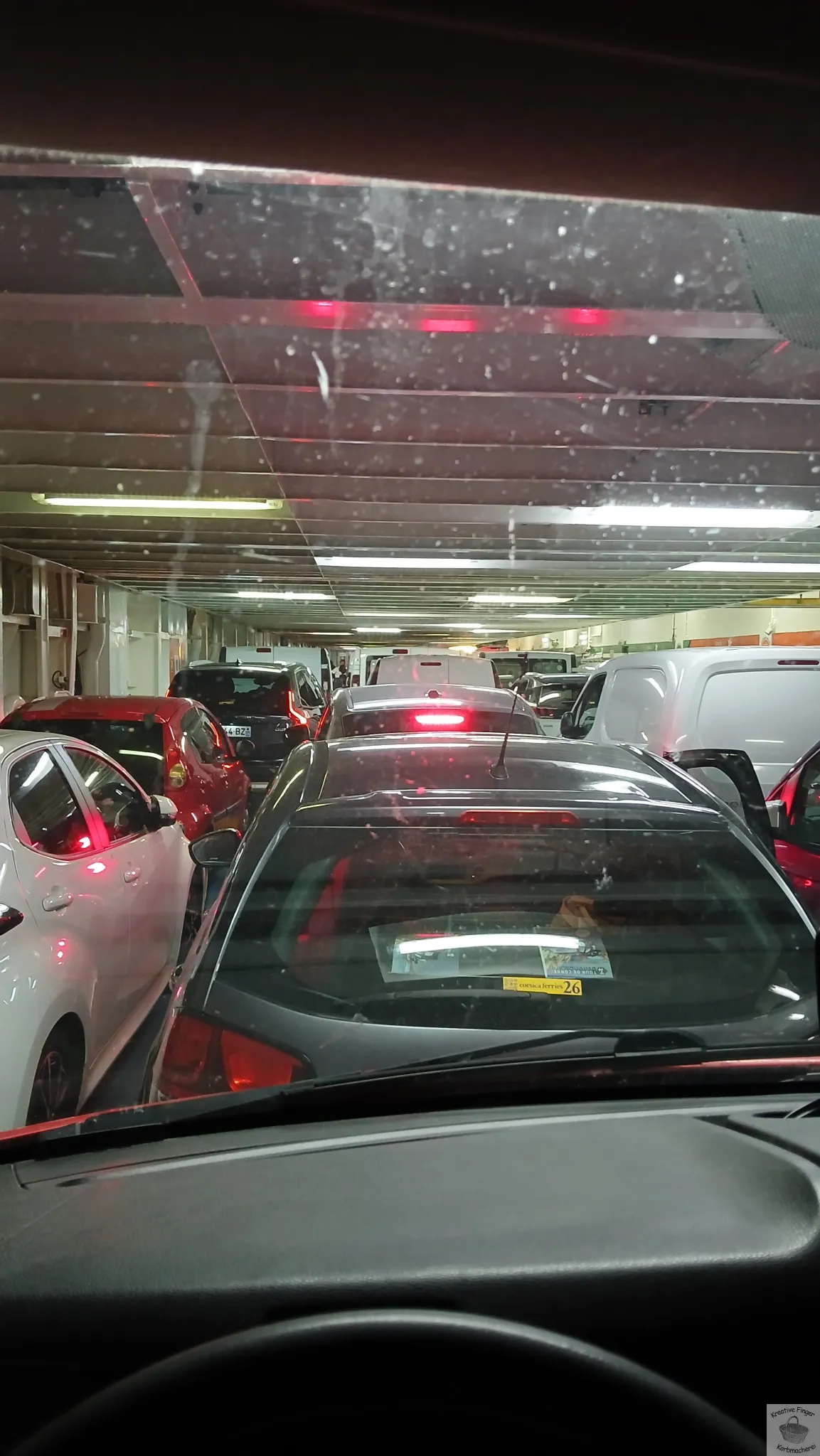
11 October 2026 – Overnight stay at Aire Poulet de Bresse
The return journey turned out to be a bit different than expected after all. The bus had used an enormous amount of oil, as we realised after spending the night at the hotel. More than 1 litre had simply vanished over a distance of around 400 km. No smoke, not a single drop under the bus. Just gone.
The same thing happened at our next stop in Hartheim. So we had to top it up again and carry on driving with a queasy feeling. In the meantime, the turbocharger seems to have given up the ghost. But we eventually made it home by driving carefully.
Now the garage needs to have a look at the problem. Initial research suggests possible costs ranging from around 1,000 euros up to 7,000 euros, and even a replacement engine. A faulty turbocharger alone would be the cheapest option. We’ll just have to wait and see.
As a traditional basketry workshop, a love for nature and honest craftsmanship are close to our hearts. Please note that our blog articles often consist of personal workshop reports, historical insights, or everyday stories. If general characteristics such as "natural," "chemical-free," "sustainable," or "biodegradable" are mentioned in the texts, these refer solely to our untreated willow wickerwork. For quality reasons, we standardly use modern, durable cotton weaving tape when renewing chair caning. The currently valid material details, legally binding information, and appropriate care instructions for your product can be found on our information pages and in the FAQs.